Table of Contents
- Does the Baking Soda, Parchment Paper, and Iron Trick Work?
- What Works Best on Oil Stains
- How to Get Oil Stains Out of Kids Clothes Step by Step
- When the Iron Trick Is a Good Idea
- When to Skip the Iron
- What If the Oil Stain Has Already Been Washed?
- Common Mistakes That Make Oil Stains Worse
- Frequently Asked Questions
- Sources
If you need to know how to get oil stains out of kids clothes, start with a dry method first. The most useful approach is to absorb the oil, treat it with a grease-cutting soap, and only use the parchment paper and iron trick on fabrics that can safely handle low heat.
- Best for: Cotton tees, school clothes, and everyday kids outfits
- Time: About 25 to 40 minutes
- You need: Baking soda, parchment paper, dish soap, a soft brush, and an iron
- Most important rule: Do not use the dryer until the stain is gone
- Skip the iron for: Dry-clean-only, delicate, embellished, or heat-sensitive fabrics
Does the Baking Soda, Parchment Paper, and Iron Trick Work?
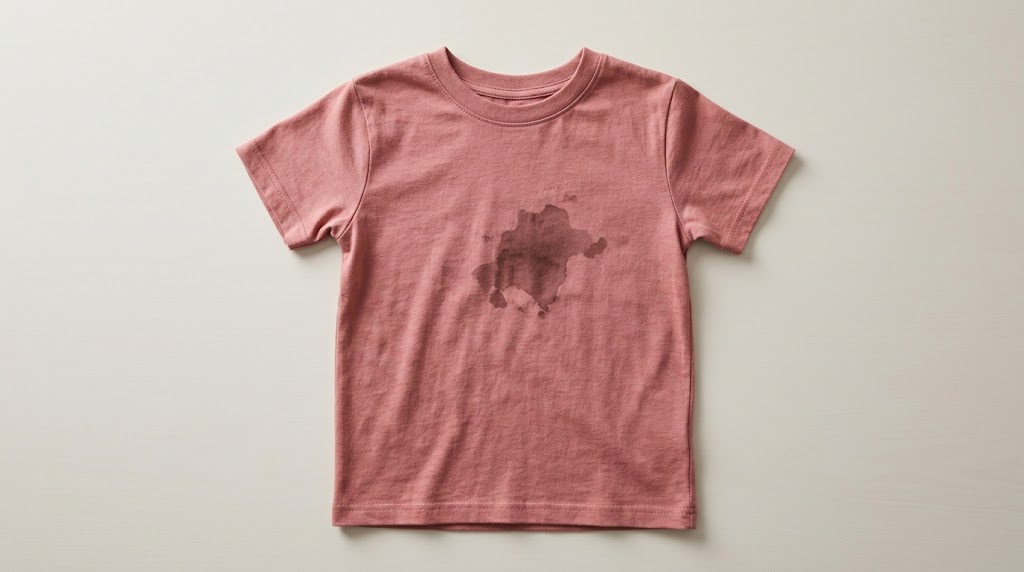
It can help, especially on fresh or light grease marks. Baking soda can absorb some of the oil, and parchment paper can help lift loosened grease when low heat is applied carefully.
Still, this should not be treated as a magic fix for every fabric. In many cases, the stain needs one more step after the iron trick: a grease-cutting dish soap to break down what remains before washing.
That is why the safest version of the method uses the viral trick as part of the process, not the whole process.
What Works Best on Oil Stains
| Step | Why It Helps | Best Time to Use It |
|---|---|---|
| Blotting | Removes loose oil before it spreads | Right away |
| Baking soda | Absorbs surface oil | Fresh or visible grease spots |
| Parchment paper + low iron | Can help transfer oil out of the fabric | Only on iron-safe fabric |
| Dish soap | Breaks down grease | Before washing |
| Air drying | Prevents heat from setting any leftover stain | After washing |
Tip: Oil stains often look lighter when wet and then show up again after drying. Always inspect the fabric in good light before using a dryer.
How to Get Oil Stains Out of Kids Clothes Step by Step
Check the care label first.
Make sure the garment can handle ironing and warm washing. If the item is dry-clean-only or clearly delicate, skip the iron method and use a gentler stain treatment or professional cleaning.
Blot the fresh oil.
Use a paper towel or clean cloth to press on the stain. Do not rub, because rubbing can spread the grease deeper into the fibers.
Cover the spot with baking soda.
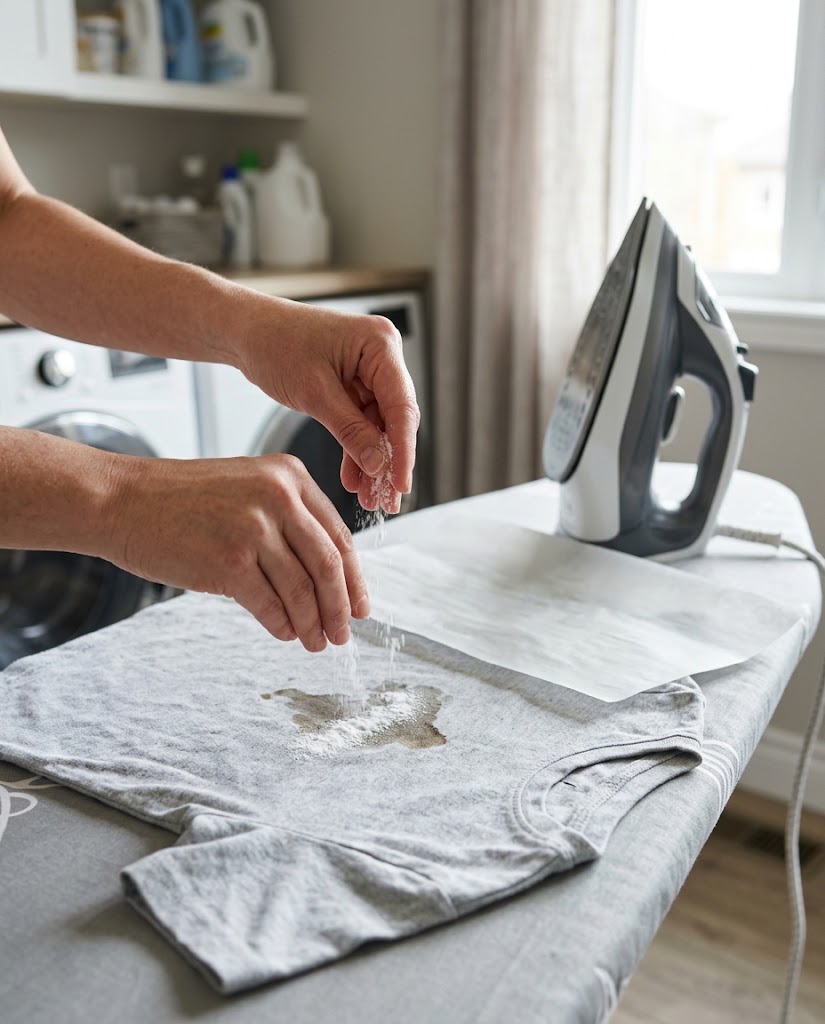
Sprinkle enough baking soda to fully cover the stain. Let it sit for 15 to 30 minutes so it can absorb as much oil as possible.
Brush the powder away gently.
Use a soft toothbrush or cloth. If the baking soda looks clumpy or slightly dark, that usually means it pulled up some oil.
Use parchment paper and low heat.
Place one piece of parchment paper under the stained area and another on top. Press with a low, dry iron for a few seconds at a time. Lift and check often. Move to a clean part of the parchment if it becomes oily.
Work in a small amount of dish soap.
Add a few drops of plain grease-cutting dish soap directly to the stain. Gently work it in with your fingers or a soft brush, then let it sit for 5 to 10 minutes.
Wash the item.
Launder it in the warmest water allowed by the care label using your regular laundry detergent.
Air dry and inspect.
Do not put the item in the dryer yet. Let it air dry, then check the area in daylight. If the stain is still visible, repeat the treatment before using any high heat.
When the Iron Trick Is a Good Idea
This method makes the most sense on sturdy everyday fabrics, especially cotton or cotton-blend kids clothes with a fresh or visible grease spot.
It can also be useful when you want to treat the stain before a full wash. That is why so many parents like it for school clothes, play clothes, and plain T-shirts.
When to Skip the Iron
- Dry-clean-only clothing: Follow the care label.
- Delicate fabrics: Silk, lace, and some lightweight blends may not handle heat well.
- Printed or decorated clothing: Heat can damage prints, vinyl, or embellishments.
- Unknown fabric: If you are not sure, test another method first.
Safety: Never iron directly on the stained fabric without a protective layer. Use parchment paper, keep the iron dry, and start with low heat. If the clothing label warns against ironing, do not use this method.
What If the Oil Stain Has Already Been Washed?
You can still try to remove it, but it may take more than one round. Start with baking soda, then move to dish soap, wash again, and air dry before checking.
If the item already went through a hot dryer, the stain may be harder to lift. That does not always mean it is permanent, but it usually means you need to repeat the treatment more patiently.
Common Mistakes That Make Oil Stains Worse
- Rubbing the stain first: This can spread the grease.
- Using water only: Water alone does not break down oil well.
- Skipping dish soap: The absorbent powder helps, but grease-cutting soap often does the deeper work.
- Using high heat too soon: A dryer can set leftover oil into the fabric.
- Not checking the care label: Heat or aggressive treatment can damage some clothes.
Frequently Asked Questions
Can baking soda remove oil stains by itself?
It can absorb some of the oil, especially when the stain is fresh, but it often works better as the first step rather than the only step.
Do I need parchment paper for this method?
Yes, if you use the iron trick. The paper protects the fabric and can help absorb loosened grease. Do not iron directly on the stained area.
Can I use this method on school uniforms?
Usually yes, if the fabric is iron-safe and the care label allows it. Always test carefully if the uniform has prints, patches, or coated fabric.
What is the best soap for oil stains?
A plain grease-cutting dish soap is one of the most useful options for pretreating oil and grease marks before washing.
Should I rewash the shirt after the stain looks better?
Yes. Even if the stain fades after the iron step, washing helps remove the loosened oil and any leftover baking soda or soap.
Sources
For general stain-removal guidance, fabric care precautions, and advice about treating oil safely, see UGA Cooperative Extension and Clorox stain removal guidance.