Table of Contents
- The Ingenious Visual Lesson of a Painted Stone
- Why “Ships Don’t Sink by Surrounding Water” Captures a Universal Struggle
- Isaiah 43:2 and the Promise of Unshakable Protection
- Practical Ways to Stop the Inward Flood
- Keeping the Message Alive in a Cluttered World
- What We Learn When We Stop Blaming the Ocean
- Creating Your Own Reminder Stone
- Frequently Asked Questions
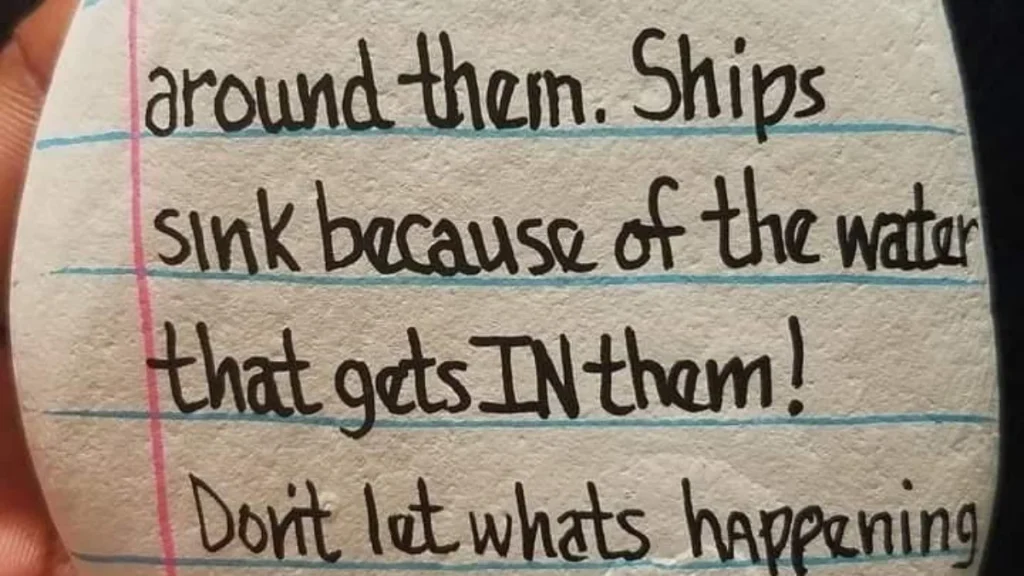
There is a simple painted stone making the rounds in homes and on social media that carries a message so startlingly practical it stops you mid-scroll. The stone reads, “Ships don’t sink because of the water around them. Ships sink because of the water that gets IN them!” Right beneath that vivid analogy, it references a powerful promise: Isaiah 43:2. The visual connects instantly because it speaks to the difference between the troubles we swim through and the troubles we allow to flood our inner peace.
Seeing that smooth oval rock against a dark, blurred background, held gently in someone’s hand, turns an abstract spiritual concept into a physical reminder. It asks us to examine what we are absorbing. The water outside—our difficult coworkers, financial stress, bad news, traffic, disappointments—isn’t what capsizes us. It’s the water we let seep through the hull.
The Ingenious Visual Lesson of a Painted Stone
The object in the image is an unassuming, smooth oval-shaped stone. A steady hand has painted it with crisp white cursive lettering, creating a stark contrast that demands attention. The stone is a portable, durable canvas for a lesson that never goes out of style. By choosing a rock, the creator hints at permanence and solidity—exactly the state of mind we lose when we let the outside world crush us.
The backdrop is dark and softly blurred, probably a fabric surface. This lack of visual noise forces your eyes straight to the painted words. There is nothing else to distract you, no clutter, no decoration. That starkness mirrors the choice itself: either you focus on the ship (your soul) or you fixate on the flood (your circumstances).
A partial hand at the bottom left holds the stone steady. That subtle detail matters because it grounds the message in reality. It isn’t floating on a screen; it is held by a real person who likely needed this reminder just as much as the viewer does. The stone is a tangible declaration.
Why “Ships Don’t Sink by Surrounding Water” Captures a Universal Struggle
We spend so much energy trying to control the ocean. We wish difficult people were less difficult, we wish the economy were stronger, we wish our past had been gentler. Yet a ship engineered to float handles massive waves and deep water perfectly well. The danger begins when integrity fails, when a hidden crack lets the external creep inside. Keeping the water out becomes the single most essential task.
This visual reminder normalizes struggle. A ship surrounded by water isn’t in a broken situation; it’s simply doing what ships do—moving through an unpredictable element. Similarly, you are not failing because life is chaotic around you. You are only at risk if that chaos becomes your internal narrative, filling your thoughts with panic, resentment, or despair.
The metaphor also teaches that you don’t need the water to disappear before you can stay afloat. You only need a sealed vessel. It shifts the goal from controlling every outside force to maintaining a healthy boundary between who you are and what you face.
Isaiah 43:2 and the Promise of Unshakable Protection
The phrase “Isaiah 43:2” sits right below the main quote in a more decorative, lighter script. It grounds the illustration in a profound spiritual text that reads, “When you pass through the waters, I will be with you; and when you pass through the rivers, they will not sweep over you.” The key word is “through.” The scripture never promises a dry path around the river. It promises safe passage through it.
That’s a critical nuance when we connect it back to the sinking ship. God doesn’t promise to build a dam and remove the river. He promises that the water won’t swallow you. The external circumstances may remain dangerously high, but your inner chambers stay dry. The painted stone becomes a kind of portable altar, an object you can hold while repeating that promise until your heart rate slows.
By physically writing those words on a rock, someone connected the ancient promise to a modern psychological truth: resilience is leak-proofing your spirit, not wrangling the weather patterns.
Practical Ways to Stop the Inward Flood
Knowing you shouldn’t let the water in is one thing. Actually staying watertight when the waves hit is another skill entirely. The first step is to identify exactly what “water” you have already taken on. That might look like replaying a critical comment, obsessing over a headline, or holding your body in a tense guarded knot all day. Name the water before you can pump it back out.
Creating a physical reminder, similar to the painted stone in the image, can work as a pattern interrupt. When you notice yourself spiraling, holding something solid and smooth in your hand can anchor you. It reminds your body that you are here, safe, on dry ground inside. That tactile sensation plus the visible words creates a two-channel reset.
Here are several gentle strategies to seal the hull before things get worse:
- Practice a three-breath pause before reacting to upsetting news or words.
- Visualize a glass barrier between your core self and the swirling circumstances.
- Ask yourself: “Has this problem entered me yet, or is it just circling outside?”
- Write the “ships don’t sink” phrase on a sticky note for your mirror or dashboard.
- Speak Isaiah 43:2 aloud while holding a smooth object in your hand.
Keeping the Message Alive in a Cluttered World
The world hands us porous boundaries unless we deliberately strengthen them. Notifications, urgent tones, and constant comparison slowly drill holes in our hull. One tiny leak won’t sink a ship instantly, but neglect will. Left unaddressed, small leaks become unbearable weight, pulling us lower until we barely remember what buoyancy felt like.
A written stone displayed on a nightstand or desk gives you a glanceable anchor. It is far quieter than a buzzing reminder on a phone, and it demands nothing from you except attention. Looking at the cursive strokes takes effort; your eyes must trace the letters, slowing your mind to reading pace rather than scanning pace. That very slowness is part of the remedy.
You might even start a small collection of similar reminder objects—not in a cluttered way, but in an intentional, sparse arrangement that walks you back from the edge. One stone says “breathe,” another says “Isaiah 43:2,” another holds a single word like “sealed.” The practice grows beyond decoration into spiritual ship maintenance.
What We Learn When We Stop Blaming the Ocean
It is strangely comforting to realize that the water isn’t the enemy. The ocean is just doing what oceans do—being deep, unpredictable, and sometimes terrifying. Our real work is far simpler and more accessible: inspect the ship. Tend to the places where resentment has cracked the boards. Patch the holes left by grief or panic. Check for corrosion where bitterness ate away the seal.
This isn’t a call to ignore genuine threats or suffer in silence. A ship in dangerous weather still seeks a harbor. But even in the harbor, a compromised hull will sink. You cannot just steer toward easier circumstances and call the problem solved. The ships don’t sink by surrounding water parable pushes personal responsibility into the spotlight while simultaneously offering enormous hope. You are not a victim of every single wave. You have agency over what enters your hull.
Creating Your Own Reminder Stone
While the image does not describe the crafting method, we can honor its quiet influence by considering how to bring a clean, minimal reminder into your living space. A smooth oval river rock, some white acrylic paint, and a fine brush are all the materials visible in the photograph. The lettering is cursive and deliberate, not rushed or perfect, which adds warmth. That human imperfection makes it feel approachable, as though a friend wrote it for you.
If you choose to make your own, pick a stone that feels good in your palm, somewhere between palm-sized and thumb-sized. Wash and dry it completely so the paint adheres well. You don’t need expert hand-lettering skills; sincerity reads louder than precision. The white on dark stone looks crisp and remains legible from across a room.
Place the finished stone somewhere you will encounter naturally—a windowsill above the kitchen sink, a bathroom shelf, or tucked near your car’s console. Let it be a safe landmark that calls you back to the truth that external chaos isn’t the captain of your ship.
Frequently Asked Questions
What does “Ships don’t sink by surrounding water” mean in simple terms?
It means that external problems alone cannot defeat us. The struggles around us only cause lasting damage when we internalize them and let them fill our thoughts and emotions. In boat terms, the ocean outside is not the problem; the water that leaks inside is what brings the ship down.
How does Isaiah 43:2 connect to the ship illustration?
Isaiah 43:2 reassures that when we go through deep waters, we will not be overwhelmed. The painted stone pairs this promise with the ship analogy to show that we are protected even in turbulent conditions. God’s presence keeps the destructive flood from entering and weighing down our soul.
Why was a rock used to display this message?
Smooth stones are durable, natural, and grounding to hold. The photo shows an oval stone with white painted script, but the materials aren’t the focus—the tangible reminder is. A rock can sit undisturbed for years, never needing a charge or update, always ready to anchor your attention back to a steady truth.
Is this just about spiritual wellness, or does it apply to everyday stress?
It applies to both. The concept works for any type of external pressure, from workplace anxiety to family drama. The image invites anyone, regardless of faith background, to adopt a healthier boundary between self and circumstance. The biblical reference strengthens the message for those who lean on scripture, but the mental health parallel holds its own weight.
Can I really stop overwhelming thoughts just by remembering a painted stone?
A single visual probably won’t erase deep anxiety, but it can serve as a quick reset point. The word painted on the stone gives your mind a clear alternative thought to latch onto. Over time, repeatedly choosing that alternative thought builds mental muscle, much like any other healthy habit.
Where should I keep a reminder like this?
Anywhere your eyes land during moments of quiet or stress. A nightstand, a desk corner next to your keyboard, or a bathroom shelf are common spots. The hand in the photo is holding the stone, which suggests it also works as a portable comfort item you can keep in a pocket or bag.
At the end of a hard day, when the tide feels high and your energy low, that oval rock with its simple white cursive holds a stubborn hope. The ocean doesn’t get the final say—only the condition of your hull does. Keep the water out, hold onto the promise of Isaiah 43:2, and let the ship sail on. You were built to stay buoyant through far rougher seas than this.