Table of Contents
- Understanding the Biblical Perspective
- Blasphemy and the Sanctity of God’s Name
- Oaths and Their Significance
- Respectful Communication
- Why Does This Matter?
- Practical Applications
- Cultivating a More Reverent Communication Style
- FAQ
- What does the Bible say about cursing?
- Are oaths always wrong in the Bible?
- How can I stop using curse words?
- Is it possible to apologize for using curse words?
The question of whether cussing is a sin is a common one, prompting reflection on how we communicate and interact with the world around us. Examining the Bible offers valuable insights into this matter, revealing a nuanced perspective on speech, oaths, and reverence. Understanding the scriptures surrounding cussing provides a framework for personal growth and spiritual discernment. This exploration aims to illuminate the biblical viewpoint on this often-debated topic.
Understanding the Biblical Perspective
The Bible doesn’t explicitly list “cussing” as a standalone sin, but it addresses related behaviors like blasphemy, oaths, and disrespectful language. These themes offer a comprehensive view of how we should use our words, emphasizing reverence, truthfulness, and respect.
Blasphemy and the Sanctity of God’s Name
Blasphemy involves using God’s name irreverently or disrespectfully. The Bible strongly condemns this act, considering it a grave offense. Exodus 20:7 states, “You shall not take the name of the Lord your God in vain.” This verse underscores the sacredness of God’s name and the importance of treating it with respect. Using curse words often falls under the purview of blasphemy because they involve defiling God’s name with offensive language.
The act of taking God’s name in vain isn’t just about using it casually. It’s about disrespecting the divine and diminishing the power and holiness of God. This can manifest in various forms, including the use of curse words, frivolous oaths, or irreverent pronouncements.
Oaths and Their Significance
The Bible addresses the use of oaths, highlighting the importance of truthfulness in our declarations. Deuteronomy 19:22 warns against swearing falsely, stating that whoever swears falsely swears and keeps not his oath.
While oaths weren’t necessarily forbidden, they were to be used with careful consideration and a commitment to upholding one’s word. Using curses or profanity in conjunction with oaths can be seen as disrespectful and a violation of biblical principles. The emphasis is on sincerity and integrity in our promises.
Respectful Communication
The Bible consistently emphasizes the importance of respectful communication. Proverbs 15:1 states, “A soft answer turns away wrath, but a harsh word provokes anger.” This highlights the power of our words and the need to choose them wisely.
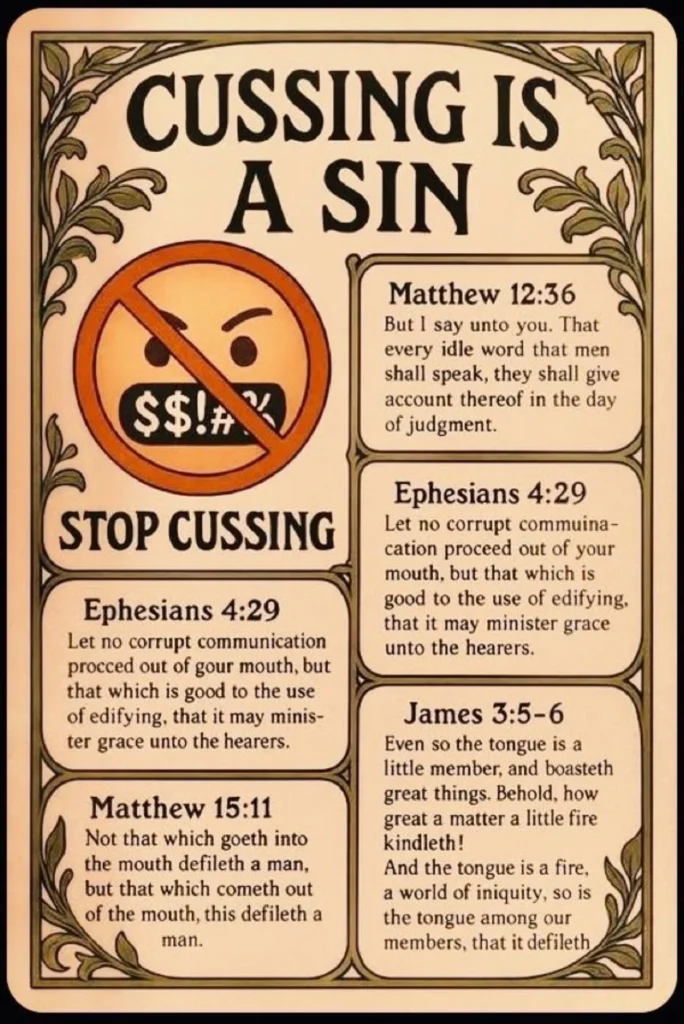
The Bible encourages us to be gentle, kind, and compassionate in our speech. Ephesians 4:29 advises, “Do not let any unwholesome talk come out of your mouth, but only what is helpful for building up, according to the need of the moment.” This calls for thoughtful and constructive communication, avoiding language that could be hurtful or offensive.
Why Does This Matter?
The biblical perspective on cussing isn’t simply about avoiding certain words; it’s about aligning our speech with our values and demonstrating reverence for God. Choosing respectful language reflects a commitment to spiritual growth and fosters positive relationships.
Our words have power – they can uplift or destroy, build up or tear down. By consciously choosing respectful communication, we honor God and create a more harmonious environment around us. This mindful approach contributes to a more positive and spiritually aligned life.
Practical Applications
Understanding the biblical perspective can guide us in making conscious choices about our language. Here are some practical steps to consider:
- **Reflect on your language:** Become aware of the words you use and how they impact others.
- **Identify triggers:** Recognize situations or emotions that lead to using curse words.
- **Practice alternative phrases:** Develop respectful ways to express frustration or anger.
- **Seek accountability:** Ask a trusted friend or mentor to help you identify and address problematic language.
Cultivating a More Reverent Communication Style
Shifting away from curse words doesn’t happen overnight. It requires conscious effort and a commitment to personal growth. Focusing on positive affirmations, practicing gratitude, and cultivating a spirit of reverence can help foster a more respectful communication style.
Remember that changing our language is a journey, not a destination. Be patient with yourself, celebrate small victories, and seek ongoing support along the way. The goal isn’t perfection, but a genuine desire to honor God with our words.
FAQ
What does the Bible say about cursing?
The Bible doesn’t explicitly list “cursing” as a sin but addresses related offenses like blasphemy and oaths. It emphasizes reverence for God’s name and the importance of truthfulness in our declarations.
Are oaths always wrong in the Bible?
The Bible doesn’t forbid oaths entirely, but it cautions against swearing falsely. The emphasis is on using oaths with sincerity and upholding one’s word. Using curse words in conjunction with oaths is generally considered disrespectful.
How can I stop using curse words?
Breaking the habit of using curse words requires conscious effort. Identify your triggers, develop alternative phrases, and seek accountability. Focus on positive affirmations and cultivate a spirit of reverence to support your progress.
Is it possible to apologize for using curse words?
Yes, absolutely. A sincere apology is a powerful step towards reconciliation and healing. Acknowledging the harm your words caused and expressing remorse demonstrates respect for others and a commitment to change.
The Bible encourages forgiveness, both from God and from others. By apologizing and seeking to make amends, you can repair relationships and move forward with a renewed commitment to respectful communication.
Ultimately, the Bible encourages us to be mindful of our words and to use them in a way that honors God and builds up others. This involves choosing language that is respectful, truthful, and compassionate. By striving to communicate in a way that reflects our values, we can cultivate a more positive and spiritually aligned life.