Table of Contents
- Why a structured language learning chronology matters
- Breaking down the 10-step chronology
- Stage one: Alphabets and numbers as the foundation
- Building sentences with essential verbs
- Practical vocabulary for real conversations
- Why the chronology works for any language
- Tips for using this language learning chronology
- Adapting the chronology to your personal goals
- FAQ
- A gentle reminder to trust the process
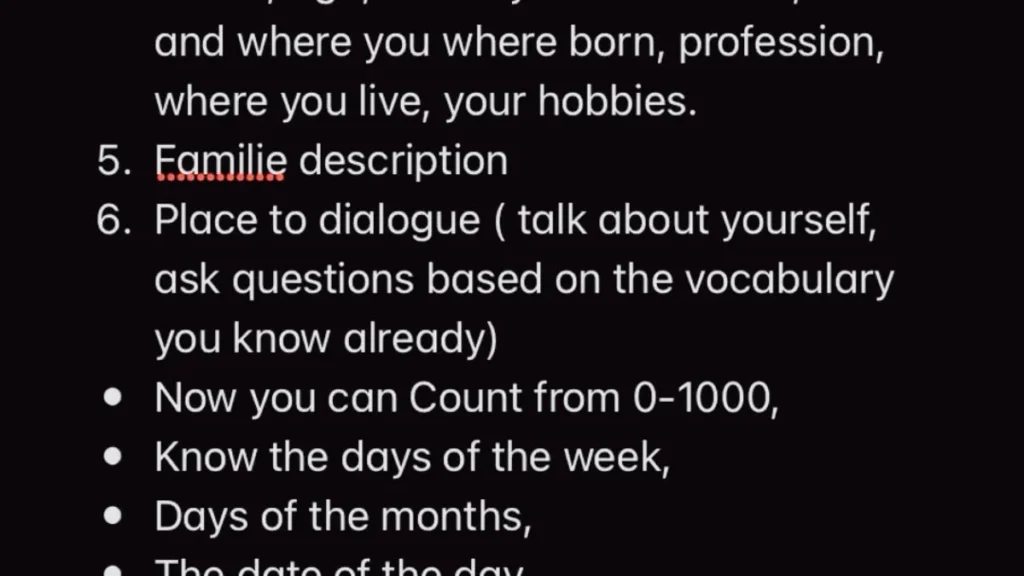
There is something deeply reassuring about finding a handwritten note that promises a clear path through the often messy process of learning a new language. A recent image captures exactly this: a personal note titled “Chronology I used to learn any new language.” What makes it special is how ordinary and doable it looks. The ten stages are written in simple language, each building naturally on the one before it. The note outlines a practical language learning chronology that moves from the absolute basics like alphabets and numbers all the way to using verbs comfortably in the present and past tense.
Why a structured language learning chronology matters
When most people start learning a language, they feel excited but quickly become overwhelmed. Vocabulary apps throw random words at you, grammar books jump straight into complex rules, and it is easy to lose motivation. The handwritten note solves this problem by giving learners a sequence that makes sense. Following a fixed order removes the daily guesswork of what to study next. It also ensures that each new skill rests on a solid foundation.
This approach mirrors how children naturally acquire their first language. They learn sounds first, then words for immediate needs, then simple sentences, and only much later complex grammar. The chronology in the note follows a similar path, starting with the building blocks of any language: its alphabet and number system. Without these, you cannot read, write, or handle basic transactions.
Breaking down the 10-step chronology
The beauty of this method lies in its clarity. Each stage has a specific focus, and the progression feels natural:
- Alphabets and Numbers – Learn the characters, sounds, and counting system.
- Dates and Months – Know the days, months, and how to express calendar dates.
- Verb To be/To have – Master these two essential foundation verbs.
- Famillie description – Describe family members and relationships.
- Place to dialogue – Practice conversational phrases for common locations.
- Modal verbs – Learn to express ability, possibility, and necessity.
- Prepositions – Understand spatial and directional words.
- Verbs in the present and past tense – Form and use core verbs across basic timeframes.
The note includes a detailed breakdown under several stages. For dates and months, it specifies counting and knowing the days. The verb section lists essential verbs like eat, drink, travel, sleep, read, write, and speak. It also mentions learning food and drink-related vocabulary. This practical focus means learners acquire words they will actually use in daily life.
Stage one: Alphabets and numbers as the foundation
Starting with alphabets and numbers might feel almost too obvious, but skipping this step causes problems later. Learning the correct sounds from the beginning prevents fossilized pronunciation errors. If you start learning phrases without knowing how letters sound, you will mispronounce words and struggle to understand native speakers.
Numbers matter more than most learners realize. You need them for prices, phone numbers, addresses, and telling time. A learner who can count confidently handles everyday situations with much less anxiety. The note places this right at the start, correctly treating it as non-negotiable groundwork.
Building sentences with essential verbs
Once a learner has alphabets and numbers down, the chronology moves to the two most important verbs in many languages: to be and to have. These verbs form the backbone of self-description, possession, and existence. You use “to be” to say who you are, where you are from, and how you feel. You use “to have” to talk about family, possessions, and physical states.
The note then introduces family description, which naturally uses both verbs. Describing your mother, father, siblings, and extended family pulls together vocabulary and grammar in a personally meaningful way. The addition of modal verbs later allows for more nuanced expression like “I can go,” “you should eat,” or “we must leave.”
Practical vocabulary for real conversations
What stands out in the handwritten note is the emphasis on words that support genuine dialogue. Under the stages, it lists food, drink, and core action verbs like eat, drink, travel, sleep, read, write, and speak. These are not academic or rare words. They are the verbs that power everyday conversations about plans, meals, hobbies, and routines.
The “Place to dialogue” stage suggests learners practice conversational phrases specific to locations. This might mean learning how to order in a café, ask for directions, or greet someone at a social gathering. Prepositions further refine this by helping learners explain where things are and how to get places.
Why the chronology works for any language
The structure is universal. Every spoken language has an alphabet or character system, numbers, days, months, and a way to express being and having. The chronology language learning approach does not rely on any language-specific trick. It works for French as well as it does for Japanese, even though the writing systems differ enormously.
Grammar-intensive languages benefit from this slower build-up. Learners avoid the trap of memorizing complex rules before they can form basic sentences. Tonal languages benefit because the early focus on alphabets and sounds trains the ear. The method is flexible enough to adapt while providing enough structure to keep a self-directed learner on track.
Tips for using this language learning chronology
Making the most of this ten-step guide requires consistency more than intensity. The note itself feels unhurried, as if written by someone who understands that language learning happens over months and years, not days. Here are some practical ways to put the chronology into practice:
- Stay on one stage until it feels comfortable. Do not rush through alphabets just because they seem simple. Solid foundations make everything else easier.
- Combine writing and speaking. For each stage, practice writing out the words and saying them aloud. Handwriting helps memory in a way typing does not.
- Create simple sentences from day one. Even when learning numbers, try saying “I have three books” or “Two coffees, please.” This bridges isolated vocabulary into real use.
- Use the verb list for daily practice. Take the verbs mentioned—eat, drink, travel, sleep, read, write, speak—and write a few sentences about your day in the present and past tense.
- Find a practice partner before stage five. The “Place to dialogue” stage works best with another person. Language exchange apps or local meetups can provide a low-pressure environment.
- Revisit earlier stages often. While working on prepositions, keep reviewing numbers and family vocabulary. Language knowledge builds cumulatively.
Adapting the chronology to your personal goals
While the note provides a fixed order, learners can add personal vocabulary within each stage. Someone learning for travel might expand the food and drink vocabulary extensively. A learner preparing for business might add professional terms to the verb list. The structure stays the same, but the content flexes around real needs.
For parents teaching children, this chronology offers an excellent framework. Young learners thrive on predictable routines and concrete topics like family, food, and places. The stages are small enough to feel achievable and broad enough to occupy a child’s curiosity for weeks or months.
FAQ
How long should I spend on each stage of the chronology?
There is no fixed time requirement for any stage. Spend enough time to feel confident using the material in simple sentences before moving forward. For some, alphabets and numbers may take a week. For others learning a completely unfamiliar script, it could take a month. The key is not to rush. Mastery of earlier stages makes later grammar points much easier to absorb.
Can this chronology work for languages with non-Latin scripts?
Absolutely. The first stage explicitly includes alphabets, which means learning whatever writing system your target language uses. For Mandarin, this would mean starting with pinyin and basic characters. For Arabic, it means learning the connected script. The principle of starting with sounds and symbols holds true across all languages.
Do I need a textbook to follow this chronology?
Not necessarily. Free online resources, language apps, YouTube tutorials, and notebook practice can cover all ten stages. A dedicated notebook where you write everything by hand, similar to the original note, is highly recommended. Handwriting deepens recall and gives you a tangible record of progress.
What should I do after finishing all ten stages?
The note ends with verbs in the present and past tense, which gives you a functional command of everyday conversation. From there, you can extend naturally into future tense, more complex sentence structures, and deeper vocabulary areas like emotions, abstract ideas, or professional jargon. Many learners find that after finishing this chronology, they can hold basic conversations and learn new material more independently.
Is it okay to skip a stage if it seems irrelevant?
Skipping is not recommended because each stage supports the next. Even if family vocabulary seems less immediately useful, describing people is a fundamental skill that connects to possessive grammar and descriptive adjectives. Every stage has a purpose, even if its usefulness is not immediately obvious.
A gentle reminder to trust the process
Looking at this handwritten note, you get the sense that the person who wrote it genuinely wanted to help others. There are no extravagant promises, no claims of fluency in thirty days. Just a steady, patient sequence that anyone can follow. That is perhaps the most encouraging part of the whole language learning chronology. It respects the learner’s time and intelligence while offering a path that feels walkable, even on busy days.
Keep the stages visible. Tape them into a notebook or pin them above your study space. On days when motivation dips, the simple list reminds you what to do next. Sometimes the best learning tools are not the most technologically advanced. Sometimes they are hand-penned notes that say, quietly and confidently, “Here is how I did it. You can too.”