Table of Contents
- Why a Visual Morning Routine Chart Changes Everything
- What You Will Need to Build Your Own Cute Checklist
- Designing the Chart for Different Ages
- Step-by-Step Morning Routine Sequence
- Places to Display the Chart So It Actually Gets Used
- Making the Chart Genuinely Cute and Motivation-Boosting
- Keeping the Routine Fresh Through the School Year
- Tips for Parents Navigating Rough Morning Patches
- Common Questions About Morning Routine Charts
- Embracing Calmer Mornings Together
Mornings can feel like an impossible sprint. Alarms get snoozed, shoes disappear, and somehow the lunchbox ends up in the living room. A before school getting ready checklist or cute morning routine chart for students gently pulls everyone back on track. It shifts the morning momentum from parental nagging into a predictable rhythm children can follow on their own. When the steps live somewhere visible, like the fridge door or a bedroom wall, the entire household exhales a little easier.
Why a Visual Morning Routine Chart Changes Everything
Young brains respond beautifully to pictures and simple words arranged in order. A checklist removes the mental load of remembering what comes next. Instead of hearing repeated reminders, a child glances at the chart and sees exactly where they are in the flow. This small shift lowers cortisol for parents and builds confidence in students. Over time, the sequence becomes second nature and the chart becomes backup rather than the main event.
Another quiet benefit shows up in emotional regulation. Many morning meltdowns stem from transition struggles, not defiance. A chart acts as a neutral third party that says gently, “Now we brush our hair,” without any frustrated tone attached. Kids also feel a burst of pride when they move a magnet, check a box, or simply know they handled the steps independently. That sense of capability ripples into the rest of the school day.
What You Will Need to Build Your Own Cute Checklist
Gather simple supplies before sitting down to create the chart. You don’t need expensive materials. Items already tucked into craft drawers or home offices work beautifully. The goal is functional charm, not perfection.
- Sturdy paper, cardstock, or a small whiteboard for the base
- Colored markers, pens, or crayons for drawing and lettering
- Stickers, washi tape, or simple printed clip art for visual cues
- Sticky magnets or reusable adhesive strips to hang the chart
- Optional: lamination sheets or a clear plastic sleeve and a dry-erase marker
- Optional: small reward stars or a set of dot stickers for tracking completion
Digital families can also use a tablet-based checklist app, but a tactile, physical chart often works best for younger students. Something about physically checking a box or sliding a picture feels more satisfying and real.
Designing the Chart for Different Ages
The layout depends heavily on the child’s age and reading level. Preschoolers thrive on picture-heavy charts with no words at all. A simple sun illustration means wake up, a toothbrush means dental care, a little shirt means get dressed. Arrange the icons left to right in the exact order they need to happen.
Early elementary students enjoy a mix of simple words and sweet illustrations. You might draw a cereal bowl icon next to the word breakfast or a backpack beside the phrase pack bag. Let them help choose the colors and doodles. When a child co-creates the chart, they develop a sense of ownership that fuels cooperation. Middle schoolers might prefer a minimalist typed checklist in a sleek font, perhaps printed in soft pastels and slipped inside a clear frame by their mirror.
Step-by-Step Morning Routine Sequence
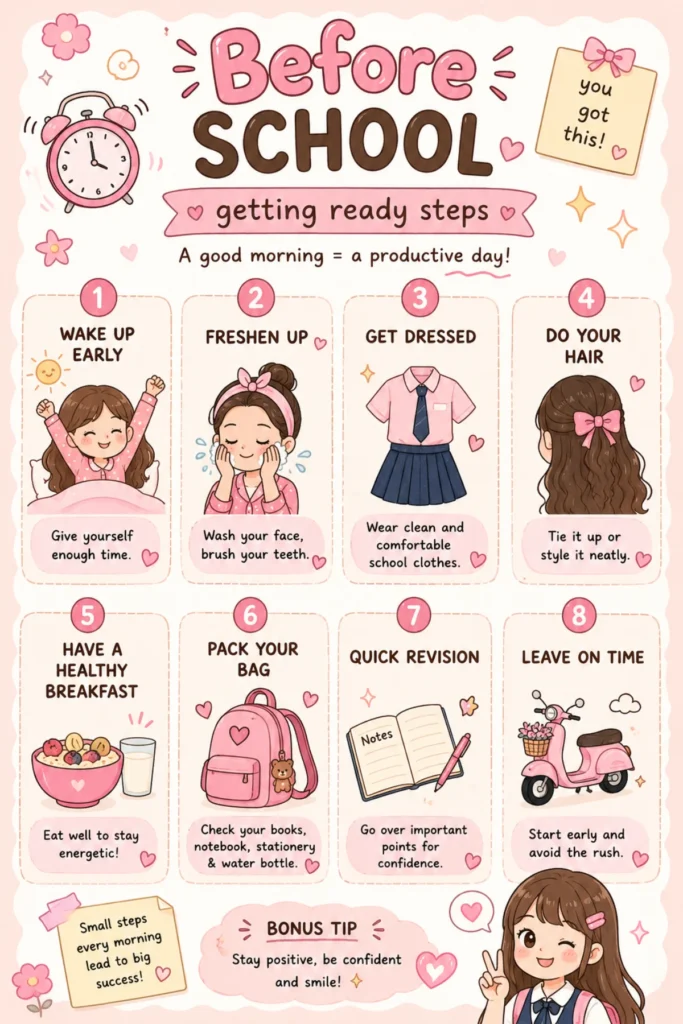
Adapt the following flow to match your family’s actual timetable. The goal is realistic forward motion, not over-optimized perfection. Keep the list short enough that it feels doable instead of discouraging.
Step 1 – Wake Up Gently
Start the chart with a soft wake-up cue. This could be a simple illustration of a stretching child or an alarm clock with little hearts around it. Include making the bed or simply pulling up the blanket. That tiny first accomplishment sets a productive tone.
Step 2 – Freshen Up
Group bathroom tasks under one friendly heading. A toothbrush icon, a splash-of-water symbol, and a hairbrush cover the basics. Some families add washing hands and face with a cute soap graphic. Keep the number of steps age-appropriate.
Step 3 – Get Dressed
A small clothing icon or a stick-figure wearing a shirt reminds children to change out of pajamas. For younger students, lay out clothing the night before and add a simple note to the chart: put on the outfit from the chair. Hanging a completed outfit nearby bridges the chart and the real-world action smoothly.
Step 4 – Eat a Healthy Breakfast
Depict a bowl of oats, a banana, scrambled eggs, or whatever your family typically eats. The image signals fuel for the day. Hydration matters too, so a small glass of water or milk drawn beside the meal reinforces drinking something nourishing.
Step 5 – Grooming Extras
Create a small section for hair brushing, sunscreen application, or putting on glasses. These extras often get forgotten in the rush. A visual reminder prevents the last-minute scramble when someone remembers their hair still needs a quick brush.
Step 6 – Pack the Backpack
This step deserves its own clear spot on the chart. Draw a backpack along with symbols for the lunchbox, water bottle, homework folder, library book, and any special gear. Do as much packing as possible the evening before, but keep this morning checkpoint visible.
Step 7 – Positive Send-Off
A little smiley face, a heart, or shoes icon near the door wraps up the routine. You might add a prompt like “hug goodbye” or “put on shoes.” Ending the chart with warmth helps children transition out the door feeling loved and steady.
Places to Display the Chart So It Actually Gets Used
Visibility determines success. The best chart in the world becomes wallpaper if it sits behind a closet door. Pin it at the child’s eye level on the bedroom wall, attach it to the bathroom mirror, or hang it on the fridge at snack-grabbing height. Families with multiple children sometimes create individual mini-charts mounted on clipboards near each child’s backpack hook.
For laminated charts, a dry-erase marker clipped to the side invites daily interaction. Kids enjoy the sensory act of wiping yesterday’s check marks clean. Some families place the chart inside a clear picture frame and use the glass as the dry-erase surface, which looks tidy on a kitchen counter.
Making the Chart Genuinely Cute and Motivation-Boosting
Aesthetics matter more than we usually admit. A chart drenched in a child’s favorite colors or featuring sweet little animal illustrations draws the eye and lowers resistance. Use soft pastels, tiny hearts, rainbows, or simple floral doodles. The overall vibe should whisper calm and kindness rather than another cold to-do list.
Adding a small reward section without making it the entire focus works wonders. A row of stars at the bottom where children place a sticker after completing the full sequence offers gentle incentive. The reward might be extra story time, choosing the car music, or simply verbal praise. The chart itself becomes a proud display of daily wins.
Keeping the Routine Fresh Through the School Year
Novelty helps habits stick. After a few weeks, even beloved charts fade into background scenery. Rotate small details to wake things back up. Swap out a seasonal sticker, change the marker color you use for check marks, or let your child draw a new breakfast icon.
Adjust steps as the school year shifts. Winter might call for a snow boots reminder; spring sports mean adding a practice bag icon. By revisiting the chart together each month, you signal that the routine belongs to both of you, not just the adults enforcing it.
Tips for Parents Navigating Rough Morning Patches
Even with a flawless chart, some mornings wobble. That’s normal. Use the chart as a gentle reset tool instead of a rigid rulebook. When a child dawdles, kneel beside them and quietly point to the current step. Stay close. A calm, warm presence beside the chart builds more cooperation than calling reminders from another room.
Keep breakfast simple and predictable on school days. Save elaborate meals for weekends. Pre-portion snacks the night before and keep backpacks parked by the door. The fewer decisions hanging in the air at seven in the morning, the smoother the chart-based flow runs.
Common Questions About Morning Routine Charts
At what age can a child start using a visual checklist?
Children as young as two and a half can follow picture-based steps when the images clearly represent everyday actions. Start with three or four core pictures like potty, brush teeth, and get dressed. Build from there as they grow comfortable with the rhythm.
What if my child ignores the chart after a few days?
Engagement naturally fluctuates. Gently guide their attention back without scolding. Saying “Let’s check our chart together” feels collaborative rather than corrective. You might also refresh the chart with a few new stickers or invite your child to color a fresh version, rekindling their interest.
Should I include exact times on the morning checklist?
For most elementary students, a sequential list without rigid time stamps works better. Clock faces or digital times can add pressure and distract from the calm flow you’re building. If your family loves using a visual timer, place it near the chart instead of printing times directly on it.
How can a morning routine chart help with anxiety?
Knowing what comes next reduces a child’s brain workload. Predictable visual sequences lower the fight-or-flight feeling some children experience during transitions. A chart becomes a comforting anchor they can revisit independently whenever the morning feels chaotic or loud.
Can teens benefit from a morning routine chart?
Yes, but the format matters. Older students often prefer a clean typographic checklist mounted inside a closet or taped beside a full-length mirror. Lean into streamlined, minimalistic design and focus the list on genuine pain points like waking on time, grabbing a packed lunch, and checking for chargers and homework.
Embracing Calmer Mornings Together
A before school getting ready checklist or cute morning routine chart for students isn’t magic, but it feels close. It quiets the noise, hands gentle autonomy to children, and shrinks morning overwhelm into manageable pieces. Whether you sketch it on a piece of cardstock in ten minutes or design a printed keepsake, the heart of the project stays the same: helping someone small feel big enough to handle their day. Hang it where the light hits, let your child scribble a checkmark, and watch those precious morning minutes become a little softer, one step at a time.