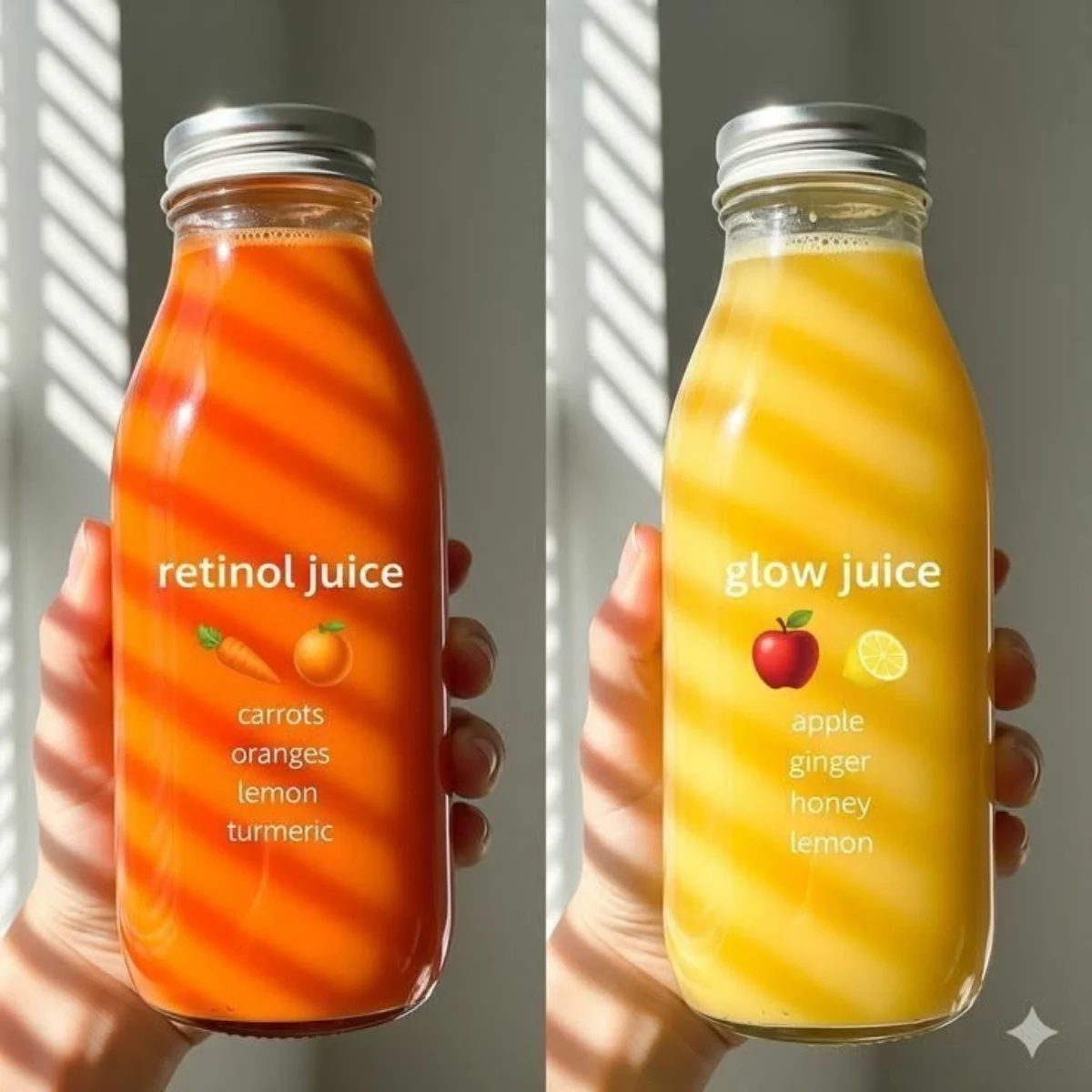
When you hear the words retinol juice and glow juice recipes, it is easy to picture a tall glass of something vibrant, fresh, and deeply colorful. These drinks are not about complicated techniques or hard-to-find powders. They are built around real, whole ingredients that many of us already reach for when we want to feel a little brighter from the inside out. Think of carrots glowing in warm orange tones, ruby-red beets that stain everything they touch, leafy greens that bring an earthy balance, and citrus fruits that wake up everything they meet. This topic keeps popping up in wellness conversations because it blends two powerful but approachable ideas: supporting your skin with nutrients that align with a retinol-aware lifestyle, and simply enjoying something that looks and tastes like sunshine in a glass.
What Makes These Juice Ideas Special
True topical retinol is a well-known skincare ingredient, but that is not what goes into the blender. In the world of homemade juices, the term retinol juice has become a friendly shorthand for drinks made with ingredients naturally rich in beta-carotene and vitamin A precursors. Your body converts these compounds into vitamin A at its own pace, which is part of the reason carrot-based blends are so popular in this category. Glow juice, meanwhile, is the lighter, often brighter sibling. It leans into hydration, vitamin C, and antioxidants from fruits and vegetables that make your skin look awake and fresh. Together, these two ideas give you a complete little toolkit: one side focuses on deep nourishment, and the other focuses on immediate radiance and hydration.
The real beauty of these recipes is that they do not lock you into a single rigid formula. You can wake up on a Monday and crave a rich, savory orange blend, then pivot midweek to a light green juice that tingles with ginger and cucumber. Both fit under the same umbrella, and both give you a reason to reach for produce that might otherwise sit untouched in the crisper drawer.
Why This Approach Deserves a Spot in Your Routine
Making room for retinol juice and glow juice recipes is less about following a strict protocol and more about adding one colorful, intentional moment to your day. Many of us already layer serums and moisturizers onto our skin with care, so pairing that external effort with what we drink feels like a natural next step. The ingredients at the heart of these juices arrive with a generous dose of vitamins, minerals, and water, all of which contribute to how your skin looks and how your body feels. Hydration alone can shift the appearance of your complexion, and when it comes packaged with antioxidants and phytonutrients, you are simply giving your skin more of what it needs to do its job well.
There is also a mental shift that happens when you take a few minutes to wash, chop, and blend beautiful produce. The process itself is grounding. Watching carrots turn into liquid gold or seeing beets bleed their deep magenta color into a pitcher can genuinely lift your mood. That kind of quiet pleasure is worth as much as the nutrients in the glass.
Key Visual Elements and Color Pairings
One of the most satisfying parts of crafting retinol juice and glow juice recipes is playing with natural color. Retinol-inspired juices tend toward deep orange, coral, and sunset-red hues. Carrots form the base, and you can deepen the shade with a small slice of roasted sweet potato, a chunk of mango, or a sliver of red bell pepper. Turmeric adds a golden tint and a warm, peppery note that feels surprisingly cozy in a cold juice.
Glow juices lean green, pale gold, or vivid pink. Cucumber, green apple, celery, and romaine lettuce give you that clean, almost translucent green color that looks crisp in a clear glass. For a pink glow juice, watermelon blended with a squeeze of lime and a few fresh mint leaves creates something that feels like a spa treatment in drinkable form. Beet and orange combinations hit a stunning middle ground between the two categories, giving you the earthy sweetness of a retinol juice with the bright, cheerful pop of a glow drink. Layering colors in a single glass is another lovely trick: pour a thin carrot-mango layer first, then gently float a spinach-apple blend on top for a two-tone pour that feels special enough for guests.
Building Your Ingredient Palette
Understanding the core ingredients helps you mix and match confidently. Carrots and pumpkin are classic retinol-juice foundations because they are mild, slightly sweet, and packed with beta-carotene. Add a tiny amount of healthy fat, such as a few drops of avocado oil or a spoonful of hemp seeds blended in, to support absorption of fat-soluble vitamins. Leafy greens like spinach and kale are softer in flavor than they sound once blended with something sweet and acidic. Glow juice shines when you combine high-water-content produce like cucumber, celery, and watermelon with bright sources of vitamin C such as lemon, lime, orange, or kiwi.
Herbs and aromatics make everything more interesting. A thumb of fresh ginger brings warmth and a slight bite that balances sweeter juices. Mint and basil add a cooling, almost floral quality that works beautifully with melon and citrus. If you enjoy a little earthy depth, a small piece of raw beet goes a long way, but start with half a small beet so it does not overpower the drink. The goal is always a blend you genuinely want to finish, not one you have to choke down for the sake of your skin.
Ways to Adapt the Idea to Your Taste and Season
These recipes are forgiving and shift easily with the seasons. In cooler months, a warming retinol juice with carrot, orange, ginger, and a whisper of cinnamon feels like liquid autumn. You can gently warm it on the stove until just lukewarm without destroying the fresh taste. Summer calls for lighter, icier glow juices built from cucumber, watermelon, mint, and lime, blended with a handful of ice cubes until slushy and refreshing.
If you prefer a smoothie texture over a thin juice, use a high-speed blender and keep all the fiber in the drink. This gives you a thicker, more filling option that works as a light breakfast or an afternoon pick-me-up. For a clearer juice that feels closer to a pressed juice, strain the blended mixture through a nut milk bag or a fine mesh sieve, pressing gently to extract the liquid. The leftover pulp can be stirred into muffin batter, mixed into oatmeal, or added to soups, so nothing goes to waste. This small step turns one batch of produce into two useful things, which feels both resourceful and quietly satisfying.
Styling and Serving Inspiration
Part of the joy of retinol juice and glow juice recipes comes from how they look on the kitchen counter. Pouring a freshly made juice into a favorite glass can transform an ordinary afternoon into something that feels intentionally beautiful. Short, heavy-bottomed tumblers suit bright orange blends, while tall, slender highball glasses show off pale green glow juices perfectly. A thin slice of citrus perched on the rim, a sprig of fresh mint tucked against the glass, or a thin ribbon of cucumber curled inside the cup adds that little extra touch without any fuss.
If you are making a batch for friends or family, small glass bottles with lids let everyone grab their portion from the fridge. Layering a few different juices in one bottle creates a pretty gradient effect that makes people smile before they even take a sip. Serving the juice with a wide paper or metal straw makes the experience feel more leisurely and encourages slow sipping rather than gulping it down. Keep a small dish of extra citrus wedges and fresh herb sprigs nearby so everyone can tweak their own glass. This kind of simple, thoughtful setup turns a basic juice into a tiny ritual worth slowing down for.
Practical Tips for Busy Days
Mornings can be chaotic, and no one wants to deep-clean a juicer at seven a.m. Prepping ingredients in advance makes the whole process feel doable. Wash and chop carrots, trim greens, and peel citrus the night before, storing everything in separate airtight containers in the fridge. In the morning, all you have to do is drop everything into the blender, add a splash of water or coconut water, and blend. Cleaning a blender jar takes seconds compared to a masticating juicer, which is a real consideration on days when every minute counts.
Batch blending is another lifesaver. Make enough juice for two days, pour it into a tightly sealed glass jar filled to the very top to minimize air exposure, and store it in the coldest part of the fridge. The flavor is best within 24 hours, but a well-sealed jar keeps things fresh enough for a second day. Give it a gentle shake before pouring, since natural separation happens quickly. If you find the juice too thick after chilling, a splash of sparkling water lightens the texture and adds a pleasant fizz that feels celebratory even on an ordinary Tuesday.
FAQ
What is the difference between retinol juice and glow juice?
Retinol juice draws its name from ingredients naturally high in beta-carotene and vitamin A precursors, such as carrots, sweet potato, mango, and pumpkin. These support the body’s own vitamin A production. Glow juice focuses on hydration and vitamin C from ingredients like cucumber, celery, citrus, watermelon, and leafy greens. Both aim to support skin health, but retinol juice feels richer and more grounding, while glow juice is lighter and more immediately refreshing.
Do I need a juicer to make these drinks?
Not at all. A regular blender works beautifully for both styles. Simply blend the ingredients with a small amount of water or coconut water until completely smooth. For a thinner, pulp-free juice, pour the blended mixture through a nut milk bag or fine mesh strainer and gently squeeze out the liquid. For a thicker smoothie-style drink, skip the straining step and enjoy the fiber as part of the experience.
How long does homemade juice stay fresh?
Freshly made juice tastes best right away, but it can be stored in a tightly sealed glass jar in the refrigerator for up to 48 hours. Fill the jar as full as possible to limit air exposure, which helps preserve color and nutrients. Separation is completely normal, so give the jar a gentle shake before drinking. If the juice smells off or tastes fizzy when it should not, it is time to compost it.
Is it okay to add sweeteners or milk to these juices?
Absolutely. These recipes are meant to be adapted to your preferences. If a juice tastes too earthy or bitter, a small drizzle of honey, maple syrup, or a pitted date blended in can round out the flavor. Unsweetened almond milk, oat milk, or coconut milk can be used in place of water for a creamier, more latte-like texture that still delivers all the nutrient benefits. Start with a tiny amount and adjust gradually so the natural produce flavors still come through.
Can children enjoy these juice recipes?
Yes, and many kids are drawn to the bright colors and naturally sweet flavors of carrot, apple, watermelon, and citrus blends. For younger children, keep portions small and avoid adding ginger in large amounts, as the heat can be intense for sensitive palates. Straining the juice or blending it extra smooth can help with texture preferences. Always check for any specific food allergies and introduce new ingredients gradually, just as you would with any food.
The world of retinol juice and glow juice recipes is welcoming, flexible, and full of color. Whether you land on a rich carrot-ginger blend or a pale green cucumber-mint cooler, the simple act of choosing real, vibrant ingredients is a quiet way to care for yourself. There is no perfect formula and no single right answer. There is only your kitchen, your blender, and the produce aisle waiting for you to try something new. Start with what you have, follow the colors that catch your eye, and let your own taste guide the way.