
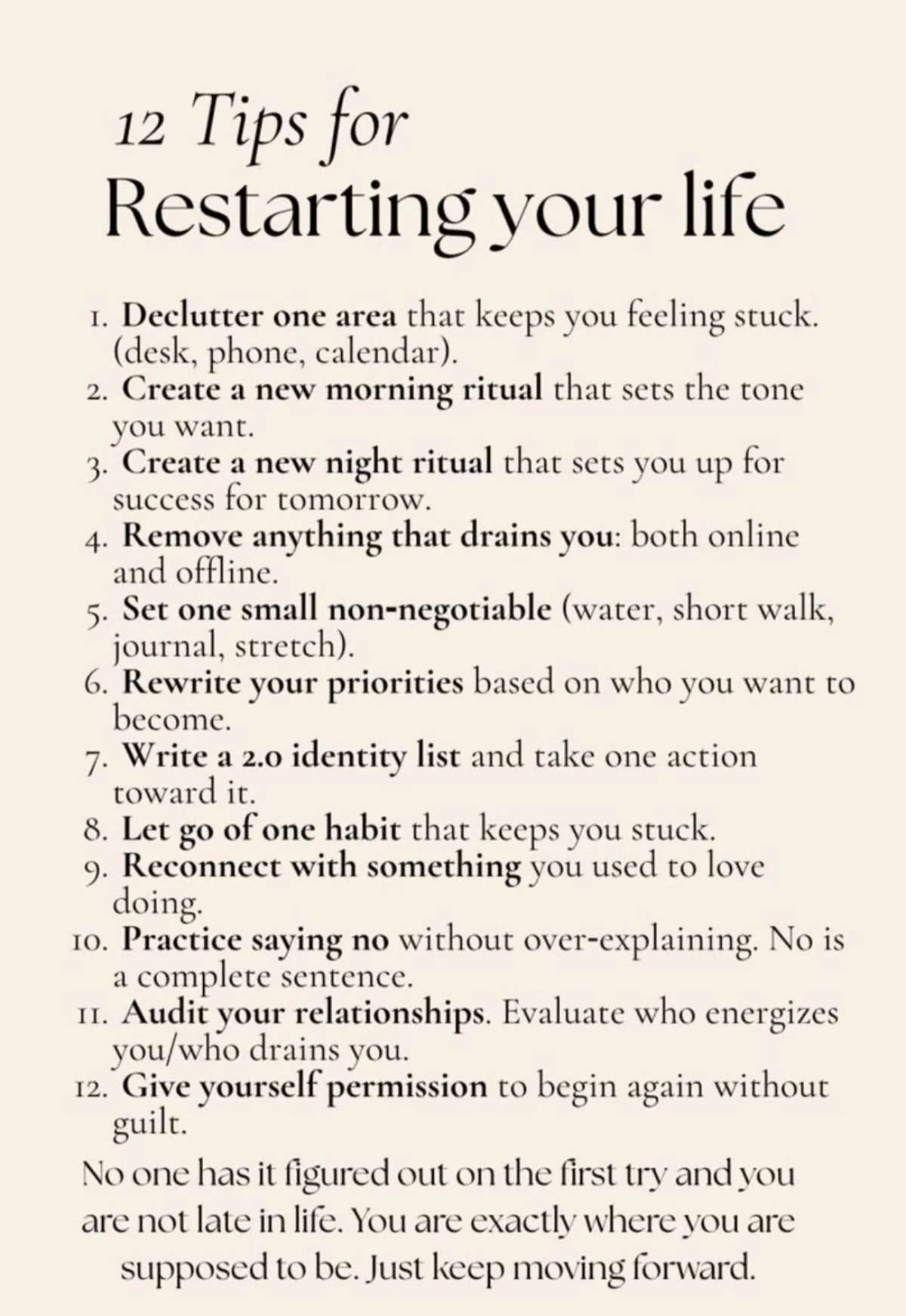
Restarting your life rarely happens with a dramatic bang. It usually begins in a quiet moment when you realize the old ways of being no longer fit. Maybe you have just left a long-term relationship, lost a job, moved to a new town, or simply woken up feeling disconnected from the person you’ve become. Starting over feels enormous and often heavy, like standing at the base of a mountain with no trail map. But putting one foot in front of the other is possible, and it doesn’t require abandoning everything you know. These 12 tips for restarting your life are meant to be gentle companions for the messy, beautiful, entirely human process of becoming who you want to be next.
Why Thoughts Get Tangled During Big Life Changes
The mind turns fuzzy when you stand at a crossroads. You might want to sell all your furniture and book a one-way flight, or you might want to hide under a weighted blanket and wait for the feeling to pass. Both impulses make sense. Our brains crave certainty, and a life restart rips up the script. Without familiar cues of who we are, the old stories start to shout: you can’t do this, it’s too late, what will people say?
These thoughts aren’t truths; they’re mental static. Recognizing the static is the first stitch in a new pattern. Reframing your internal narrative benefits every other step you take. When you name the fear instead of letting it drive the car, you free up room to make decisions rooted in curiosity rather than panic.
Why This Is Worth Trying
No one warns you how much energy it takes to pretend you’re fine when you’re not. The slow drain of staying stuck can affect your sleep, dull your appetite, and soften your sense of purpose. Moving toward a deliberate restart doesn’t guarantee a painless path, but it does give you back a sense of agency. Research on intentional change shows that people who engage with difficult transitions actively rather than passively tend to build greater emotional resilience over time.
Small changes cascade. Waking up ten minutes earlier to sit with a cup of tea sounds too simple to matter, yet tiny rituals like this teach your brain that you are a person who keeps promises to yourself. That self-trust becomes the foundation for larger leaps. Giving yourself permission to restart is a profound act of self-compassion, one that whispers: you are not your past mistakes, and you are allowed to grow.
Unraveling the Fear of Starting Over
Underneath the logistics of a fresh start usually sits a lump of fear so heavy it can stop you cold. Fear of judgment. Fear of financial instability. Fear that you’ll fail and have to return to your old life with your tail between your legs. This fear isn’t a weakness; it’s a leftover protector from a time when belonging to the tribe meant survival.
Today, letting fear run the show often keeps you from meaningful growth. Instead of trying to banish fear, treat it like a nervous backseat driver. Acknowledge its presence without letting it grab the wheel. Write down your specific fears on paper. Seeing them in your own handwriting shrinks them from a shapeless monster into a problem you can solve piece by piece.
Practical Ways to Lay Fresh Groundwork
When you look at the entire mountain, your legs give out before you take a step. Break the view into bite-sized pieces. Practical groundwork isn’t glamorous, but it’s what holds you up when motivation wavers.
- Declutter one surface. Clear your nightstand or kitchen counter. External chaos mirrors internal chaos, and creating a small pocket of order signals to your brain that change is happening.
- Build a simple morning anchor. Before you reach for your phone, drink a full glass of water, stretch for two minutes, or step outside to sniff the air. This anchors your day in your body rather than the digital world.
- Create a financial snapshot. Even if the numbers are scary, write down exactly what you have and what you owe. You can’t build a bridge without knowing the width of the river.
- Protect your sleep window. Rest is not a reward for productivity; it’s the fuel that lets you think clearly enough to make hard decisions.
Feeding Your Energy Through Food and Movement
When life feels unsteady, the body becomes a barometer. You might notice grabbing sugary snacks for comfort or skipping meals altogether because the knot in your stomach disguises hunger. These habits affect your mood regulation and energy crashes make everything feel worse.
This isn’t about starting a strict diet or an intense exercise routine. That urgency often backfires. Instead, look for gentle additions. Add a handful of greens to your lunch, not because you “should,” but because your body deserves fuel that supports steady energy. Walk around the block without headphones, letting your thoughts bounce around freely. Movement untangles sticky emotions when you least expect it. Feed yourself like you’d feed a friend going through a tough transition: with warmth, patience, and zero judgment.
Redesigning Your Relationships During a Reset
A personal restart acts like a filter for your social circle. Some people will cheer you on, and others will subtly or loudly resist your changes. Old habits between friends run deep, and when you stop meeting someone for bottomless brunch every Sunday to work on a creative project, they might feel abandoned.
Let relationships find their new shape naturally without forcing a dramatic confrontation. At the same time, seek out voices that understand what you’re building. This might mean joining a local hiking group, finding a quiet book club, or simply sitting in a coffee shop where people gather around shared interests. Loneliness in transition is real, but isolation is optional. Reach out, even when your instinct says to hide.
12 Gentle Tips for Restarting Your Life
These tips aren’t a checklist to complete by Friday. Treat them like a deck of cards you can shuffle and pull from when you need guidance.
- Grieve the old chapter. Before rushing into the new, acknowledge what you’re leaving behind. Even a bad situation held something you cared about. Let yourself feel the loss.
- Write your one-sentence intention. “I want to feel safe in my body” or “I want to build a career that uses my creativity.” Keep it simple and alive.
- Start a curiosity journal. Not a gratitude journal, but a place where you jot down things that spark even a flicker of interest. A type of bird, a podcast topic, a color combination. Follow the sparks.
- Take a social media pause. Give your brain a break from comparison. A week or a month away from the highlight reels of others lets your own quiet voice grow louder.
- Change your environment in small ways. Move your chair to face a different wall. Buy a new lampshade. Plant basil seeds. Fresh physical surroundings help your brain accept that things are shifting.
- Say no without a lengthy explanation. “That doesn’t work for me right now” is a complete sentence. Protect your rebuilding energy.
- Learn one tiny new skill. Bake bread from scratch, learn to change a bike tire, or memorize a poem. Mastering something small reminds you that you are capable of growth.
- Create a comfort playlist. Music that feels like a deep exhale can regulate your nervous system during moments of panic. Fill it with songs that feel like home.
- Volunteer for two hours. Shifting focus away from your own pain toward someone else’s need provides perspective without ignoring your own struggle.
- Write a letter to your future self. Seal it and set a calendar reminder to open it in six months. Describe how you hope you’ll feel, not just what you hope you’ll have.
- Forgive yourself for past choices. You made decisions with the information and emotional capacity you had at the time. Carrying shame won’t make the new path easier.
- Celebrate a “nothing” day. Schedule a day with zero expectations. A full reset sometimes requires soft pants, a silly movie, and permission to stop striving.
Common Roadblocks and What to Do About Them
Even with the best intentions, you’ll hit walls. The most common one is the myth of the clean slate. You don’t suddenly become a different person at midnight. Your history travels with you, and that’s actually okay. The goal is integration, not erasure.
Another roadblock is telling everyone your detailed plan too early. Talking about your grand restart can give you a premature dopamine hit that tricks your brain into feeling the achievement without the work. Hold some of your dreams close to your chest until they’ve grown roots. Social pressure and unsolicited advice can drown a tender new vision.
When progress feels invisible, go back to paper. Note three small ways today looked different from three months ago. A quieter inner critic, a cleaner closet, a single phone call you finally made. The growth is there, hiding in the small print.
Frequently Asked Questions
How do I know if I need a full life restart or just a small change?
A full restart usually calls to you persistently, not just on a terrible Tuesday. If the discontent sits in your bones for months and taints multiple areas of your life, your work, your health, your close relationships, it may be time for a broader reset. Small changes, on the other hand, feel like relief within a generally functional framework. Check in with your body. Jaw tension, poor sleep, and a heavy chest that lingers often signal a deeper need.
What if my family doesn’t support my decision to start over?
Family resistance stings, especially when you’re already feeling fragile. Understand that their response is often about their own fears, not your capabilities. Your change might threaten their sense of stability. You don’t need their enthusiastic approval to move forward. Build a chosen support system outside the family circle, and set gentle but firm boundaries around conversations that descend into criticism. Their feelings are theirs to manage.
Can I restart my life after 40 or 50?
Absolutely. The idea that life hardens into a fixed shape by a certain age is a cultural myth. A later-in-life restart often comes with advantages younger people lack: deeper self-knowledge, clearer priorities, and a lower tolerance for nonsense. The path might involve different logistics, but the emotional process is ageless. Countless people have found their most satisfying careers, relationships, and passions in their fifth, sixth, and seventh decades.
How long does it take to feel normal again after a big fresh start?
There is no tidy timeline, and chasing “normal” can add unnecessary pressure. The first few weeks often feel disorienting. After about three months, small routines start to feel more solid. Around six months, you might notice a shift in your inner identity; the new life starts to feel like yours instead of a borrowed coat. Be patient with the wobbles. Healing and rebuilding are seasonal, not linear.
What do I do when I miss my old life?
Missing your old life is completely natural and doesn’t mean you made the wrong choice. It means you’re human. You might miss the comfort of the known even when that known was painful. When nostalgia hits, don’t fight it. Honor the good moments you remember while gently reminding yourself of the reasons you left. One bittersweet truth of growth is that you can hold gratitude for the past while still choosing a different future.
A Quiet Breath Before You Begin
Restarting your life is not an event with a ribbon-cutting ceremony. It’s a slow, tender, everyday act of paying attention to your own needs. Some mornings you’ll wake up convinced you’ve made a terrible mistake, and other mornings the sunlight will hit your kitchen table in a way that feels like pure hope. Trust both mornings equally.
You are already doing the brave work just by reading these words and imagining a different way forward. There is no perfect time, no perfect plan, and no perfect version of you waiting at the finish line. There’s just a person, standing in the middle of their story, holding the pen. You get to write the next sentence, and the one after that.