
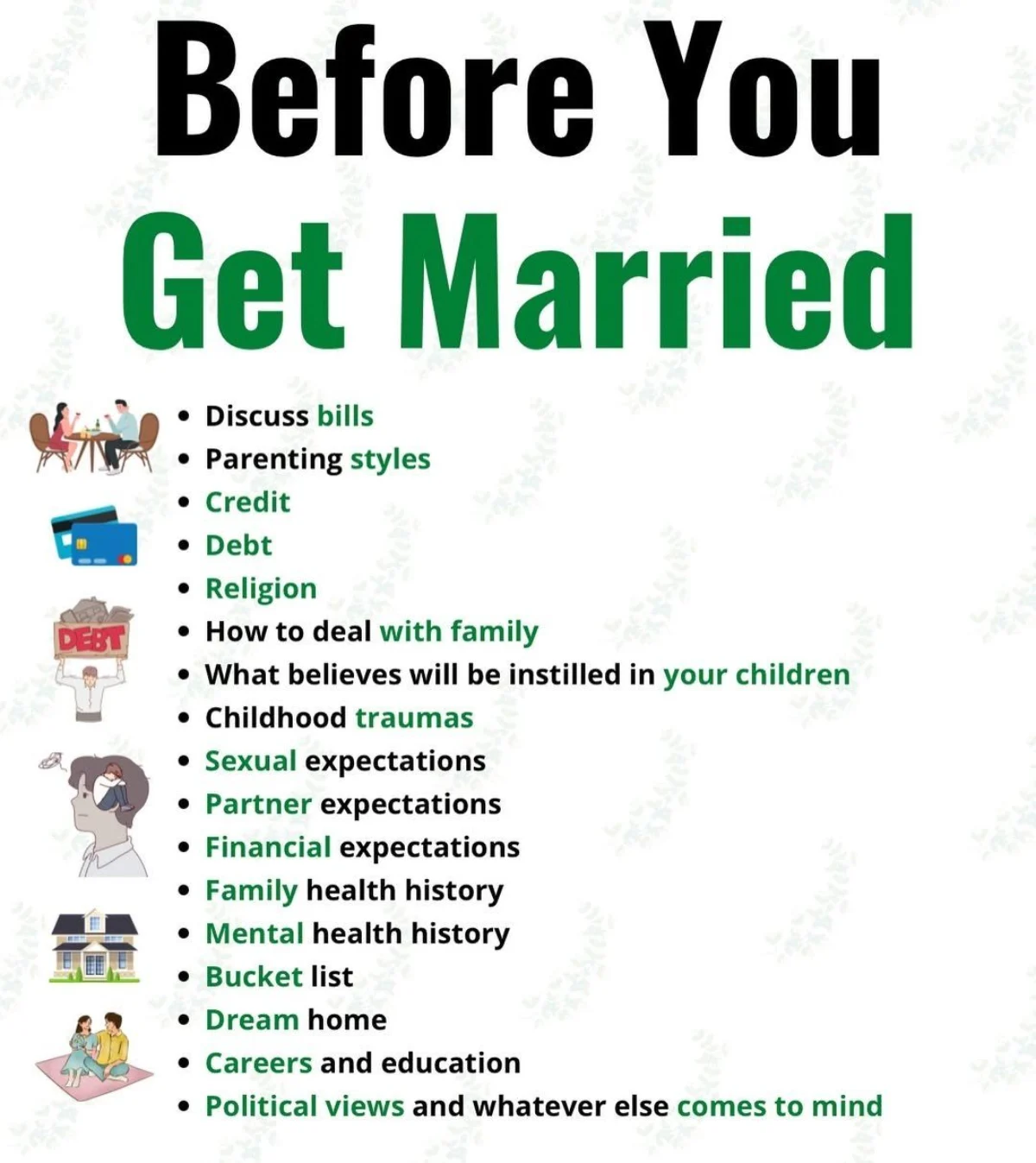
It’s easy to get caught up in the rush of wedding planning. The venue, the guest list, the catering—these logistical decisions can easily consume your entire engagement. But while you’re picking out table linens, there’s a quiet, more significant planning process happening in the background. You are deciding how you will grow old together, how you’ll handle conflict, and what your shared life will actually look like once the honeymoon is over. Talking through the important topics to discuss before marriage isn’t about testing your relationship; it’s about honoring it. True compatibility doesn’t mean you agree on everything. It means you know how to navigate the differences with honesty and respect.
Why These Conversations Matter More Than the Seating Chart
Every couple brings a hidden suitcase into the relationship. It’s packed with childhood experiences, unspoken expectations about roles, private fears about money, and deep-seated hopes for the future. When you avoid a difficult conversation, you’re not keeping the peace; you’re simply piling items into that suitcase until it becomes too heavy to carry.
Bringing these topics into the light before the wedding can feel vulnerable. But vulnerability is the gateway to trust. When you speak openly about money or family, you send each other a clear message: this relationship is safe enough to hold the messy parts, not just the polished ones. Knowing you can repair a disconnect before a crisis hits is a gift you give your future selves.
The Financial Foundation You’re Actually Building
Money has a strange emotional charge. We grow up believing it’s rude to bring it up, yet rarely an argument passes without a financial undercurrent. A marriage is an economic partnership, whether you merge every dollar or keep separate accounts. Getting past the surface question of “Are you a saver or a spender?” is crucial.
This means pulling out actual numbers, not vague estimates. You need a full accounting of each other’s realities: student loan debt, credit card balances, and credit scores. But then you dig deeper. What did your parents teach you about money? Does one of you see cash as security while the other sees it as freedom? Discuss how you’ll handle a financial emergency, how you’ll save for a home, and whether you intend to support aging parents one day. You aren’t just planning a budget; you are building a shared philosophy around resources.
A healthy approach involves a practical system, too. Some couples prefer the “yours, mine, and ours” method with a joint account for household bills and personal accounts for individual spending. Regardless of the system, a standing monthly “money date” to discuss cash flow over coffee can remove the dread and turn it into a routine check-in.
Navigating Family Ties and In-Law Dynamics
When you marry, you don’t just marry a person; you connect to an entire family system with its own unspoken rules, holiday traditions, and communication styles that might feel completely alien to you. The idea that you will simply “love each other’s families” is nice, but it’s not always practical. The reality is often more complicated.
You have to define your own team boundary. This doesn’t mean being hostile to parents or siblings. It means making it explicitly clear that your loyalty is now to the family you two are creating. Talk about how often you’ll visit during the holidays. Rotating, staying home, and setting limits are all valid choices, but they require a united front. If a parent tends to overstep, you need to agree on how to gently but firmly handle those moments so the burden of boundary-setting never falls solely on one partner. It’s about protecting the relationship bubble you’re building together.
Understanding Conflict Styles Before the Clash
Falling in love with someone who handles a disagreement just like you do is rare. Often, one partner wants to tackle an issue head-on immediately, while the other needs silence to sort through their emotions. Without a conversation about these patterns, one person feels abandoned while the other feels chased.
Ask each other how conflict was handled in your childhood homes. Was it explosive, followed by warm resolution? Or was it a quiet, simmering tension that was never truly acknowledged? These patterns leave a blueprint. Once you understand the blueprint, you can redraw it. Agree on a signal or a phrase that means “I need a break, but I’m coming back to this.” It’s a safety valve that prevents discussions from escalating into fights that cause permanent damage. It’s completely valid to postpone a difficult talk until you’ve eaten, rested, and the adrenaline has left your system.
Carving Out a Shared Vision for Daily Life
Marriage is lived in the small hours. It’s found in the quiet of a Tuesday night, not just on anniversaries or European vacations. Too often, couples assume they share the same vision of a daily rhythm without actually describing it.
Get granular with it. Picture a typical weekday in five years. Who does the grocery shopping? Who makes the morning coffee? How do you wind down after work? For some, quality time means doing a dedicated activity together. For others, it’s simply existing in the same room with a book while your partner plays a video game. Neither is wrong, but you must articulate it. If one partner expects a run together every evening but the other needs thirty minutes of absolute solitude after logging off from work, resentment can brew silently. Clearing the air about the mundane makes space for genuine connection.
The Deeper Intimacy and Family Planning Talk
Intimacy isn’t a static, sparkling thing that just stays lit. It fluctuates. It’s shaped by stress, exhaustion, health, and the sheer busyness of life. Pre-marital counseling often uncovers that couples are deeply relieved to finally voice fears about mismatched expectations in this area. Opening this conversational door now makes it safer to check in later, when life throws its inevitable curveballs.
Similarly, a vague “we want kids someday” isn’t enough. Delve into the specifics that challenge you. What happens if having a biological child is difficult? Are you open to fertility treatments or adoption? How do you imagine dividing the load of childcare and the mental load of knowing which permission slips are due? A “great father” or “great mother” can mean wildly different things to different people. Clarify your definitions. This is the moment for radical honesty, even if it means saying, “I’m actually leaning toward not having children,” and trusting your partner to hold that truth with care.
Important Topics to Discuss Before Marriage: Keeping the Dialogue Open
These conversations aren’t a test you pass and then forget. They are heavy doors you push open together, letting the light reach the dusty corners of expectation and fear. The goal isn’t a flawless agreement on every point. The goal is a pattern of communication where you both feel safe enough to speak the truth, even when your voice shakes a little.
A practical way to begin is by simply choosing one topic. Don’t ambush your partner. Instead you might say, “I’d really love to set aside an evening this week to talk about how we want to handle holidays. No pressure, just curiosity.” Pour something warm to drink. Sit on the couch rather than across a table. Hold hands. Physical contact grounds you in the fact that you are on the same side. Listen to understand the sentiment beneath the words, and let the wedding seating chart wait until tomorrow.
FAQ
Is it okay to disagree on some of these big topics?
Absolutely. Disagreement is inevitable and even healthy. Complete agreement often means someone isn’t being entirely honest. What matters isn’t the lack of conflict, but the ability to navigate it with kindness. Finding a workable middle ground or a compromise that leaves neither partner feeling bulldozed is a sign of a resilient, mature relationship.
What if we keep having the same argument?
Recurring arguments often mean the surface topic isn’t the real issue. You might be fighting about an unwashed dish, but the root is a feeling of being undervalued or carrying an unseen mental load. When you notice a loop, pause and gently ask a deeper question: “I know we’re talking about the chores chart, but is there a bigger feeling of being unsupported here?” Often, acknowledging the hidden hurt defuses the surface battle.
Should we consider a prenuptial agreement?
Thinking about a prenup might feel unromantic, but it’s fundamentally a conversation about fairness and clarity. It forces a full financial accounting and frames how you would thoughtfully unwind your partnership if life took an unforeseen turn. The process of drafting one, even if you don’t sign it, often brings up important values about money and responsibility that simply don’t surface in casual dating chats.
Can we do this on our own, or do we need a counselor?
Many couples start these chats on quiet walks or over long dinners. However, a good pre-marital counselor doesn’t just referee conflict; they provide a roadmap. Counselors know the hidden potholes. They ask questions you haven’t thought of. Seeing a neutral third party isn’t an admission of a problem. Rather, it’s a proactive step toward building a skill set in communication that affects everything from your parenting to your retirement, making it one of the most practical wedding investments you can make.
As your wedding approaches, remember that the strongest marriages are private before they are public. The flowers will wilt, the band will pack up, and the guests will go home. But the feeling of being fully and completely known by the person standing next to you? That is the part that lasts. By sitting with the discomfort of unknown answers and handing over your whole heart—worries, debts, dreams, and all—you aren’t just planning a ceremony. You are cultivating a home that exists between two people, strong enough to withstand the storms that every life eventually brings.