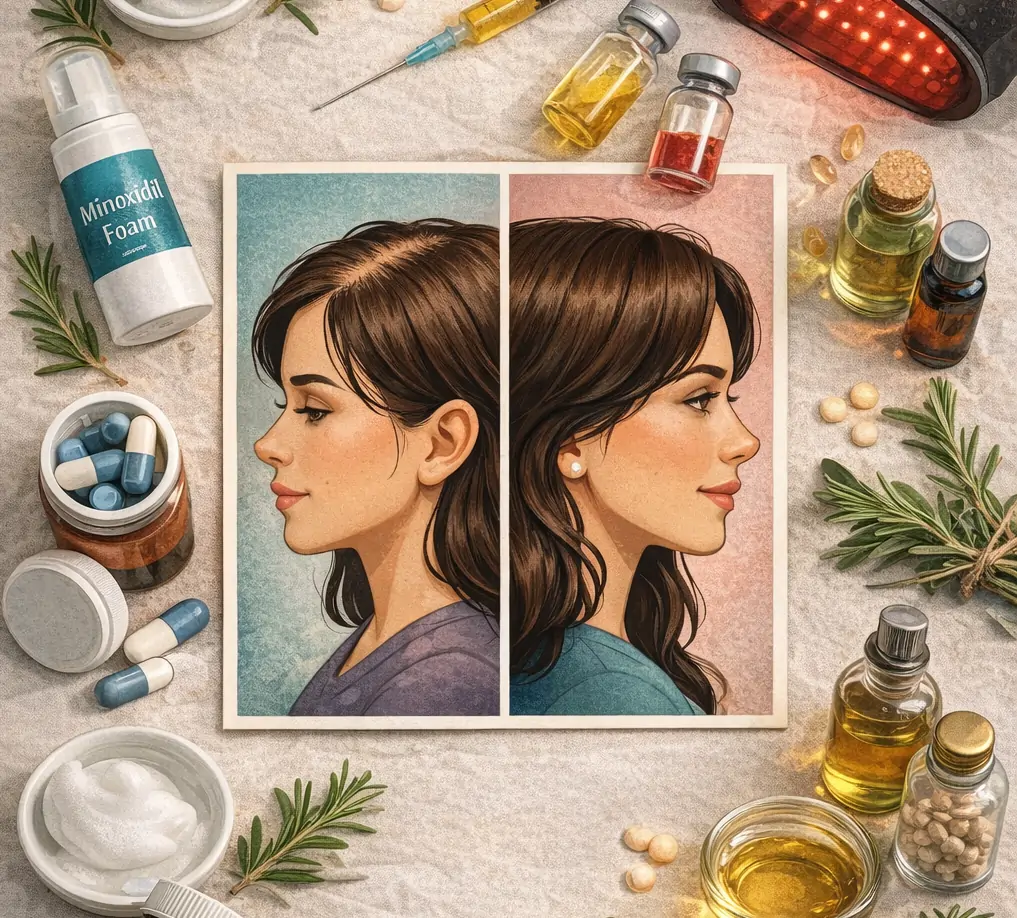
Dealing with hair loss as a woman can feel incredibly isolating, but here is the truth: you are far from alone. Statistics suggest that nearly 40% of women will experience visible hair thinning by age 50. Whether you are noticing a widening part, a thinner ponytail, or more strands in the shower drain, understanding the “why” is the first step toward the “how.”
In this comprehensive guide, we will dive into the most effective medical treatments, including Spironolactone, the latest in Female Pattern Hair Loss (FPHL) protocols, and the lifestyle shifts that actually move the needle.
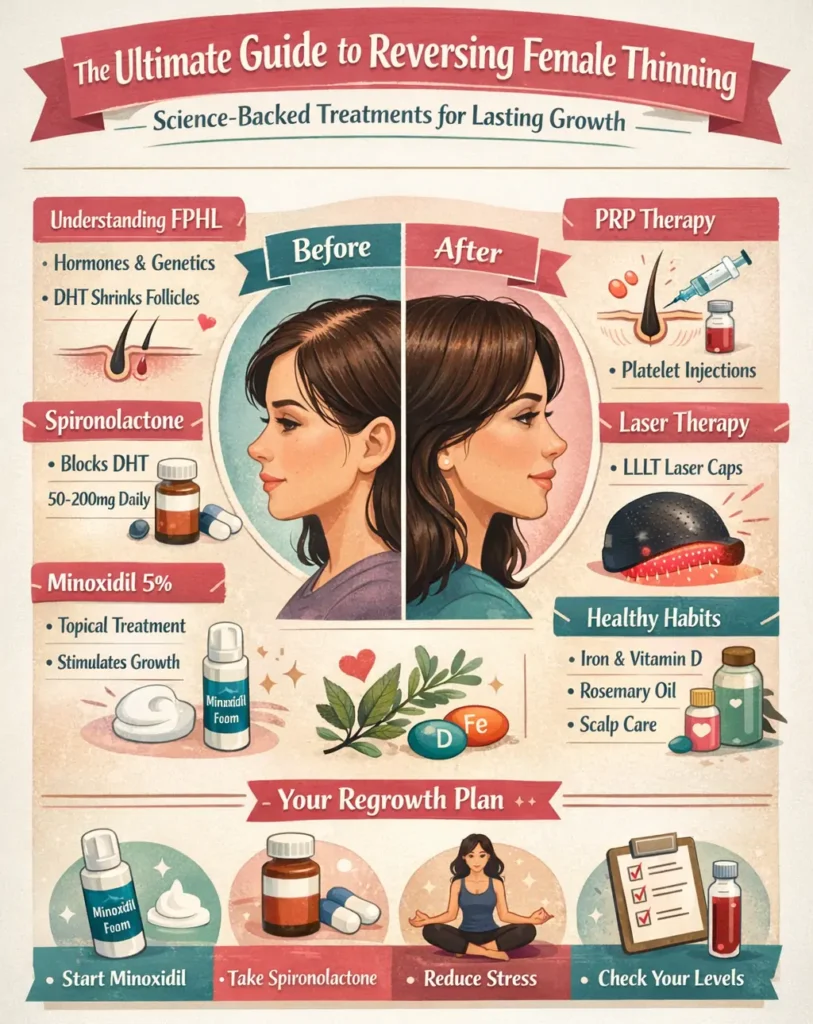
Understanding Female Pattern Hair Loss (FPHL)
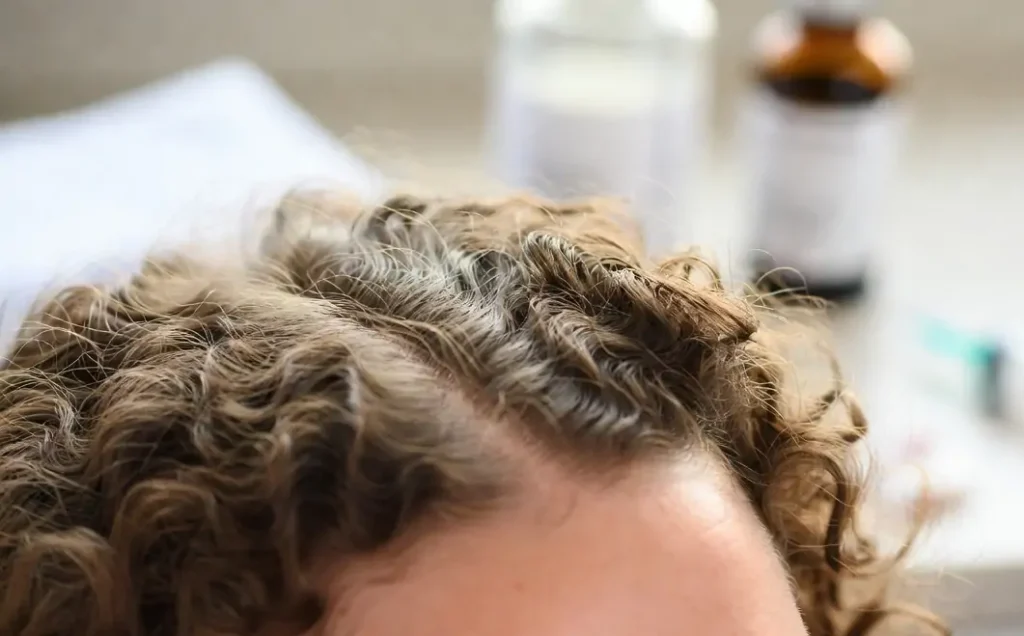
Unlike men, who often see a receding hairline, women typically experience diffuse thinning across the top and crown of the scalp. This is often medically referred to as Androgenetic Alopecia.
Why Is It Happening?
The culprit is usually a combination of genetics and hormones. Specifically, a byproduct of testosterone called DHT (Dihydrotestosterone) can cause hair follicles to shrink, or “miniaturize.” Over time, the hair produced is thinner, shorter, and eventually, the follicle stops producing hair altogether.
Spironolactone for Hair Loss: Is It the Right Choice?
One of the most talked-about treatments in dermatology today is Spironolactone. Originally used to treat high blood pressure, doctors now frequently prescribe it “off-label” for female hair loss.
How It Works
Spironolactone is an anti-androgen. It works by:
- Reducing the production of androgens (male hormones) in the body.
- Blocking the action of DHT on your hair follicles.
What to Expect
- Dosage: Most dermatologists prescribe between 50mg to 200mg daily.
- Results: This isn’t an overnight fix. It usually takes 6 to 12 months to see significant regrowth or stabilization.
- Side Effects: Since it’s a diuretic, you may experience increased urination, breast tenderness, or changes in your menstrual cycle.
Important Note: Spironolactone is not suitable for women who are pregnant or planning to become pregnant, as it can interfere with fetal development.
Gold Standard Treatments for Regrowing Hair
If you want to see real results, you often need a multi-pronged approach. Here are the top-rated solutions currently available:
1. Topical Minoxidil (Rogaine)
This remains the only FDA-approved over-the-counter treatment for female hair loss.
- The 5% Foam: Research shows that the 5% concentration, used once daily, is more effective than the 2% solution.
- Pro Tip: Don’t stop when you see growth! Minoxidil is a commitment; if you stop, the new hair will likely shed within a few months.
2. Low-Level Laser Therapy (LLLT)
Laser caps and combs use medical-grade lasers to stimulate cellular activity in the follicles. It sounds like science fiction, but it’s a cleared FDA treatment that improves hair density by increasing blood flow to the scalp.
3. Platelet-Rich Plasma (PRP) Therapy
This is a clinical procedure where your own blood is drawn, processed to concentrate the platelets, and then injected into the scalp. These platelets contain growth factors that jumpstart dormant follicles.
The New Frontier: Holistic and Lifestyle Tips
While medication handles the hormones, your body needs the right “building blocks” to produce healthy hair.
Nutritional Essentials
Your hair is a non-essential tissue, meaning your body sends nutrients to your heart and lungs first. If you are deficient, your hair suffers.
- Ferritin (Iron): Low iron is a leading cause of thinning in women. Aim for ferritin levels above 70 ng/mL for optimal growth.
- Vitamin D: Acts like a pro-hormone for hair follicles.
- Biotin and Zinc: Support the keratin structure of the hair.
Scalp Health is Hair Health
Think of your scalp as the “soil” and your hair as the “plant.”
- Scalp Massages: Using a rosemary oil blend (which some studies suggest is as effective as 2% Minoxidil) for 4 minutes a day can increase hair thickness by stretching the follicle cells.
- Ketoconazole Shampoo: Using an anti-dandruff shampoo containing 1% or 2% ketoconazole can help reduce scalp inflammation and block local DHT.
Comparison of Popular Treatments
| Treatment | Method | Best For | Recovery Time |
| Minoxidil | Topical Foam | Early-stage thinning | 3-6 Months |
| Spironolactone | Oral Tablet | Hormonal/PCOS related | 6-12 Months |
| PRP Injections | Clinical Procedure | Advanced thinning | 4-8 Months |
| Laser Caps | At-home Device | Maintenance & Density | 6 Months |
Common Myths About Female Hair Loss
- Myth: Washing your hair too much causes hair loss. * Fact: Washing actually keeps the scalp clean and free of DHT-laden sebum. The hair you see in the drain was already detached; the water just helped it fall.
- Myth: Only “old” women lose hair. * Fact: Many women notice thinning in their 20s and 30s due to stress (Telogen Effluvium) or PCOS.
- Myth: Biotin alone will fix everything. * Fact: Unless you are deficient, extra biotin won’t stop genetic thinning. It makes hair stronger, but it doesn’t block the hormones causing the loss.
Building Your Regrowth Routine
If you are ready to take action, here is a recommended “Starter Protocol”:
- Consult a Professional: Get blood work done to check your Iron, Vitamin D, and Thyroid levels.
- Start Minoxidil 5%: Apply it to a dry scalp every night before bed.
- Incorporate Rosemary Oil: Use it as a pre-wash treatment twice a week.
- Manage Stress: High cortisol (the stress hormone) can push hair into the “shedding” phase prematurely.
When to See a Doctor
If your hair loss is accompanied by a rash, redness, pain, or if it is falling out in sudden patches (Alopecia Areata), seek a dermatologist immediately. These can be signs of autoimmune conditions that require steroid treatments rather than standard hair growth products.
Final Thoughts
Regrowing hair is a marathon, not a sprint. The most successful women are those who stay consistent with their routine for at least six months. Whether you choose the medical route with Spironolactone or a more natural approach with oils and vitamins, the key is to start early.
Your hair does not define your worth, but taking care of it is a powerful act of self-care.