Table of Contents
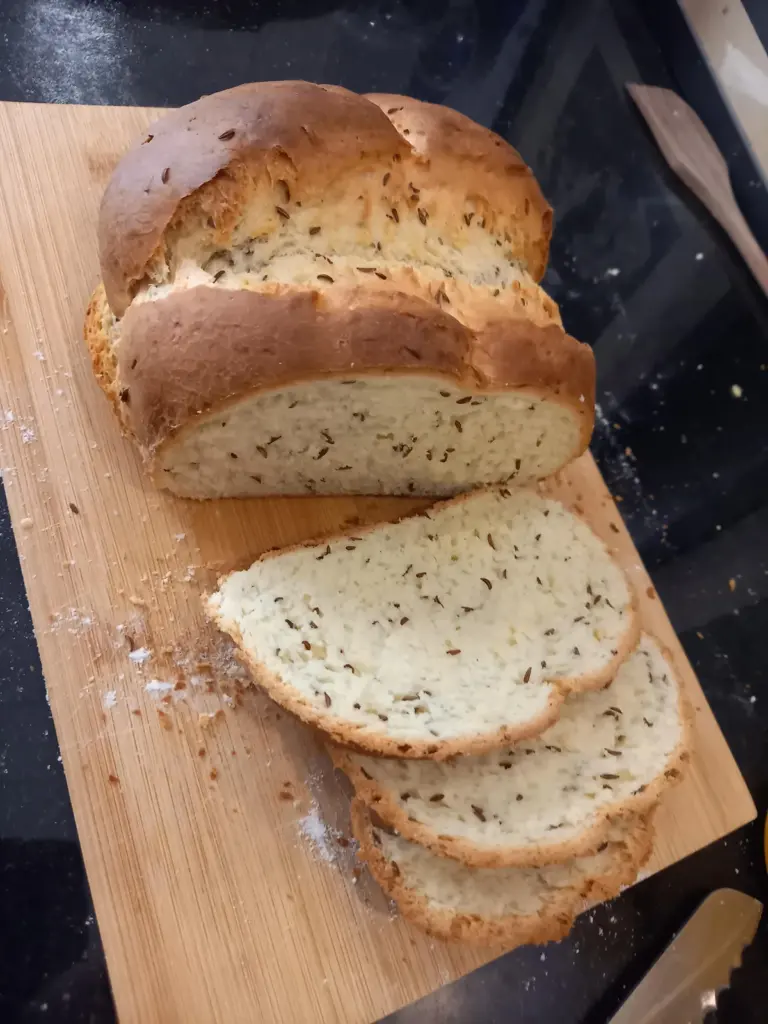
Have you ever heard of water-proofing bread dough? I hadn’t either until I stumbled on a recipe in a 1980s East German cooking magazine. The method is simple: you shape the dough into a ball, put it in a bowl, and cover it with cold water while it rises. Curious and a little skeptical, I gave it a try. The result was a tasty cumin-spiced loaf with a crisp crust and a soft, slightly crumbly interior. If you’re new to bread baking or just love old-fashioned kitchen experiments, this one is worth trying.
Quick Facts
- Skill level: Beginner (some kneading experience helpful)
- Time: About 2.5 to 3 hours (including rising)
- Materials: Flour, water, yeast, salt, cumin seeds, mixing bowl, baking sheet
- Finished size: One round loaf, about 8 inches across
What Is Water-Proofing?
Water-proofing is an old technique where you let the dough rise while submerged in cold water. The water keeps the dough from drying out and slows the rise, which can develop flavor. The recipe I found called for placing the shaped dough ball in a bowl and adding enough cold water to cover it. I was nervous—would it turn into a soggy mess? But it worked. The dough held together, and the bread baked up nicely.
Step-by-Step Instructions
This is a simple yeast bread, but the water-proofing step is unusual. Follow these steps for a loaf like the one in the photo.
- Make the dough: In a large bowl, combine 3 cups bread flour, 1 packet (2¼ teaspoons) active dry yeast, 1½ teaspoons salt, and 2 tablespoons cumin seeds. Add 1¼ cups warm water (about 110°F) and stir until a shaggy dough forms.
- Knead: Turn out onto a floured surface and knead for 10–12 minutes, until smooth and elastic. The original recipe may have called for less kneading, but I found a longer knead gives a better texture. Add flour as needed to prevent sticking.
- Water-proof the dough: Shape the dough into a tight ball. Place it in a clean mixing bowl and add enough cold water to cover the dough completely. Let it sit for 30 minutes. The dough will float and may puff slightly.
- Remove and rest: Gently lift the dough out of the water and pat dry with a clean towel. Place on a greased baking sheet. Let it rest for 15 minutes while you preheat the oven to 400°F (200°C).
- Bake: Score the top with a sharp knife if you like. Bake for 35–40 minutes, until the crust is golden and the loaf sounds hollow when tapped on the bottom.
- Cool: Transfer to a wire rack and cool completely before slicing.
Tips and Troubleshooting
Crumbly texture? My first loaf was a bit too crumbly because I didn’t knead enough. Next time, knead for the full 10–12 minutes. A longer knead builds gluten and gives a chewier crumb.
- Water temperature: Use cold water for the proofing step—not ice cold, but straight from the tap. Warm water would speed up the rise too much.
- Don’t skip drying: Pat the dough dry before baking so the crust can form properly.
- Cumin flavor: Cumin seeds are strong; adjust to your taste. You can also use ground cumin, but seeds give a nice texture.
- Flour choice: Bread flour gives the best structure. All-purpose works in a pinch, but the loaf may be slightly softer.
FAQs
- Can I use instant yeast instead of active dry?
- Yes, instant yeast works fine. Use the same amount and mix it directly with the dry ingredients.
- Why does the dough float in water?
- The yeast produces gas during fermentation, which makes the dough buoyant. If it sinks, it may need more rising time.
- How should I store the bread?
- Keep it wrapped in a clean towel at room temperature for up to 3 days. For longer storage, slice and freeze.
This bread is a fun conversation starter and a delicious companion to soups or stews. Give it a try and see what you think of the water-proofing method.