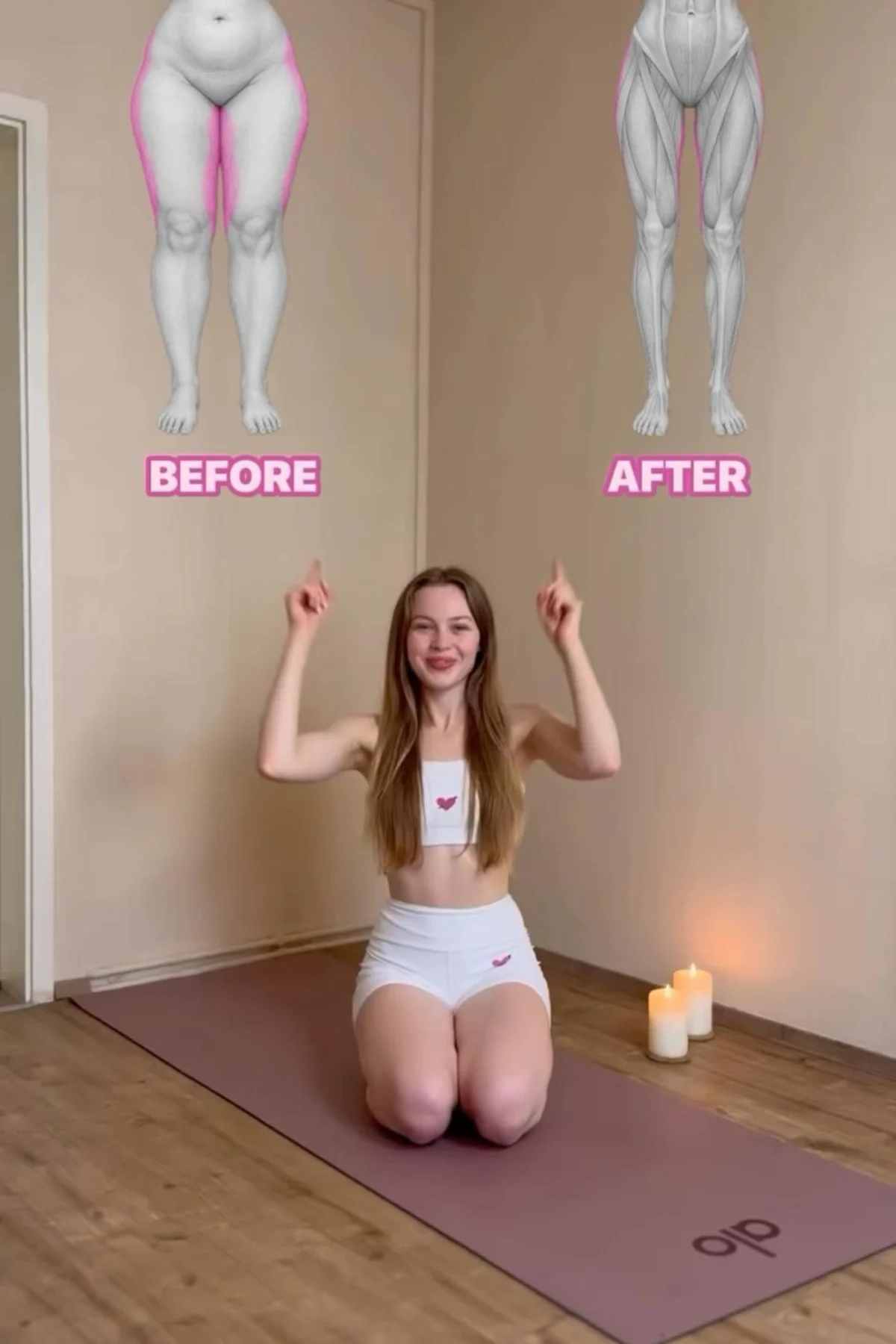
A leg workout transformation before after journey is one of the most rewarding physical evolutions you can undertake. It is rarely just about getting a “toned” look. The real story sits in the data you don’t see on social media: your walking posture, your climbing stamina, and a confidence that carries you through heavy doors. When we talk about a before-and-after scenario, we are talking about a timeline measured in consistent effort, not a seven-day miracle. The lower body houses the largest muscle groups, which means the potential for functional change is massive if you respect the process.
Why a Leg Workout Transformation Matters
Focusing on lower-body training creates a metabolic ripple effect that goes far beyond a pair of jeans fitting differently. Because the glutes, quads, and hamstrings are substantial muscles, they demand significant energy. Strengthening them increases your basal metabolic rate, which means your body becomes more efficient at utilizing energy even at rest. More importantly, a strong lower body is your structural foundation. The difference between “before” back pain and “after” relief often stems directly from glute activation and hip stability gained during consistent leg training.
There is also an underrated psychological shift. The “after” photo often reflects a person who has learned to push through discomfort safely. Mastering a controlled squat under tension requires mental fortitude. When you track a leg workout transformation before after, you are documenting proof that you can do hard things systematically. That mental grit spills into career decisions and daily discipline. It stops being about shrinking and starts being about building capacity—carrying groceries effortlessly, hiking without knee pain, and standing tall at the end of a long day.
Recognizing the True Starting Point
A proper start requires honest documentation that goes deeper than weight or thigh circumference. Legacy fitness markers like the scale often lie during a lower-body transformation because muscle density replaces fat volume. A person can lose three inches on their hips while the scale barely moves. That is why the “before” snapshot needs to include functional baselines. Take notes on how many bodyweight squats you can do with proper form, not just how your legs look in a mirror. Capture your posture from the side—many find their anterior pelvic tilt begins correcting naturally as posterior chain strength builds.
Photograph your starting position under neutral lighting. Avoid flexing artificially, sucking in, or altering your stance to appear a certain way. The value of a leg workout transformation before after record lies in its authenticity. Wear the same fitted attire you plan to use for your mid-point and final check-ins. These consistent visual bookmarks prevent the brain’s tendency to overlook gradual change. When you feel stuck, a side-by-side comparison of hamstring curvature or quad separation will tell the truth that daily self-perception hides.
Base Movements That Drive Visible Change
You do not need a complex list of isolation exercises to spark a dramatic before-and-after shift. The lower body responds most efficiently to compound loading that recruits multiple joints. A deep goblet squat, where you hold a weight against your chest and descend with control, teaches the hips and spine to work together. Romanian deadlifts develop hamstring length and resilience that immediately improves the shape of the posterior thigh. Walking lunges add a stability challenge that polishes the smaller muscles around the knee and ankle, which often determine the overall silhouette of the leg.
Progressive overload is the engine behind any real transformation. Your muscles adapt only when you ask them to handle slightly more tension over time. That could mean adding five pounds to a barbell, slowing the lowering phase of a squat to a four-count, or reducing rest periods between sets. Pay attention to tempo. A controlled eccentric—the lowering part of a movement—creates the structural tears that heal into denser, firmer muscle. The “after” photo with visible quad definition usually comes from respecting the downward phase as much as the lift itself.
The Role of Single-Leg Work
Bilateral exercises like squats form the backbone, but single-leg work often unlocks the symmetry that makes a transformation eye-catching. Bulgarian split squats and step-ups highlight imbalances you might not feel in daily life. One leg may be substantially stronger or more stable. Addressing those gaps changes not just appearance but long-term joint health. When you eliminate a hip shift during walking, the outer quad and glute medius develop evenly, creating a balanced leg line from every angle.
Single-leg exercises also demand midline stabilization. Your core fires to keep the torso upright on one foot, which translates to a tighter, more poised posture in the “after” stage. The visual difference is often a lifted, rounder glute profile and a smoother integration between the hamstring and calf. Integrating these moves once a week helps prevent the plateau where the scale and mirror seem frozen in place.
Nutrition and Recovery as Transformation Drivers
Protein intake is the construction crew behind the scenes of a leg workout transformation before after. Without adequate amino acids, the muscle breakdown you cause during heavy leg days cannot rebuild into stronger tissue. Aim for consistent protein distribution—including a serving after training—because lower-body sessions drain glycogen and stress fibers deeply. Carbohydrates also matter strategically. Eating complex carbs after an intense leg workout restores energy stores and supports the hormonal environment needed for repair. The visual fullness of the legs, that sculpted athletic look, often comes from properly timed refueling, not dehydration or deprivation.
Sleep is the step that many new lifters neglect. Growth hormone pulses during deep sleep cycles, knitting together the micro-tears in the quads and glutes. A person sleeping six interrupted hours will see slower visual change than someone prioritizing seven to nine hours of darkness and cool room temperature. The “after” photo isn’t built during the workout; it is built during the hours you spend resting with your feet up and your phone away from your bed. Watch for stagnation in circumference measurements when stress levels and sleep quality dip—it is a direct correlation.
Tracking Without Obsession
A sustainable tracking routine uses multiple data streams. Take front, side, and back photos every four weeks in the same lighting and same clothing. Record the weight loads and rep counts of key movements. Jot down qualitative notes about how a set felt—did your knees ache, or did you feel powerful? This three-pronged approach prevents reliance on a scale that often misleads lower-body transformers. You might see a two-kilo increase on the scale alongside a visibly leaner thigh gap; that is muscle arriving, not fat.
Measure circumference at the same time of day, ideally morning, when inflammation is lowest. Track upper thigh, mid-thigh, and calf if you want granular data. Do not measure every day. Weekly or biweekly checks give the real trend line. The leg workout transformation before after sequence becomes motivating when you see those small incremental changes—a half-centimeter gain on the quad, an extra rep on the split squat—compounding into a significant overhaul across a three-month window.
Typical Timeline and What to Expect
Weeks one through four are a neurological adaptation phase. The “before” feeling of shakiness under a bar gets replaced by motor control. Visual changes might be subtle but postural shifts, especially in the hips, often appear first. Weeks five through eight frequently bring the first visible signs of muscle separation, particularly around the vastus lateralis on the outer thigh, if body fat level is moderate. By weeks nine through twelve, a committed individual can see noticeable glute rounding, firmer hamstrings, and more defined calf insertion points.
These timelines assume consistent loading, protein intake, and sleep. A leg workout transformation before after spanning six months tells a much fuller story. At the half-year mark, bone density improvements, stronger connective tissue, and metabolic adaptations go deeper than any photograph can capture. The most impressive before-and-after sets aren’t just aesthetic—they show a change in presence. The person stands differently. The “after” stance is often naturally more assertive, grounded, and at ease with gravity.
Useful Tips for Staying Consistent
- Choose a dedicated training shoe: Flat-soled shoes or barefoot-style trainers improve ground connection during deadlifts and squats, preventing wobble that cheats your gains.
- Film your working sets: A short video from knee height can reveal depth deficiencies or shifting patterns that lead to asymmetrical development over months.
- Cycle your intensity: Alternate between heavier lower-rep weeks and higher-volume moderate-load weeks to constantly give your muscles a new adaptation signal.
- Warm up your ankles and hips specifically: Ten minutes of mobility before loading prevents the compensations that flatten the glutes and overwork the quads.
- Keep a paper logbook: Digital notes are fine, but the physical act of writing lifts cements the mindset of a person who respects the long-term transformation arc.
FAQ
How long does a noticeable leg workout transformation take?
Under consistent training with proper nutrition, the first visual signs often appear around weeks five to eight. This usually shows as a firmer thigh contour and slightly lifted glute profile. However, deep structural and strength-based changes typically take three to six months to become obvious in photos. Patience and consistent overload matter far more than genetic luck in this timeline.
Do I need heavy weights for a leg transformation?
You need challenging tension, but heavy barbells are only one vehicle. Submaximal loads taken to near failure, slow eccentric tempos, and unilateral movements can all generate dramatic before-and-after changes. The key is progressive difficulty—making the muscle work harder over time relative to its current capacity, whether with a 20-kilo dumbbell or a bodyweight pistol squat progression.
Why do my legs look bigger but feel firmer in the beginning?
Early-stage “bigger” legs often result from a combination of inflammation, temporary water retention in the muscle, and glycogen storage. This is a normal part of adaptation. As the weeks progress and your body composition shifts, the inflammation reduces, revealing the firmer muscle tissue underneath. This is precisely why keeping photos is critical—the scale alone cannot explain this phenomenon.
Can I transform my legs with home workouts only?
Absolutely. A leg workout transformation before after is achievable with bodyweight, bands, and a single moderately heavy kettlebell or dumbbell. The challenge is continuing to add difficulty without a fully loaded gym. Single-leg variations, extended range-of-motion squats off a stable surface, and heavy resistance bands can sustain the mechanical tension needed for significant lower-body adaptation across months.
What should a leg day warm-up include for best results?
A ten-minute warm-up should increase core temperature and mobilize the ankles, hips, and thoracic spine. Bodyweight squats focusing on deep controlled descent, walking lunges with a torso twist, and banded glute bridges wake up the posterior chain. This specific preparation improves activation quality during working sets, leading directly to better muscle recruitment and faster visual progress over a twelve-week period.
The quiet truth of a leg workout transformation before after lies not in a dramatic reveal but in the daily moments—choosing the stairs, carrying your child longer, standing from a deep chair without bracing your hands. Those functional victories are the authentic “after.” When you step back and see the physical change, recognize it as the visible marker of a stronger, more resilient version of yourself. Let that version keep setting the next small, sustainable goal.