If you have been looking for a way to add more plant-based protein to your meals without relying on store-bought blends, making your own protein powder from seeds is a straightforward and satisfying project. Many commercial protein powders contain additives, sweeteners, or ingredients you might prefer to avoid. By taking a few minutes in your own kitchen, you can create a simple, pure powder that works well in smoothies, oatmeal, baked goods, and more. This tutorial walks you through the process with clear steps and practical details so you can feel confident giving it a try.
Why Making Your Own Seed Protein Powder Is Worth Trying
Whole seeds are naturally packed with protein, healthy fats, and fiber. When you grind them into a powder, you unlock a versatile ingredient that fits into many different recipes. Making your own powder puts you in control of what goes into it. There are no hidden preservatives, no artificial flavors, and no mystery ingredients. You choose the seeds, and you know exactly what you are using.
Another reason to consider this approach is cost. Bulk seeds are often quite affordable compared to pre-made protein powders. A single bag of seeds can yield a good amount of powder, and you can rotate different types depending on what you have on hand or what flavors you enjoy. It is also a wonderful option for those following a vegan or plant-based lifestyle, as seeds are a completely animal-free source of protein.
Finally, the process itself is very simple. You do not need special equipment beyond a good blender or coffee grinder, and you can make small batches as needed. This keeps the powder fresh and avoids waste. Whether you are new to making your own staples or you already make your own nut milk or granola, this is a natural next step.
What You Will Need
The list of materials for this project is short. You likely already have most of these items in your kitchen.
- Raw seeds of your choice. Popular options include pumpkin seeds, sunflower seeds, hemp seeds, sesame seeds, or flaxseeds. You can use one type or a blend. Make sure they are raw and unsalted for the best flavor.
- A high-speed blender or a clean coffee grinder. A dedicated coffee grinder works very well for small batches. A blender with a small jar attachment is also effective.
- A fine-mesh strainer or sifter. This helps you separate the fine powder from any larger pieces that did not grind completely.
- An airtight glass jar or container. This will store your finished powder and keep it fresh.
- A measuring spoon or small scoop. Useful for portioning the powder when you use it later.
Step-by-Step Instructions
Follow these steps to make your own seed protein powder. Each step is straightforward, and the whole process takes only a few minutes.
Step 1: Choose and Prepare Your Seeds
Select the seeds you want to use. Pumpkin seeds and sunflower seeds have a mild, nutty flavor that works well in most recipes. Hemp seeds are soft and grind easily, while flaxseeds add a nice dose of omega-3s. If you are using flaxseeds, you can leave them whole, as they will grind into a fine meal. No need to wash or soak the seeds. Just make sure they are dry and free of any debris.
Step 2: Grind the Seeds in Batches
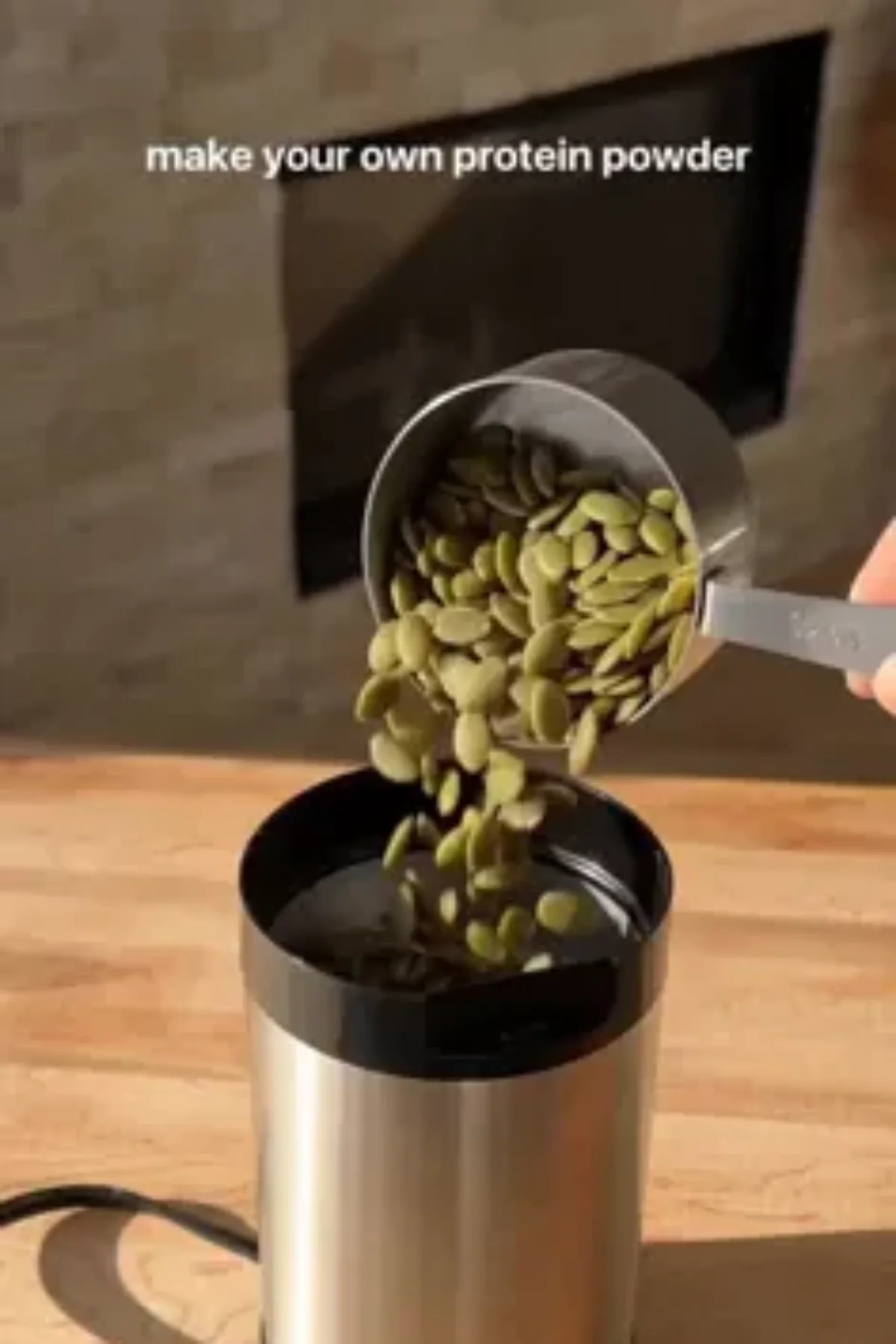
Place a small amount of seeds into your blender or coffee grinder. Do not fill the container more than halfway. Seeds need room to move around for even grinding. Pulse the machine in short bursts rather than running it continuously. This prevents the seeds from heating up too much, which can affect the texture and flavor. Continue pulsing until the seeds turn into a fine, powdery consistency. For most seeds, this takes about 30 to 60 seconds total.
Step 3: Sift the Powder
Pour the ground seeds through a fine-mesh strainer or sifter set over a bowl. Gently shake or tap the strainer to let the fine powder fall through. Larger pieces that remain in the strainer can be returned to the grinder for another short pulse. This step ensures a smooth, uniform powder that mixes easily into liquids and batters.
Step 4: Store the Powder Properly
Transfer the sifted powder into your clean, dry airtight container. Seal it tightly. Because seeds contain natural oils, the powder is best stored in the refrigerator or a cool, dark pantry. Proper storage helps maintain freshness and prevents the oils from turning rancid. Label the container with the date and the type of seed you used.
Tips for Best Results
A few simple practices can make a noticeable difference in the quality of your homemade seed protein powder.
- Grind in small batches. Small quantities grind more evenly and put less strain on your machine. This also keeps the powder fresher since you can make only what you need for a week or two.
- Keep your equipment dry. Any moisture in the grinder or blender can cause the seeds to clump or turn into a paste. Make sure everything is completely dry before you start.
- Experiment with blends. Try mixing pumpkin and sunflower seeds for a balanced flavor, or add a small amount of sesame seeds for a slightly different taste. You can adjust the blend to suit your personal preference.
- Use within a few weeks. Because homemade powder has no preservatives, it is best used within two to four weeks. Making smaller batches more often ensures you always have fresh powder on hand.
Safety and Storage Notes
This project is safe for most people, but a couple of points are worth keeping in mind. If you are using a coffee grinder, be careful when handling the blades during cleaning. Unplug the grinder first and wipe the inside with a dry cloth or a slightly damp cloth. Never immerse the grinder base in water.
For those with nut or seed allergies, obviously choose seeds that are safe for you. Also, flaxseeds and chia seeds can absorb liquid and thicken mixtures. This is a useful property for baking and smoothies, but something to be aware of when adding the powder to drinks.
Store the powder away from heat and direct sunlight. The natural oils in seeds can go bad if left in warm conditions for too long. If you notice an off smell or change in color, it is time to make a fresh batch.
Frequently Asked Questions
Can I use roasted or salted seeds?
It is best to use raw, unsalted seeds for making protein powder. Roasted seeds have a stronger flavor that can overpower the powder. Salted seeds add unwanted sodium and may affect how the powder performs in recipes. Stick with raw seeds for the most neutral and versatile result.
How long does homemade seed protein powder last?
When stored properly in an airtight container in the refrigerator, homemade seed protein powder stays fresh for about two to four weeks. The natural oils in seeds are prone to oxidation, so it is better to make smaller batches rather than a large quantity that might go stale before you use it.
Can I mix different seeds together before grinding?
Yes, you can certainly blend different seeds before grinding. Combining seeds like pumpkin, sunflower, and hemp creates a well-rounded powder with varied nutrients and a pleasant flavor. Just be sure to mix them evenly so the grinding is consistent. Remember that softer seeds like hemp may grind faster than harder seeds like sesame.
Is homemade seed powder as high in protein as store-bought powder?
Homemade seed powder is a concentrated source of protein, but the exact protein content varies by the type of seed you use. Pumpkin seeds and hemp seeds are especially rich in protein. While it may not be as protein-dense as some processed isolates, it offers a whole-food alternative with fiber and healthy fats that are not found in many commercial powders.
Warm Closing Thoughts
Making your own protein powder from seeds is one of those small kitchen habits that feels both empowering and practical. It connects you to the ingredients you eat and gives you a versatile staple that fits seamlessly into a plant-based routine. Whether you stir a spoonful into your morning oats, blend it into a post-workout smoothie, or use it to boost the protein in homemade energy balls, you are nourishing your body with something simple and real.
Give it a try with a bag of seeds you already have in your pantry. The process is quick, the results are rewarding, and you might just find yourself never wanting to go back to the store-bought tub again. Happy blending, and enjoy your homemade creation.