
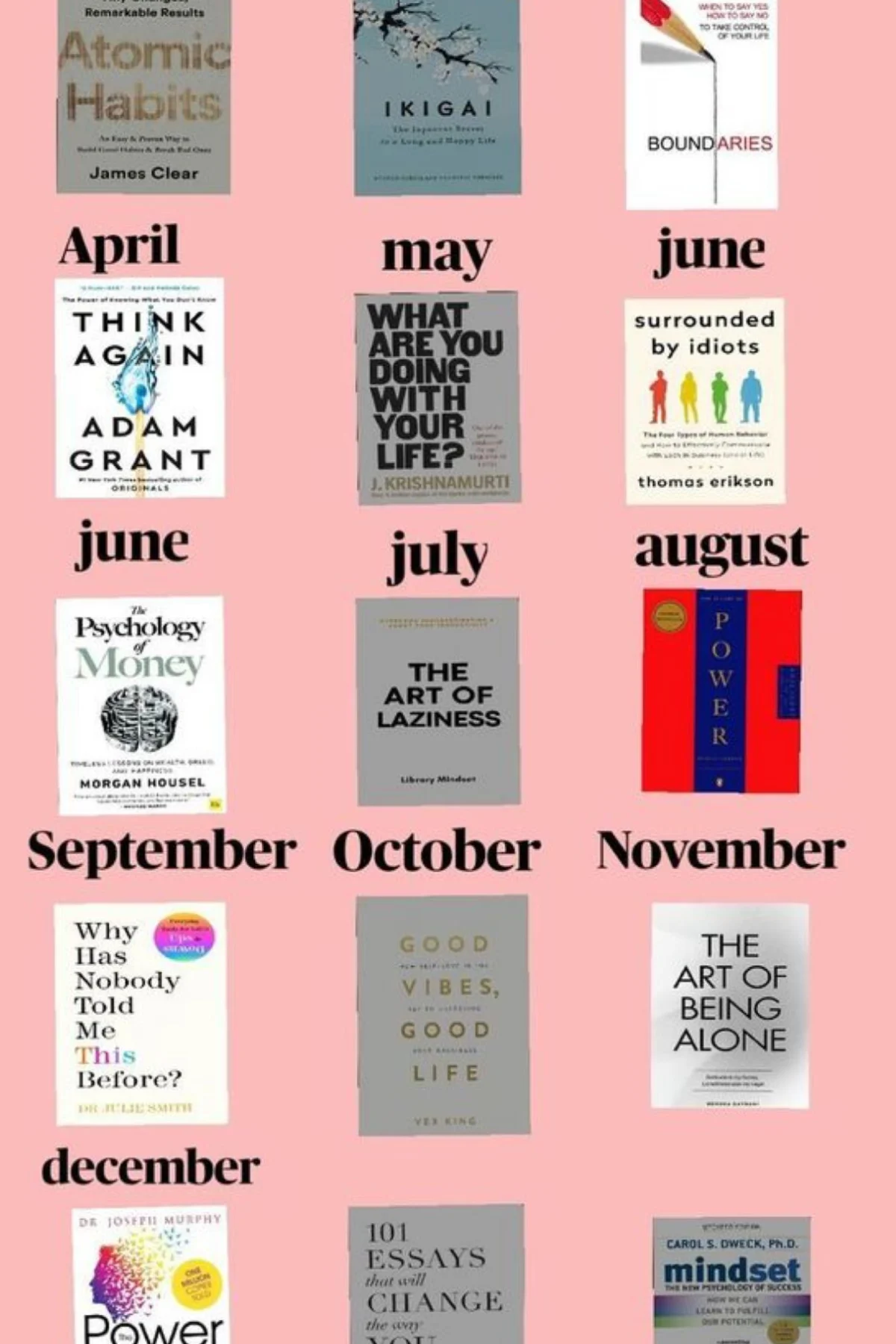
There is something deeply satisfying about matching your reading to the rhythm of the seasons. A monthly book reading list for a year is not about rigid quotas or racing through titles just to tick them off. It is a gentle structure, a way to invite different kinds of stories and ideas into your life as the months unfold. Some weeks you might devour two books; other months you may linger over a single chapter each night. The goal is simply to keep reaching for a book that feels right for the moment.
I have always found that a loose framework helps me avoid the paralysis of staring at a full shelf wondering what to read next. A year-long list with monthly themes creates just enough guidance to keep you moving forward without ever feeling like homework. It can make room for fiction and memoir, for lighthearted escapes and deeper nonfiction, for the books you already own and the ones you might borrow from a friend.
Why a monthly reading list matters
When left entirely to whim, many of us gravitate toward exactly the same kind of book month after month. That is not a failure; it is human nature. We reach for what feels safe and immediately appealing. A gentle monthly theme can nudge you toward variety without demanding a complete genre switch you might resist. January might invite reflection, July might call for pure immersive story, and October naturally leans toward atmosphere and mystery.
A year-long list also removes decision fatigue. It gives you a starting point when motivation dips, which it occasionally will. Life gets busy, seasons shift, and reading time often shrinks during travel-heavy months or holiday seasons. Knowing you have a flexible suggestion rather than a deadline can quiet the part of your brain that turns a beloved hobby into one more thing on the to-do list.
And there is a quiet magic in watching your reading life change shape over twelve months. The books you choose in winter often feel different in your hands than the ones you reach for in summer. A monthly list honors that natural ebb and flow.
Building your seasonal reading rhythm
The most sustainable monthly reading lists group twelve months into broader seasonal moods rather than treating each month like an isolated sprint. Winter months tend to call for longer, immersive reads and reflective nonfiction. Spring feels ripe for renewal stories, memoirs, and garden-inspired literature. Summer begs for page-turners you can read outdoors or while traveling. Autumn naturally invites atmospheric fiction, layered literary novels, and books that feel a little moody.
Winter deep dives
During the coldest stretch, many readers gravitate toward thick novels that reward slow, patient attention. This is the season for sprawling family sagas, immersive historical fiction, or that classic you have always meant to read. Nonfiction about creativity, philosophy, or personal growth also pairs well with dark evenings and the impulse to look inward. Books that require an extra measure of focus often feel nourishing rather than demanding when the outside world is quiet.
Spring refresh
As light returns, reading tastes often shift toward books about new beginnings, nature, and memoir. This is a beautiful window for stories set in gardens, for narrative nonfiction about the natural world, and for lighthearted romance with an optimistic feel. Many readers also find spring an inviting moment to pick up essay collections or short story anthologies, where bite-sized pieces fit easily into busier, sunnier days.
Summer page-turners
Warm weather reading is all about momentum. Thrillers, mysteries, sweeping beach reads, and compulsively readable series dominate these months. Shorter chapters, propulsive plots, and high emotional stakes all work well when you are reading in bursts between outdoor activities. Summer is also the season when many readers revisit old favorites or finally crack open that popular series everyone keeps recommending.
Autumn atmosphere
September through November calls for a shift toward moodier tones. Gothic novels, literary fiction with complex family dynamics, magical realism, and speculative stories all feel perfectly suited to cooling temperatures and earlier sunsets. Many readers also turn toward reflective nonfiction and biographies during autumn, perhaps because the season itself feels like a transition that invites deeper thinking.
A flexible month-by-month framework
Think of the following list as a conversation starter rather than a prescription. Swap in any title that fits the monthly spirit. The themes matter more than the specific books, and your own shelves probably already hold perfect candidates for each one.
- January: A reflective memoir or a book about fresh starts. The beginning of the year pairs beautifully with stories of transformation and quiet reinvention.
- February: A love story or a book about deep connection. This can be romance, a literary exploration of friendship, or a family-centered novel that centers relationships.
- March: A book about nature, growth, or change. As the ground begins to thaw, stories of renewal and the natural world feel especially resonant.
- April: A poetry collection or lyrical novel. National Poetry Month makes April an ideal time to explore verse or prose with a distinctly poetic sensibility.
- May: A book by an author from a culture different from your own. Expanding your reading horizons adds richness and perspective as spring fully unfolds.
- June: An escapist summer novel. Something bright, bingeable, and built for long afternoons. Beach settings are welcome but not required.
- July: A thriller or mystery. The kind of propulsive story that keeps you turning pages late into warm evenings.
- August: A book you already own but have not read. Before the autumn publishing rush begins, shop your own shelves.
- September: A literary novel with complex characters. As routines tighten, a layered, character-driven story feels grounding.
- October: A gothic, eerie, or magical story. The month practically demands something with an atmospheric edge, whether ghostly, witchy, or simply mysterious.
- November: A work of narrative nonfiction. A well-told true story about history, science, or human experience pairs well with the reflective mood of late autumn.
- December: A comforting reread or a cozy holiday tale. The end of the year rewards familiarity and warmth over challenge.
Practical ways to stay on track
Consistency over a full year rarely comes from pure willpower. Small systems make a meaningful difference without turning reading into a chore. Keep your current book visible rather than buried on a shelf. Leave it on the nightstand, the coffee table, or even the kitchen counter where you will see it during quiet moments.
Carry a book with you whenever you leave the house. The minutes spent waiting for an appointment, sitting in a pickup line, or lingering in a coffee shop add up quickly. A physical book or a reading app on your phone can transform scattered pockets of time into genuine progress. Audiobooks also count fully and often fit neatly into commutes, walks, and household tasks.
Give yourself genuine permission to abandon books that are not working. Nothing stalls a reading year faster than forcing yourself through a title you dread picking up. When a book feels like a mismatch, set it aside. You can always return to it later when your mood or circumstances have shifted. The monthly list is meant to serve your reading life, not dictate it.
Sharing the experience
Reading is often portrayed as solitary, but it does not have to be. Talking about books deepens your connection to them and keeps motivation humming. A casual book club with a few friends, even one that meets only seasonally, can anchor your reading year. Online reading communities offer another low-pressure way to share reactions and discover titles.
Keeping a simple reading journal also enriches the experience. You need not write lengthy reviews. A few lines about what you read, what you noticed, and how the book met you in that particular month creates a lovely record to look back on when the year ends. It also helps you notice patterns in what draws you, which in turn sharpens your choices for the months ahead.
Frequently asked questions
What if I fall behind on the monthly list?
There is no behind. A monthly reading list is an invitation, not a race. If life gets busy and you read less during a particular month, simply carry the unfinished book forward or skip a theme entirely. The list will still be there when you are ready to pick it back up. Some months you might read three books; others you might read none. The year as a whole matters far more than any single month.
Can I swap the monthly themes around?
Absolutely. If a gothic October novel sounds more appealing in February, follow that instinct. The themes are arranged to reflect common seasonal moods in a general way, but your personal reading cravings matter more than the calendar. Some readers feel most reflective in summer; others devour thrillers in winter. Rearrange freely until the list feels like yours.
Do audiobooks and graphic novels count?
Yes, without qualification. Stories consumed through your ears or told through a blend of art and text are real reading. Audiobooks engage the same comprehension and emotional processing as print, and graphic novels often deliver layered, sophisticated narratives. If you experienced a story, it counts toward your monthly list.
How many pages should I aim for each day?
There is no universal number, and page counts can create pressure that works against a sustainable reading life. Some readers thrive on a consistent daily goal of twenty or thirty pages. Others find that tracking pages steals the pleasure. Try reading for a set amount of time instead, perhaps fifteen or twenty minutes, and let the page count take care of itself. The best pace is the one that keeps you curious and content.
Where do I find good recommendations for each month?
Start with the books already on your shelves. Many readers own unread titles perfectly suited to each monthly theme. Libraries and independent bookstores often curate seasonal displays that align naturally with the rhythm of a year-long list. Staff recommendations and librarian-curated lists are excellent sources. Friends who know your taste can also point you toward books you might otherwise overlook.
A year of reading shaped by monthly themes is ultimately about paying gentle attention to what you read and when. It asks only that you stay curious and keep a book within reach as the seasons turn. Some months will be abundant, others sparse, and that unevenness is part of the beauty. By December, you will have a small stack of finished books, each one tied to a particular stretch of the year in a way that feels personal and true.
Whether you follow the monthly prompts closely or simply use them as a starting point for your own list, the act of planning a year of reading is already an act of hope. You are making space for stories, for stillness, and for the particular kind of quiet that only a book in your hands can offer. That is worth carrying with you through all twelve months.