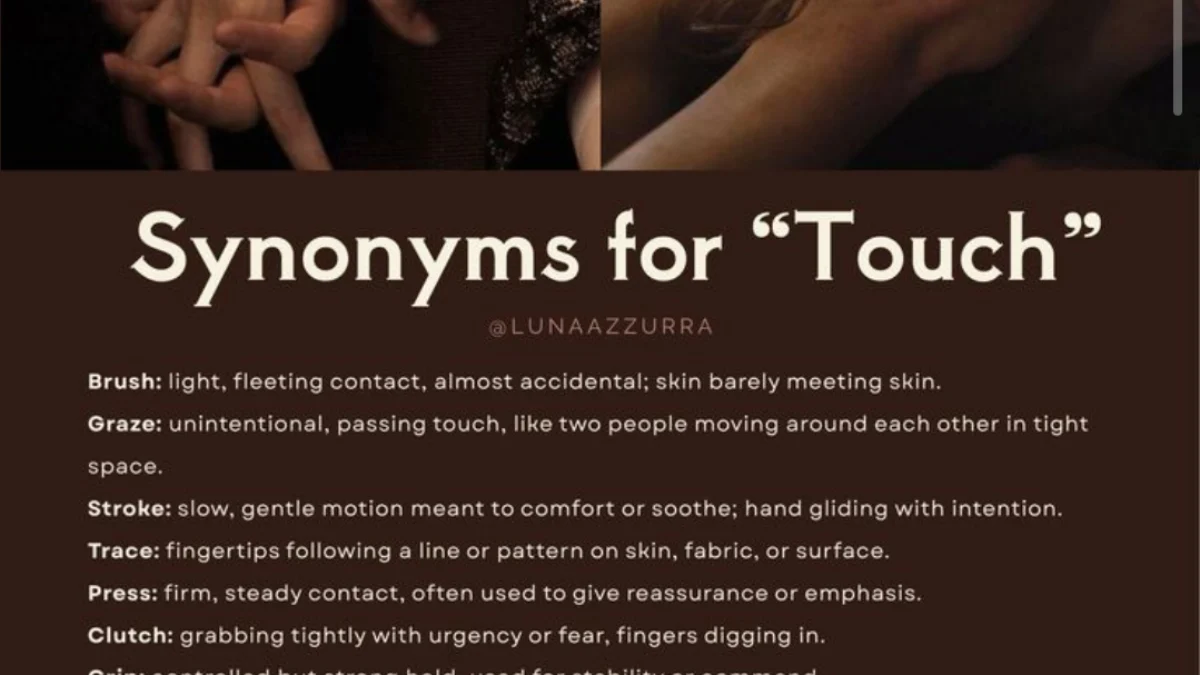
Finding the right word to describe a physical interaction can make all the difference in writing, whether you are crafting a novel, a poem, or a heartfelt letter. The human sense of touch is incredibly nuanced, encompassing everything from a light, accidental brush to an intentional, firm grasp. This article offers a comprehensive list of synonyms for “touch,” drawn from a visual infographic that pairs these words with intimate photographs of human hands. The goal is to help you expand your vocabulary so you can describe tactile experiences with greater precision and emotional resonance.
Why Understanding Synonyms for Touch Matters for Writers
When you write about characters connecting, you often rely on physical descriptions to convey their emotions and relationships. The word “touch” is broad, but words like “graze” or “cradle” carry very different feelings. A gentle graze might suggest hesitation or tenderness, while a firm grab could imply urgency or protection.
Using precise synonyms allows you to show your reader exactly what is happening without needing extra explanation. It brings your scenes to life and helps your audience feel the texture of the moment. For visual artists, photographers, or storytellers, these words can also inspire the mood of an image or scene.
Key Details from the Visual List
The infographic in question presents a straightforward, numbered list of tactile actions and descriptors. Each word is accompanied by a brief definition. The list begins with softer, lighter actions and progresses toward more deliberate or forceful ones. The photographs at the top of the graphic show two scenes of human contact: one where two hands are loosely holding each other, and another where a single hand gently touches the side of a person’s neck and hair. These images underscore the intimate, careful nature of many of the listed words.
While the complete list is not fully visible in a single static image, the visible portion includes words such as:
- Brush – a light, fleeting touch across a surface.
- Graze – to touch lightly in passing.
- Stroke – to move the hand gently over something, often repeatedly.
- Grab – to take hold of something suddenly or firmly.
- Cradle – to hold something gently and protectively, often in the curve of the hands.
These examples show the range from the faintest contact to a secure embrace. The audience for such a list includes fiction writers, poets, creative artists, and anyone looking to add depth to descriptions of human emotion and physical interaction.
Practical Considerations for Using Touch Vocabulary
To use these synonyms effectively, consider the context of your scene. Is the touch accidental or intentional? Is it loving, aggressive, or hesitant? The word you choose should match the emotional temperature of the moment. For example, if a character is comforting a friend, “cradle” or “hold” would fit better than “grab.”
It also helps to think about the body part doing the touching and the surface being touched. Fingertips brushing someone’s cheek feels different from a palm resting on a shoulder. Pair your synonym with specific body language to create a vivid image.
Another practical tip is to read your descriptions aloud. The sound and rhythm of words like “graze” versus “grasp” can change the pace of your sentence, which influences how your reader experiences the action.
Useful Tips for Incorporating These Words into Your Writing
- Start with a brainstorm. Write down the synonym you want to use and list the emotions it suggests. For instance, “stroke” can imply affection, comfort, or even habit.
- Mix strength levels. Vary your vocabulary throughout a scene. A single paragraph might include a light “brush” followed by a firmer “grasp” to show a character’s changing intent.
- Use definitions as anchors. If you are unsure about a word like “graze,” remember its definition: a touch so light it barely registers. Avoid using it for a strong action.
- Practice with the photos. Look at images of hand interactions and try to describe them using only one or two of these synonyms. It trains your eye to see the nuances.
Frequently Asked Questions
What is the difference between “brush” and “graze”?
Both words describe light contact, but “brush” often implies a brief, sideways motion across a surface, like a hand brushing dust off a sleeve. “Graze” suggests an even lighter, accidental, or passing contact, such as when fingers graze someone’s hand while reaching for something.
When should I use “cradle” instead of “hold”?
“Cradle” specifically implies a gentle, supportive, and protective hold, often using the curved shape of the hands to enclose an object or body part. Use it when you want to show tenderness, care, or the handling of something precious. “Hold” is more general and can be used for any degree of firmness.
Can “grab” ever be gentle?
Typically, “grab” implies a quick, firm, or sudden action. While it can be used in a playful context, it generally lacks the gentleness of words like “take” or “clasp.” If you want a gentler sudden touch, consider “catch” or “take hold.”
Is “stroke” always a romantic word?
No, “stroke” can describe any repeated, gentle hand motion across a surface. It is common in romantic contexts but also works for describing petting an animal, soothing a crying person, or even running a hand over fabric. Context determines the emotional tone.
How many synonyms should I use in one scene?
There is no fixed rule, but using too many different touch words in a short passage can confuse the reader. Two or three well-chosen words per scene are usually enough to establish the physical dynamic. Focus on clarity over variety.
Warm Closing
Expanding your vocabulary for touch is a small change that can bring a big shift to your writing. It adds texture to your scenes and helps readers connect with your characters on a more physical, emotional level. The next time you sit down to write about a hand reaching out, a gentle embrace, or a fleeting moment of contact, remember the words on this list. Let them guide your descriptions and help you express exactly what your heart—and your characters—want to say. Happy writing.