
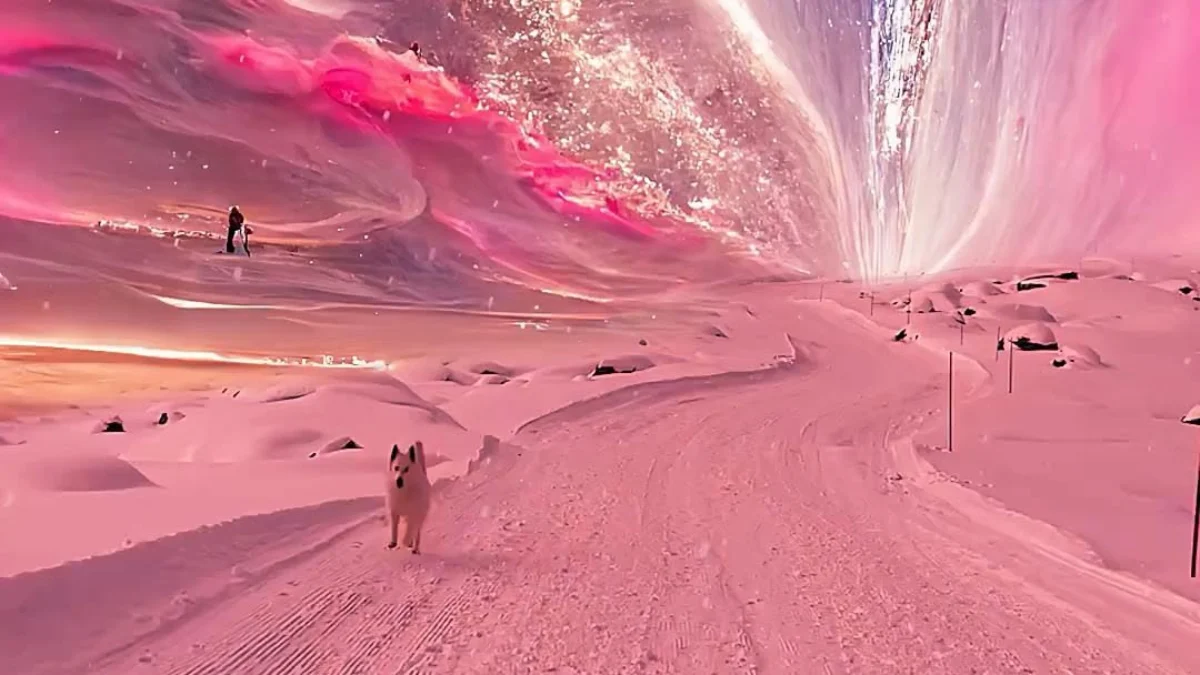
Aurora borealis, also known as the Northern Lights, captivates viewers with its ethereal display of colorful light. The image captures a serene moment in a winter landscape, showcasing a lone dog walking on a snow-covered path as celestial hues of pink and purple dance overhead. The scene evokes a sense of peace, solitude, and the profound beauty of nature. This breathtaking vista highlights one of the most remarkable natural phenomena on Earth.
Why the Aurora Borealis Winter Landscape Matters
The aurora borealis is not just a pretty light show; it’s a natural spectacle that holds immense scientific and cultural significance. Understanding the Aurora Borealis winter landscape offers a glimpse into our planet’s magnetosphere and its intricate relationship with solar activity. The aurora serves as a reminder of the powerful forces shaping our environment and the beauty that can emerge from them. Witnessing this phenomenon fosters a deep appreciation for the natural world and its wonders.
Key Details of the Aurora Borealis Display
The aurora borealis is primarily composed of electrically charged particles from the sun interacting with atoms and molecules in the Earth’s upper atmosphere. These particles collide with atmospheric gases, causing them to emit light. The colors we observe are a result of the different gases being excited. Oxygen typically produces green light, while nitrogen produces red, blue, and violet. The image showcases pink and purple hues, likely resulting from the interaction of charged particles with nitrogen molecules.
Practical Considerations for Observing the Aurora Borealis Winter Landscape
Observing the aurora borealis requires specific conditions: dark skies, clear weather, and solar activity. The best time to view the aurora is during the winter months when the nights are long and dark. A location far from light pollution significantly enhances visibility. Dress in warm clothing, including hats, gloves, and scarves, as temperatures can be extremely low. Consider bringing binoculars or a telescope for closer observation.
Useful Tips for a Wonderful Aurora Viewing Experience
- Find Dark Skies: Venture away from city lights to minimize light pollution.
- Check the Aurora Forecast: Utilize online aurora forecasts to predict activity levels.
- Dress Warmly: Layers are essential for staying comfortable in cold temperatures.
- Be Patient: Auroras can be unpredictable; persistence can lead to a spectacular display.
- Bring a Tripod: If using a camera, a tripod will help capture steady images.
- Consider a Companion: Having someone to share the experience with enhances the enjoyment.
Frequently Asked Questions
What causes the aurora borealis?
The aurora borealis is caused by electrically charged particles from the sun interacting with atoms and molecules in Earth’s upper atmosphere. These collisions excite the atmospheric gases, causing them to emit light. Oxygen produces green light, nitrogen produces red, blue, and violet, and so on. This beautiful light display is a result of solar wind interacting with Earth’s magnetic field.
Where is the best place to see the aurora borealis?
The aurora borealis is typically visible in high-latitude regions, such as Alaska, Canada, Greenland, Iceland, Norway, Sweden, and Finland. These areas offer long, dark winter nights with minimal light pollution. Some popular viewing spots include Fairbanks, Alaska; Yellowknife, Canada; and Tromsø, Norway. The image captures a landscape suitable for aurora viewing.
How long does an aurora display typically last?
Aurora displays can vary in intensity and duration. A typical aurora show might last for several hours, with periods of intense activity followed by calmer phases. The duration can depend on solar activity and atmospheric conditions. Some displays can last for days.
What should I wear when viewing the aurora borealis?
Dress in layers to stay warm and dry. Essential clothing includes a warm coat, hat, gloves, scarf, and waterproof boots. Consider bringing warm socks, thermal underwear, and a fleece jacket for additional comfort. Protect yourself from the cold by layering your clothing effectively.
Aurora Borealis Winter Landscape: A Final Thought
The aurora borealis winter landscape is a truly awe-inspiring experience. It offers a unique opportunity to connect with the power and beauty of nature. By understanding the science behind the aurora and preparing for the viewing experience, you can maximize your chances of witnessing this remarkable spectacle. Whether you are traveling with a companion or exploring a solitary path, this winter landscape promises unforgettable memories. Remember to respect the environment and appreciate the delicate balance of the natural world.