
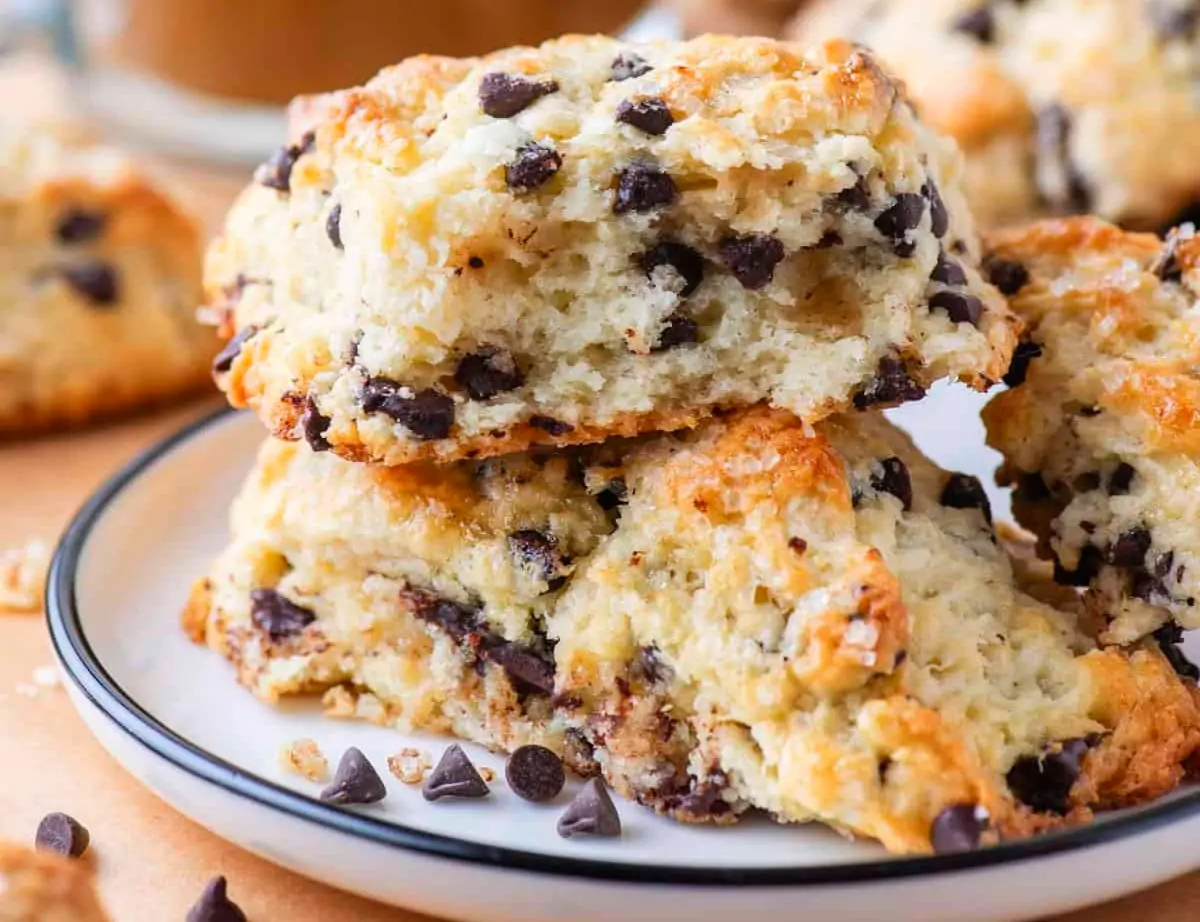
The image says it all. A simple wooden board holds a stack of freshly baked cookies, their golden-brown surfaces dotted with pools of dark chocolate. The handwritten “Grandma’s Cookies” across the top feels like a warm hug on a plate. These aren’t the kind of cookies that snap when you bite them. They’re the soft chocolate chip cookies that bend slightly in your hand, leaving a little smudge of melted chocolate on your fingers. If you’ve been chasing that tender, almost cake-like texture that seemed to exist only in childhood memories, you’re in the right place.
What makes a cookie truly soft
Texture in a cookie comes down to a few key choices. The ratio of brown sugar to white sugar plays a major role. Brown sugar contains molasses, which adds moisture and a slight chew. Using more brown sugar than white gives you that soft, bendable center that stays fresh for days. Fat type matters too. Butter brings flavor but can spread thin and crisp up fast. Many bakers who prize softness use a mix of butter and a solid fat like shortening, or they chill their butter-based dough thoroughly before baking. The chilling step is simple but powerful. Cold dough spreads more slowly in the oven, letting the center stay thick and tender while the edges just barely hint at a golden crust.
Flour measurement is another quiet culprit behind dry, crumbly cookies. Spooning flour into a measuring cup and leveling it off, rather than scooping directly from the bag, keeps the dough from becoming dense. Too much flour pulls moisture out and pushes the cookie toward a cakey or dry crumb. The cookies in the photo look substantial but not puffy, with a slight crackle on top that suggests just the right balance of flour and leavening. A touch of cornstarch in the dry ingredients is an old trick that helps soften the gluten structure, leading to that melt-in-your-mouth finish.
The visual clues of a perfect batch
Looking at those cookies on the wooden board, you can spot several signs of a well-made batch. The edges are set and faintly browned, but there’s no dark ring of over-baking. The centers look a shade lighter, which tells you they were pulled from the oven at exactly the right moment. Cookies continue to bake on the hot sheet after they come out, so taking them from the oven when the centers still look slightly underdone is the secret to a soft middle. The chocolate chips in the image are dark and distinct, not fully melted into the dough. This suggests they were folded in gently and the dough was not overworked.
The slight stacking of cookies on the board also hints at their texture. Firm, crispy cookies would sit in a tidy pile without much give. These cookies slump against each other naturally, the weight of one slightly pressing into the one below. A wooden serving board like the one pictured adds a rustic, homey feel. The grain of the wood and the casual arrangement make the whole scene feel unpretentious and welcoming. These aren’t perfect, uniform bakery cookies. They’re homemade, with slight variations in size and chocolate distribution that make each bite a little different.
Why this nostalgic treat still matters
Soft chocolate chip cookies hold a special place in home baking because they feel personal. Everyone seems to have a memory attached to them whether it’s coming home from school to a cooling rack on the counter or sneaking one from a tin tucked in a low cabinet. Baking them in your own kitchen connects you to that sense of comfort. The process itself is grounding. Measuring, mixing, and watching through the oven window as the dough rounds puff and settle is a quiet ritual in a busy week.
There’s also a generous aspect to these cookies. A stack on a wooden board invites sharing. You slide one off the top and pass the board along. The soft texture means children and older family members alike can enjoy them without a struggle. The chocolate chips are familiar and universally loved, but the quality of the chocolate you choose can elevate the whole experience. Dark chocolate chips or chopped chunks from a bar offer a slight bitterness that balances the sweet dough beautifully.
Choosing your ingredients with care
The cookies in the image look deeply satisfying, and much of that comes from simple, honest ingredients. Butter gives the dough its rich flavor. Brown sugar brings moisture and a hint of caramel. Vanilla extract rounds everything out with a warm background note. Eggs bind the dough and add tenderness. Flour provides structure without heaviness when measured correctly. Baking soda helps with spread and browning, while the optional pinch of cornstarch keeps the crumb soft. Salt is essential here. It brightens the chocolate and cuts through the sweetness so the cookie tastes balanced rather than cloying.
For the chocolate, the visible dark chips suggest a semi-sweet or bittersweet variety. Milk chocolate can make the cookie too sweet and tends to melt into the dough during baking. Darker chocolate holds its shape better and creates those beautiful pockets of molten chocolate you see between the cracks. You can use chips or roughly chop your favorite dark chocolate bar. The irregular pieces from chopping create a more rustic look, with some tiny shards dispersing throughout the dough and larger chunks creating generous pockets.
Techniques for consistently soft results
Getting that soft, tender cookie every time takes a little attention to technique. Start with room temperature butter, but don’t let it get greasy or melted. Cream the butter and sugars together until the mixture lightens in color and looks fluffy. This step incorporates air and starts dissolving the sugar properly. Add eggs one at a time, mixing just until each disappears into the batter. Overbeating at the egg stage can make cookies tough. Stir in the vanilla with the last egg.
Mix the dry ingredients separately and add them to the wet mixture in two or three additions, stirring just until the flour streaks vanish. A few remaining flour pockets will blend away when you fold in the chocolate chips. Once the chips are distributed, cover the dough and chill it for at least an hour. This rest period lets the flour fully hydrate and the flavors meld. Scoop the cold dough onto a parchment-lined baking sheet, leaving plenty of room for spread. Bake in a fully preheated oven and watch the edges carefully. As soon as the edges look set and just beginning to turn golden, pull the tray out. Let the cookies rest on the hot sheet for five minutes before moving them to a wire rack or wooden board.
Frequently asked questions
Why did my cookies come out flat and crispy?
Flat cookies usually mean the dough was too warm going into the oven or the butter was over-softened. Chilling the dough thoroughly helps control spread. Also check your leavening agents. Old baking soda loses its power and won’t give the cookies any lift.
Can I freeze the dough for later?
Yes, this dough freezes beautifully. Scoop it into individual portions, place them on a lined tray, and freeze until solid. Transfer the frozen dough balls to a sealed bag or container. Bake straight from frozen, adding a minute or two to the baking time. You’ll get the same soft texture with freshly baked warmth.
How do I store soft chocolate chip cookies to keep them tender?
Store the cooled cookies in an airtight container at room temperature. Adding a slice of plain bread to the container is an old trick that keeps cookies soft. The bread releases moisture and the cookies absorb it. Replace the bread slice every day or two to prevent it from getting stale.
What if I don’t have dark chocolate chips?
Chopped dark chocolate bars work wonderfully and often melt more smoothly. Semisweet chips are a fine substitute. If you only have milk chocolate, use it but know the cookies will be sweeter. White chocolate chips can also work for a different flavor profile, though they don’t deliver the same contrast.
Can I make these cookies without eggs?
Eggs contribute to structure and tenderness. You can experiment with common egg substitutes like unsweetened applesauce, mashed banana, or commercial egg replacers, but the texture will shift. A flax egg made from ground flaxseed and water tends to produce a softer, slightly chewier cookie that fits well with this style.
Serving ideas for a cozy moment
These soft chocolate chip cookies don’t need much fuss. The wooden board in the image says it perfectly. A casual stack, no fancy platter, just the cookies themselves as the star. Pour a glass of cold milk, brew a cup of coffee, or set out a pot of tea. The warmth of the drink and the soft, chocolate-studded cookie are simple pleasures that don’t go out of style.
For a gathering, pile them high on a rustic board and let guests help themselves. The slightly overlapping arrangement invites people to reach in. For a quieter treat, tuck a couple into a napkin and sit by a window with a book. There’s no wrong way to enjoy them. What makes these cookies special is the feeling they carry. The handwritten script on the image says “Grandma’s Cookies” because these are the kind of cookies that feel like they were made with a gentle hand and a lot of love.
The next time you pull a tray of golden, soft chocolate chip cookies from the oven and slide them onto a wooden board, pause for just a second. You’ve created more than a baked good. You’ve made a moment of warmth, a connection to memory, and a treat that welcomes everyone to the table.

Easy Chocolate Chip Cookies Recipe
These homemade chocolate chip cookies are soft in the center, lightly crisp around the edges, and filled with rich chocolate chips. This easy recipe uses simple ingredients and is perfect for beginners.
Ingredients
- 1 cup unsalted butter, softened
- 3/4 cup granulated sugar
- 3/4 cup packed light brown sugar
- 2 large eggs, at room temperature
- 2 teaspoons vanilla extract
- 2 1/4 cups all-purpose flour
- 1 teaspoon baking soda
- 1/2 teaspoon salt
- 2 cups semisweet chocolate chips
Instructions
- Preheat the oven to 350°F or 175°C. Line two baking sheets with parchment paper.
- Add the softened butter, granulated sugar, and brown sugar to a large mixing bowl. Beat for 2 to 3 minutes until light and creamy.
- Add the eggs one at a time, mixing well after each addition. Stir in the vanilla extract.
- In a separate bowl, whisk together the flour, baking soda, and salt.
- Gradually add the dry ingredients to the butter mixture. Mix only until a soft cookie dough forms.
- Fold in the chocolate chips until evenly distributed throughout the dough.
- Scoop rounded tablespoons of cookie dough onto the prepared baking sheets. Leave about 2 inches between each cookie.
- Bake for 9 to 11 minutes, or until the edges are lightly golden and the centers still look slightly soft.
- Allow the cookies to cool on the baking sheet for 5 minutes before transferring them to a wire rack.