Timing your vitamins and minerals can feel like a small detail, but it has an outsized impact on how well your body uses them. The right schedule helps you absorb nutrients fully, avoid stomach upset, and keep your daily routine simple and consistent. Think of it less as a strict timetable and more as a gentle rhythm that supports your body’s natural cycles.
Why the timing of your supplements matters
The goal of any supplement is to fill nutritional gaps, not to create expensive urine. When you take certain vitamins with food, your body has the fats and enzymes needed to break them down properly. Other supplements compete for the same absorption pathways, so taking them too close together means one may crowd out the other. A little planning goes a long way toward making each capsule or tablet count.
Your circadian rhythm also plays a role. Some nutrients support energy production and feel best in the morning, while others aid relaxation and repair overnight. Paying attention to these natural cues can make your routine feel more intuitive and effective.
Morning-friendly vitamins and minerals
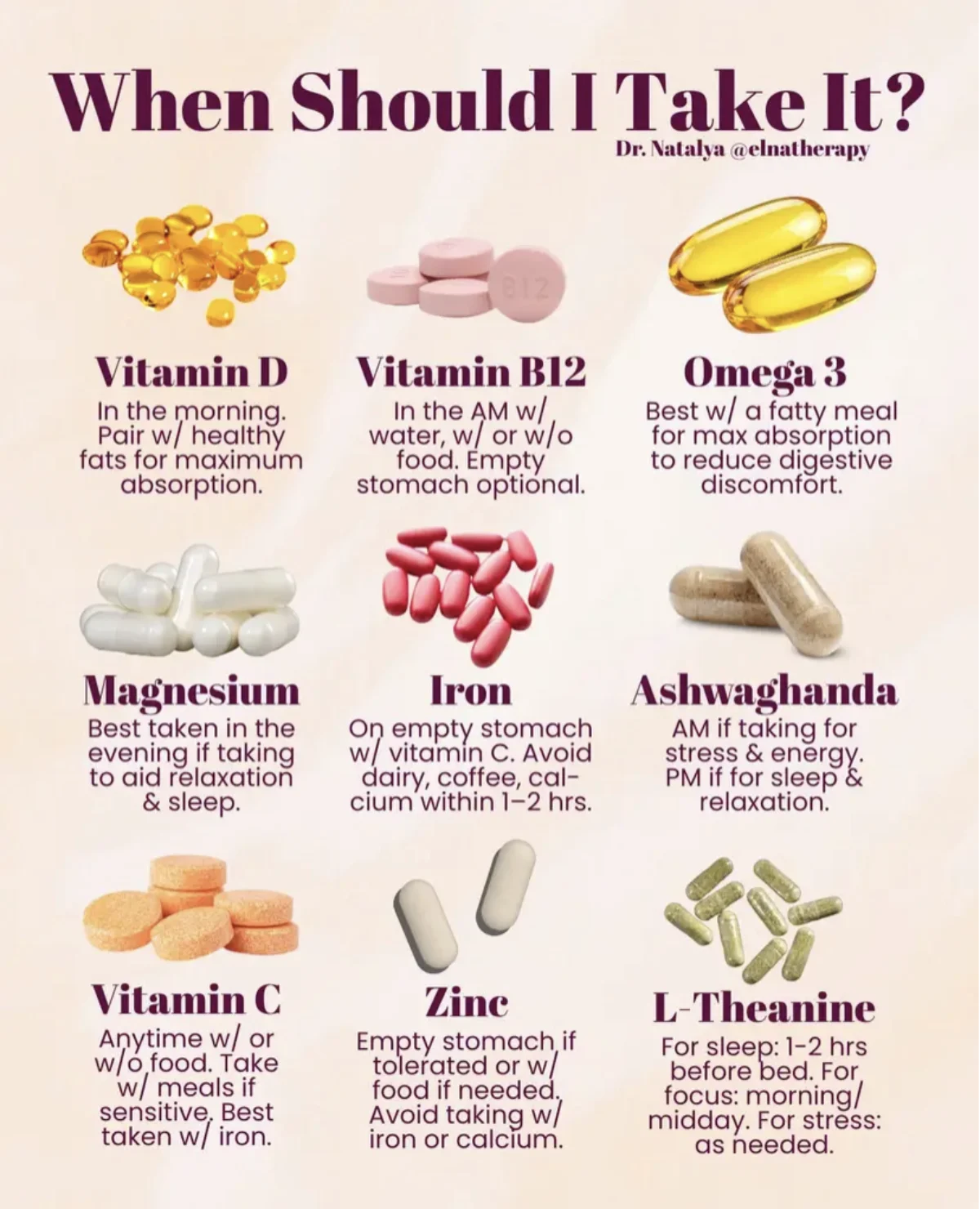
Start your day with nutrients that support energy metabolism and mental clarity. B vitamins, including B12 and a B-complex, work best when taken early because they help convert food into energy. Taking them too late in the day can leave some people feeling oddly alert at bedtime.
Iron is another morning powerhouse. It absorbs best on an empty stomach, but since that can cause nausea for many, pairing it with a small glass of orange juice is a practical compromise. The vitamin C boosts iron absorption dramatically, and the light acidity tends to be gentler than taking iron with nothing at all. Just avoid washing it down with coffee or tea; the tannins in those drinks can block iron uptake for an hour or more.
Vitamin C itself fits easily into a morning routine. It is water-soluble and safe to take on an empty stomach for most people. A morning dose gives your immune system a steady supply throughout the day.
Fat-soluble vitamins that pair perfectly with meals
Vitamins A, D, E, and K need dietary fat to dissolve and cross the intestinal wall. Taking them with a meal that contains healthy fats—avocado, eggs, nuts, olive oil, or full-fat yogurt—can increase absorption significantly. A lunch or dinner that includes these foods is an ideal partner for your fat-soluble supplements.
Vitamin D deserves special attention here. Many people take it first thing in the morning out of habit, but research suggests that pairing it with the largest meal of the day, often lunch or dinner, may be more effective. Because vitamin D influences calcium balance and may interact lightly with melatonin pathways, some people find taking it later in the day works better for their sleep quality. It is a personal variable worth experimenting with if you have the flexibility.
Evening minerals for relaxation and repair
Magnesium is a standout candidate for an evening routine. It supports muscle relaxation, calms the nervous system, and can promote deeper, more restorative sleep. Magnesium glycinate in particular is well tolerated and often recommended for its gentle, non-laxative effect at bedtime.
Calcium is another mineral that can work well at night. The body uses calcium during sleep for muscle function and bone maintenance. If you already take a calcium supplement, pairing it with magnesium in the evening can create a calming duo that mirrors the way these minerals work together in nature. Just be aware that calcium in large doses may interfere with magnesium absorption, so some people prefer to separate them by a few hours.
Zinc is trickier. It supports immune function and cellular repair overnight, but taking it on an empty stomach frequently causes nausea. If you want zinc in your evening lineup, pair it with a light snack. Keep in mind that zinc and copper compete for absorption, so long-term zinc supplementation is often balanced with a small amount of copper, something to discuss with a healthcare provider.
Smart spacing and combinations to avoid
Some pairings are better left apart. Calcium and iron compete fiercely for absorption; taking them at the same time reduces how much of each your body can use. A practical rule of thumb is to take iron in the morning and calcium later in the day. Similarly, high-dose zinc and iron should not share the same mealtime window if you want full benefit from both.
Fat-soluble vitamins are sometimes bundled into one softgel for convenience, but taking them individually with your fattiest meal remains the gold standard. If you take a multivitamin, timing it with a solid breakfast or lunch covers most bases. The small amount of fat-soluble vitamins in a multi still benefits from that dietary fat.
Thyroid medications deserve a special caution. They should be taken on an empty stomach with plain water and separated from any supplements—especially calcium, iron, and magnesium—by at least four hours. The same goes for certain antibiotics and osteoporosis medications. Your pharmacist is an excellent resource for questions about medication and supplement spacing.
Practical tips for a consistent routine
The best supplement schedule is one you can actually stick to. Visual cues like keeping your morning vitamins next to the coffee maker or your evening magnesium on the nightstand help turn intention into habit. Consistency matters more than perfection, so if your ideal schedule has you taking pills three times a day and you can realistically manage only two, work with that.
- Use a weekly pill organizer with morning and evening compartments to remove the daily guesswork.
- Set a recurring phone alarm for supplements that need to be taken away from food, like thyroid medicine.
- Keep a small water bottle and your evening supplements on the nightstand so the routine feels effortless.
- Rotate your fat-soluble vitamin dose to the meal where you consistently eat the most healthy fat.
- Write down any stomach sensitivity patterns for a week; tweak timing or pairings based on what your body tells you.
If you travel frequently, a compact case with labeled sections keeps your rhythm stable across time zones. The goal is to lower the friction so that taking your vitamins feels as natural as brushing your teeth.
Listening to your body’s signals
General timing guides are a fantastic starting point, but your own experience matters too. Some people feel energized taking vitamin D at breakfast, while others notice it disrupts their sleep if taken after midday. Nausea from a multivitamin often resolves simply by taking it with a substantial meal rather than a light snack. Energy dips, digestive rumbles, and sleep quality are all gentle feedback loops worth noticing.
When you add a new supplement, introduce it one at a time and give your body a week or so to adjust before layering in another. This makes it far easier to identify which nutrient is helping and which might be causing an unexpected reaction. Your healthcare provider can also order labs to check levels of nutrients like vitamin D, iron, and B12, which takes the guesswork out of whether your timing and dosage are truly working.
Frequently asked questions about supplement timing
Can I take all my vitamins together at the same meal?
For most people, taking a multivitamin or a few compatible supplements with a meal works perfectly fine. The main exceptions are competitive minerals like iron and calcium, which absorb better when separated by several hours. If you take a single multivitamin, look for one that spaces out iron and calcium internally, or simply take it with your largest meal and not worry too much beyond that. The convenience of a one-and-done approach often outweighs the small absorption trade-offs.
What happens if I miss my usual supplement time?
One missed window is rarely worth stressing over. For water-soluble vitamins like vitamin C and B vitamins, simply take them when you remember with a bit of food and water. For fat-soluble vitamins, if you missed the meal you normally pair them with, wait for your next meal that contains some fat. Avoid doubling up doses the next day; just pick your routine back up and move forward gently.
Is it better to take supplements on an empty stomach or with food?
Most vitamins and minerals are best taken with food. Food buffers the stomach lining, which reduces the risk of nausea from iron, zinc, and multivitamins. It also provides the fat needed for vitamins A, D, E, and K to absorb properly. A few exceptions exist, such as thyroid hormones, specific probiotics, and certain amino acids that absorb best away from competing proteins. In general, pairing your supplements with at least a small meal or snack is a safe and effective habit.
Does time of day really affect vitamin absorption?
Yes, though the effect varies by nutrient. Fat-soluble vitamins ride on the bile released during meals, so timing them with your fattiest meal can make a measurable difference. Minerals like calcium and magnesium are used by the body during sleep for repair and maintenance, so an evening dose aligns with those natural processes. The circadian rhythm also influences stomach acid production and enzyme activity throughout the day. Small timing shifts can nudge your body toward using more of what you take.
Should I take probiotics at the same time as my other supplements?
Probiotics are living organisms, and their survival through the harsh stomach environment matters. Taking them on an empty stomach, or at least away from hot beverages and antimicrobial supplements like oregano oil, gives them a better chance of reaching the intestines intact. Many people find success taking probiotics first thing in the morning with cool water, or right before bed when digestion is naturally slower. A small amount of food that is not too acidic can also help buffer the journey.
Finding the right rhythm for your vitamins and minerals takes a little curiosity and a little patience. The payoff is a routine that feels easy, supports your energy and sleep, and makes the most of the nutrients you bring into your life each day. Tune into what works for your body, keep it simple, and let the rest follow naturally.