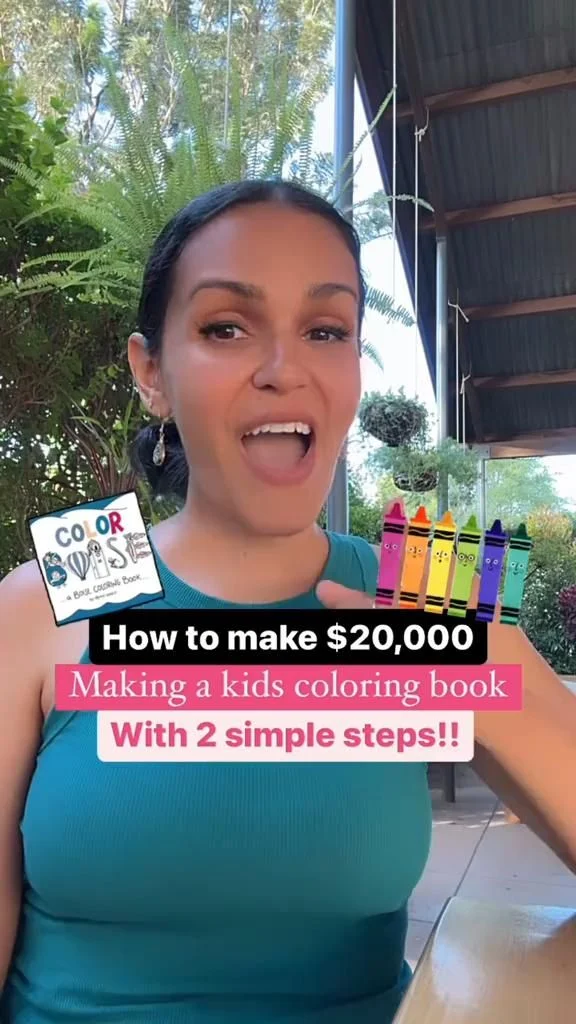
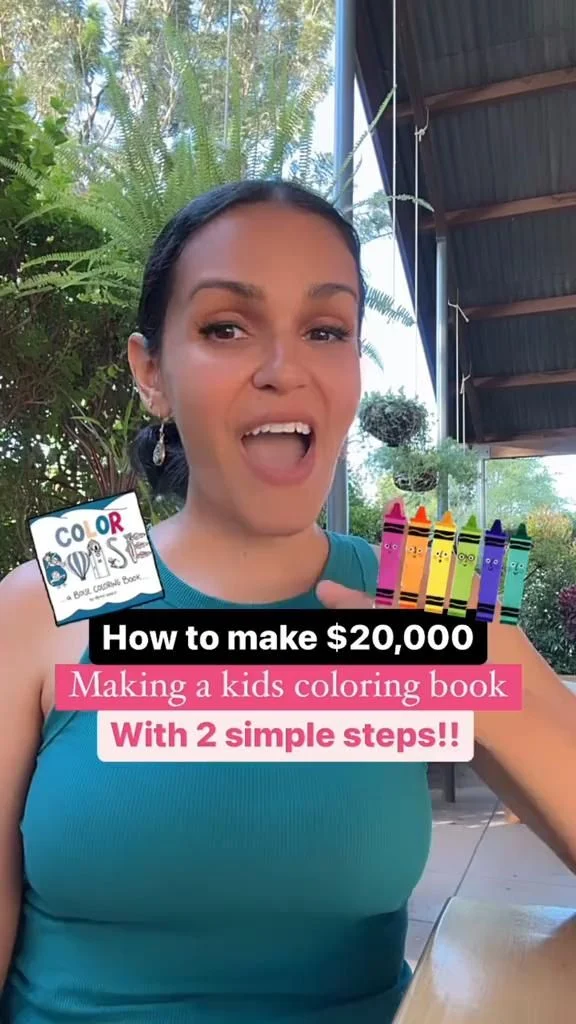
The viral claim is that you can make a kids’ coloring book in two steps and earn $20,000 from it. The honest version: you can create and publish one in two main phases—design and upload—but the income depends entirely on how many similar books are already selling in your niche. The two-step framing skips the real work of making pages people actually want to buy.
Here’s what the process actually looks like, what it costs, and where the money talk gets shaky.
What are the two steps in the viral method?
The “two steps” usually boil down to this: draw or generate the coloring pages, then upload them to Amazon KDP. That’s technically true the same way “bake a cake” is two steps: mix ingredients, put in oven. The simplification hides the decisions that separate a book that sells from one that sits in search results.
Step one is producing the interior pages. Step two is formatting and uploading the file to KDP. Everything else—researching what parents search for, pricing, cover design, marketing—happens around those two actions, and it’s where the time actually goes.
What do you need to make the coloring pages?
You don’t need to be an illustrator. Kids’ coloring books sell on clear, bold outlines that a four-year-old can stay inside. That means thick lines, simple shapes, and no fine detail that requires adult help.
Your materials list is short:
- Paper for testing prints (plain 20 lb copy paper works fine)
- A printer to check your pages actually look right
- Design software—Canva’s free tier, Inkscape, or anything that exports PDF
- A drawing tablet if you’re drawing digitally, or a scanner if you draw by hand
If you draw by hand, use a black pen with a consistent line weight. Scan at 300 DPI minimum. If you draw digitally, work in vector format so lines stay sharp at any size. Either way, test one page on your own printer before committing to a full upload.
How do you format the book for Amazon KDP?
KDP has specific requirements, and getting these wrong causes the most rework. Set your document to the trim size you want—8.5×11 inches is standard for kids’ activity books. Add a 0.25 inch bleed on all sides if your artwork extends to the edge. Most coloring pages don’t need full bleed; a plain white border is normal and easier.
Keep these numbers in mind:
- Interior pages: pure black and white, no grayscale
- Margins: at least 0.25 inch on the outside, more on the binding edge
- Page count: KDP prints books as low as 24 pages, but thicker books justify a higher price
- File format: PDF with fonts embedded
One practical note on paper: KDP uses standard book paper, not thick art paper. Crayons work fine on it. Markers bleed through, so if you want marker-friendly pages, this format isn’t the right fit. That’s a limitation of the platform, not your design.
How do you upload and publish the book?
Create a KDP account with your tax and banking details. Click “Create a new title,” choose paperback, and work through the setup screens. You’ll upload your interior PDF, design a cover using KDP’s cover generator or your own file, set a price, and pick keywords.
Keywords matter more than most first-time publishers expect. Think like a parent searching for a gift: “dinosaur coloring book for toddlers” beats “fun coloring book.” Amazon lets you use seven keyword slots of 50 characters each. Fill them with real search phrases, not single words.
Before you hit publish, order a proof copy. It costs a few dollars plus shipping, and it catches problems you cannot see on screen—lines that print too light, pages that feel thin, a cover that looks washed out. Skip this once and you risk negative reviews from buyers who got a blurry product.
What does it actually cost to start?
You can start with zero cash if you use free design software and already own a printer. The unavoidable costs are the proof copy and your time. If you buy a drawing tablet, expect to spend $50 to $200. If you pay for Canva Pro or Adobe, that’s another monthly expense, but neither is required.
The real cost is time. A 30-page book with unique drawings takes most people 15 to 30 hours, even with simple designs. That’s the part the viral video doesn’t show.
Is the $20,000 figure realistic?
No, not as a typical result. A small number of coloring books on KDP earn that much, usually because they hit a niche with high demand and low competition—think “trucks for boys age 3” or “mermaid activity book.” Most published titles earn very little. The math is brutal: a $6.99 book earns roughly $2 to $3 in royalties, so $20,000 means selling 7,000 to 10,000 copies.
That’s possible with the right niche and consistent marketing, but it is not the default outcome. Treat the two-step video as a starting point, not a promise. The people making real money publish multiple books, study what sells, and iterate.
If you want a deeper look at how the royalty structure works and what beginners miss, this guide to Amazon KDP passive income covers the specifics without the hype.
What should you do with this information?
Start small. Make a single book with 20 to 30 pages on one specific theme. Test it with a proof copy. Publish it, then watch what happens in the first month. If it sells, make a sequel with a different variation of the same theme. If it doesn’t, look at the top 20 books in your category and compare your cover, page count, and price against theirs.
You can also explore other passive income routes with similar effort. The Costco affiliate program, for example, pays commissions on products you recommend, and it works alongside a creative project like this. But don’t split your focus until the first book is live.
One more thing: never copy another illustrator’s pages. Drawing inspiration from a theme is fine. Tracing or reproducing someone else’s artwork gets your account banned and invites legal trouble. Make your own lines, even if they’re rough. Buyers can tell the difference.
How do you get a clean result on ordinary paper?
Standard printer paper works for testing, but it’s thin. If you’re giving the book to a child, expect crayon to work well and marker to bleed. For your own test prints, use 24 lb paper if you have it—it’s closer to what KDP uses and gives a truer sense of the final product.
Check these things on your proof copy:
- Lines are solid black, not gray or broken
- Nothing important sits in the binding gutter
- The cover image isn’t pixelated
- Page count matches what you designed
If lines look faint, your source file has too low a contrast. Re-export at higher quality. If the binding eats part of the drawing, increase your inside margin to 0.5 inch on even-numbered pages.
How long until you see results?
KDP books typically take a few weeks to appear in search results reliably. Sales in the first month are usually slow unless you have an existing audience or run ads. Most successful authors treat the first book as a learning experience, not a payday.
The realistic timeline looks like this: week one for design, a few days for formatting and proofing, then a month of watching and adjusting your keywords or price. If you publish consistently—one book every few weeks—you build a catalog that compounds. That’s the actual strategy behind the viral clips, and it’s neither fast nor passive.
If you’re serious about the income side, pair your coloring book with a simple financial mindset. Reading a financial affirmation about receiving money won’t replace good product research, but it can keep you motivated through the slow first months. What won’t help is quitting after one book.
Make the book. Learn the process. Then decide if the niche is worth your next 30 hours.