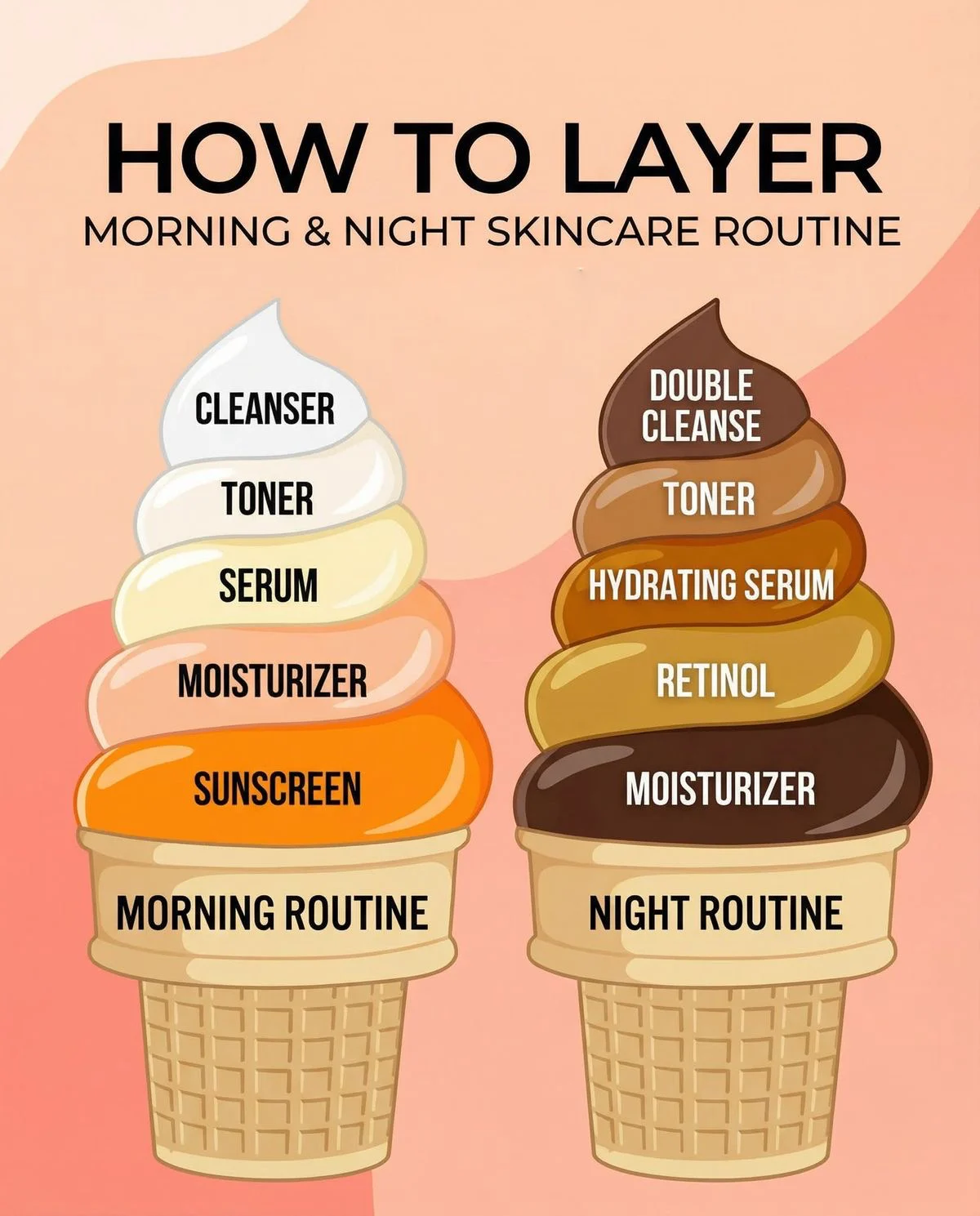
A well-loved skincare routine is a quiet ritual that bookends the day. The morning layer-up feels like pulling on armor against sunlight, pollution, and whatever the hours ahead might bring. The evening version winds things down, washes the day away, and gives your skin room to repair itself while you rest. Knowing which friendly textures and formulas to reach for—and in what order—turns a jumble of bottles into a simple, calming habit. It is not about owning every product on the shelf. It is about understanding the gentle logic of thin to thick, water to oil, and protection to repair.
Why This Way of Layering Matters
Skin does different jobs depending on the time of day, and a morning-and-night layering approach honors that natural rhythm. During daylight hours the focus is squarely on defense: shielding against UV rays, blue light, and environmental grime. At night the surface is more receptive to nourishment, making it the ideal window for richer treatments that support renewal. Without a clear order, some ingredients might struggle to absorb fully or, worse, work against each other.
Choosing a consistent sequence also helps you notice what your skin actually needs. Maybe you realize your cheeks love a milky toner in the morning but crave a creamier one after dark. Paying attention to these small shifts turns a generic chart into something that feels uniquely yours. The goal is not perfection; it is a flexible flow that makes you look forward to those few quiet minutes at the sink.
What Makes the Approach Work
The magic sits in a few practical principles that hold true whether your shelf holds three products or ten. First, always move from the lightest, most watery consistencies up to the richest, most occlusive ones. A feathery essence applied over a thick balm simply cannot do its job. Second, mornings are for protection, so a reliable sunscreen is the non-negotiable final step. Evenings are for restoration, which means double cleansing and targeted treatments get to take center stage.
Another quiet workhorse is simply waiting a few breaths between layers. Giving a serum thirty seconds to settle before smoothing on a moisturizer can change how everything feels on your face. The practice is less about rigid timing and more about treating each step with a little intention. When these habits click into place, the routine stops feeling like a chore and starts feeling like a gentle pause.
Key Visual Elements of a Balanced Ritual
Even without opening a single jar, the line-up on a bathroom shelf tells a visual story. Morning essentials usually wear bright, clean packaging—think crisp whites, soft blues, or cheerful yellows—and lean toward lightweight pumps and gel textures. An antioxidant serum might glow with a faint amber tint, while a daily moisturizer often looks cloud-like and airy. Sunscreen caps in sunny shades serve as a visual cue that this step is the final seal over everything else.
The evening collection tends to look a little more sultry, with deeper navy, charcoal, or rose-gold accents. Oil-based cleansers catch the light, while treatment bottles with droppers hint at the concentrated actives inside. A pot of sleeping mask might sit quietly to the side, promising a veil of comfort. Grouping products by time of day, perhaps on a small tray, makes the ritual feel curated and calm rather than chaotic.
Morning Flow: Protection and a Fresh Start
A sunlit morning routine feels best when it is quick, splashy, and focused on building a breathable shield. The order that tends to work beautifully starts with a gentle water-based cleanser or simply a splash of cool water, especially if your skin leans dry. A hydrating mist or lightweight toner follows, giving your face that first drink of moisture. Next comes a vitamin C or antioxidant serum, which teams up with sunscreen to bolster your daytime defense. Pat on a feather-light eye cream if it brings you joy, then seal everything with a moisturizer that sinks in without sitting heavily. The final, immovable step is sunscreen—broad spectrum, SPF 30 or higher—applied generously to face, ears, and neck.
- Gentle water-based cleanse or cool splash
- Hydrating toner or mist
- Antioxidant serum
- Lightweight eye cream
- Moisturizer suited to your skin type
- Broad-spectrum sunscreen as the final layer
Evening Flow: Unwind and Repair
Nighttime is when your skin switches into recovery mode, and the layering routine can stretch out a little longer. Begin with an oil-based cleanser or balm to melt away sunscreen, makeup, and the film of the day. Follow with a gentle water-based or cream cleanser to leave skin truly fresh. A replenishing toner or essence patted into still-damp skin helps everything that follows absorb more easily. This is the moment for targeted treatments: a retinol or gentle exfoliating acid used a few nights a week, or a calming niacinamide serum on the nights you want to keep things simple. Smooth on an eye cream with a little more richness than your daytime version, then lock it all in with a nourishing night cream or a sleeping mask. A face oil pressed lightly over the top can be a final comforting gesture, especially in colder months.
- Oil-based cleanser or balm to dissolve the day
- Water-based second cleanse
- Hydrating toner or essence
- Treatment serum or active (retinol, exfoliant, or calming booster)
- Richer eye cream
- Night cream or sleeping mask
- Optional facial oil to seal
Ways to Adapt the Idea to Your Reality
No two complexions or calendars are the same, and the beauty of a layering guide is that it bends. Oily or combination skin often thrives with gel-based textures and can sometimes skip a separate moisturizer in the morning if the sunscreen is hydrating enough. Dry or mature skin usually sings with an extra layer of essence and a creamier cleanser at night. Sensitive types might opt for a short, soothing line-up: gentle cleanse, minimal fragrance-free moisturizer, and mineral sunscreen in the morning, then a similar cleanse, a barrier-supporting balm, and a cool mist before bed.
Busy weeks call for a condensed version. A morning might simply be rinse, moisturize, and apply SPF. An exhausted evening might be a single creamy cleanser and a generous slather of night cream. The framework holds up even when you trim it down. The real goal is to keep the rhythm alive so that self-care does not feel like another task on the to-do list.
Practical Styling and Planning Tips for Your Shelf
Setting up your space so it invites you in makes a surprising difference. Try grouping your morning heroes on the left side of a tray and your night companions on the right. Use small labels or stickers with a tiny sun or moon if you love a visual cue. Check expiration dates and let go of anything that has changed smell or texture; a streamlined edit feels more luxurious than an overcrowded cabinet.
When you introduce a new product, slide it in one at a time so you can truly see how your skin responds. Patch-testing on the jawline for a few days is a quiet kindness most of us skip but rarely regret. The little ritual of decanting a cleanser into a pump bottle or setting out a fresh washcloth each evening can turn a utilitarian task into something that feels restorative. Finding pleasure in the process is part of what keeps the habit going through busy seasons.
Frequently Asked Questions
Can I use the same moisturizer for morning and night?
Absolutely, especially if you find one with a texture that feels comfortable around the clock. In the morning you will layer it under sunscreen, so a lighter lotion or gel often feels fresher. At night you might want to pat on a slightly thicker layer or mix in a drop of facial oil to turn your everyday moisturizer into a more nourishing treatment. The key is simply listening to whether your skin feels comfortably hydrated without feeling heavy or greasy.
Do I really need to double cleanse every evening?
Double cleansing is helpful on days you wear makeup, water-resistant sunscreen, or simply feel like the city has left a film on your skin. The first oil-based step efficiently breaks down those stubborn layers, so your water-based cleanser can actually reach your skin. On a bare-faced day spent mostly indoors, a single gentle cleanse is perfectly fine. Let your mirror and your fingertips guide you rather than following a strict rule.
How long should I wait between applying layers?
There is no stopwatch needed, but a thoughtful pause can improve how products sit together. A good guideline is to let each layer settle until it feels slightly tacky or mostly dry to the touch—often thirty to sixty seconds. Use that tiny gap to brush your hair, choose your outfit, or take a few slow breaths. The waiting is less about clock time and more about letting each product find its place before the next one arrives.
Is a toner really necessary in a layering routine?
Toners are a supportive step rather than an essential one for everyone. Modern hydrating toners can deliver an extra wave of moisture and help the serums that follow spread more easily. If your skin feels tight after cleansing or you enjoy the sensation of patting in a watery layer, a gentle alcohol-free toner is a lovely addition. If your routine already feels complete and your skin is happy, you can confidently skip it without guilt.
Building a morning and night skincare layering routine is really about creating two small pockets of calm in a full day. The bottles and tubes are simply tools that help you pause, check in with yourself, and offer a little care. Over time the rhythm becomes second nature, and your skin starts to reflect that consistency with a quiet, steady glow. Trust your own preferences, enjoy the textures that make you smile, and let the ritual evolve as gently as you do.