
That $4,800 monthly for 10 hours weekly claim is real math, but it’s not the whole story. Ten hours a week at $4,800 a month works out to roughly $110 an hour. That’s not impossible, but it’s not a beginner rate either. It’s the rate you get after you’ve built something—a product, an audience, a skill set—that keeps paying while you sleep.
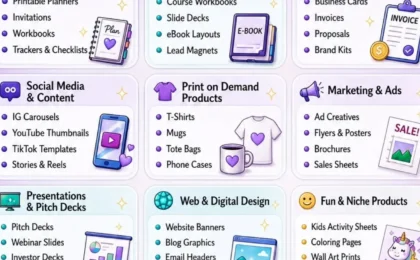
The image doesn’t say what the side hustle actually is. That’s the tell. When a post promises a big number without naming the method, the method is usually the hard part they’re skipping.
So let’s talk about what genuinely earns that kind of money, what it costs in effort, and how to adapt it to your own space, budget, and schedule.
What $4,800 a month actually requires
Break the number down and it gets more manageable. $4,800 a month is about $1,200 a week. At 10 hours a week, that’s $120 an hour. At 20 hours a week, it’s $60 an hour. At 40 hours, it’s $30 an hour.
Most people don’t start at $120 an hour. They start at $20 or $30 and work up. The ones who hit the big number fast usually have one of three things: a skill that’s in demand, a product they can sell repeatedly, or an audience that trusts them.
If you’re starting from zero, the realistic path is slower. You might spend six months building before the income shows up. That’s not a reason to quit. It’s a reason to pick something that compounds.
Which side hustles come closest to that rate
Some options get you to that $100-plus hourly range faster than others. Here’s what actually works:
- Digital products. A printable planner, a sewing pattern, a home organization guide. You make it once, sell it forever. The catch is upfront work and marketing. A $15 product needs 320 sales a month. That’s about 11 sales a day.
- Niche consulting. If you know how to stage a home for sale, arrange a small garden, or organize a pantry, people pay for that expertise. You’re trading time for money, but at a high rate. The limit is your hours.
- Handmade goods. Custom furniture, ceramics, or textiles can command high prices. The effort is real, but the margin can be excellent if you source materials well.
- Online courses. Teach a specific skill—watercolor basics, vegetable gardening in small spaces, furniture refinishing. You record it once and sell access. Similar to digital products but with more perceived value.
The common thread is leverage. You’re not trading an hour for an hour. You’re building something that works without you, or charging a premium for expertise people can’t easily find elsewhere.
What the 10-hour week really looks like
Ten hours a week sounds light, and it is—once the system is running. But getting there takes a different shape.
In the first month, you’ll spend those 10 hours just building. Making the product, setting up the shop, learning the platform. No income yet. Month two, you’re creating content to get noticed. Maybe a few sales. Month three, you’re refining what works and cutting what doesn’t.
By month six, you might be at half the target. By month nine or twelve, you could be there. That’s the honest timeline for most people who succeed at this.
The people who make it work treat those 10 hours like an appointment. Same time every day, no exceptions. They don’t wait for motivation. They just show up.
How to adapt this to your home, budget, and climate
Your space and situation change which side hustle makes sense. A small apartment doesn’t work for furniture refinishing, but it’s fine for digital products. A house with a yard opens up gardening or plant propagation. A cold climate limits outdoor work in winter, which pushes you toward indoor making or online selling.
Budget matters too. Digital products cost almost nothing to start. Handmade goods need materials. Consulting needs nothing but your knowledge. Match the startup cost to what you can afford to lose.
If you’re in a warm climate, consider seasonal products. Garden planners sell in late winter. Printable cleaning checklists work year-round. If you’re in a cold one, lean into cozy indoor products—knitting patterns, soup recipes, home organization guides.
Your home itself can be the asset. A spare room becomes a studio. A garage becomes a workshop. A sunny windowsill becomes a plant nursery. You don’t need much—you need consistent use of what you have.
Where most people go wrong
The biggest mistake is picking something they don’t actually enjoy. If you hate writing, don’t start a blog. If you can’t sit still, don’t pick data entry. The work has to be something you’d do even if it paid less, because the early months pay almost nothing.

The second mistake is quitting too early. Most side hustles fail in the first three months, right before they would have started working. The people who succeed are the ones who treat it like a job before it pays like one.
The third mistake is chasing the wrong metric. Sales matter, but so do email subscribers, repeat customers, and reviews. Those are the assets that make the $4,800 month possible later.
What to do with this information
Don’t try to replicate the exact number. Try to replicate the structure. Pick one thing, build it for six months, and measure whether it’s getting closer to that $110-an-hour rate.
Start smaller than you think. A $10 product that sells 30 times a month is $300. That’s not nothing, and it proves the model works. Then you improve the product, raise the price, or make more of them.
Set a specific goal for the next 30 days. Not “make money online” but “list one digital product and get 10 people to see it.” Small, concrete steps beat vague ambition every time.
If you’re still figuring out where to begin, these four phone-based income ideas are a practical starting point. They’re low-cost and you can test them this week. For broader inspiration, this list of creative money-making angles might spark something that fits your skills. And if you want to build knowledge that compounds, a year of focused reading can give you the foundation most people skip.
Is the $4,800 claim realistic?
Yes, for some people. No, for most people in the first year. The number is achievable, but it’s a destination, not a starting point.
What’s realistic for you depends on your skill, your consistency, and how long you’re willing to build before the income catches up. Ten hours a week is enough time. The question is whether you’ll use it the same way next month as you do this one.
That’s the real side hustle. Not the money. The showing up.