The idea of opening your kitchen cabinet for a moment of self-care has a certain timeless appeal. Among the many natural combinations people reach for, one stands out for its beautiful simplicity: an easy baking soda and coconut oil face treatment. There is something grounding about blending a spoonful of silky coconut oil with a dusting of baking soda, creating a texture that feels substantial yet gentle. It speaks to a quieter kind of beauty ritual, one that does not require complicated steps or hard-to-pronounce ingredients, just the intention to pause and do something kind for your skin.
Why This Simple Ritual Keeps Gaining Attention
In a world of elaborate ten-step routines and high-tech tools, this combination feels like a return to basics. Baking soda has long been appreciated for its finely gritty texture and its ability to neutralize and gently buff. Coconut oil, solid at room temperature but quick to melt with warmth, is celebrated for its rich moisture and the comfortable slip it gives during facial massage. When these two pantry staples come together, they create a multi-sensory experience that feels both cleansing and deeply nourishing. People are drawn to it not because it promises perfection, but because it feels doable, affordable, and pleasantly uncomplicated.
The ritual also satisfies a curiosity about reducing the number of products we put on our skin. If you have ever looked at an ingredient label and felt overwhelmed, the clarity of two recognizable items can be deeply reassuring. It aligns with a wider appreciation for slowing down and bringing mindfulness into daily moments. The gentle scent of coconut, the soft scratch of the grains, and the warmth of your own hands working the mixture all contribute to making it feel like a small, cherished ceremony.
What Makes This Combination Work So Nicely
Understanding why these two ingredients play well together helps you use them with greater awareness. Baking soda, chemically known as sodium bicarbonate, is a mild alkaline salt. Its fine, uniform crystals offer a physical exfoliation that feels predictably smooth, helping to lift away the outer layer of dull, dead cells that can make skin appear lackluster. This brief polishing moment can temporarily refine the skin’s surface, leaving it feeling exceptionally soft and clean.
Coconut oil acts as the delivering medium and a protective cushion. Rich in saturated fats, particularly lauric acid, it has a unique ability to melt at body temperature. This melting quality allows it to glide across the skin without dragging, holding the baking soda in a stable suspension that is easy to spread. After rinsing, a whisper-light residue often remains, continuing to soften the skin rather than leaving it tight and dry. For many, this is the element that transforms a potentially harsh scrub into something that feels surprisingly conditioning.
Key Elements of a Successful Application
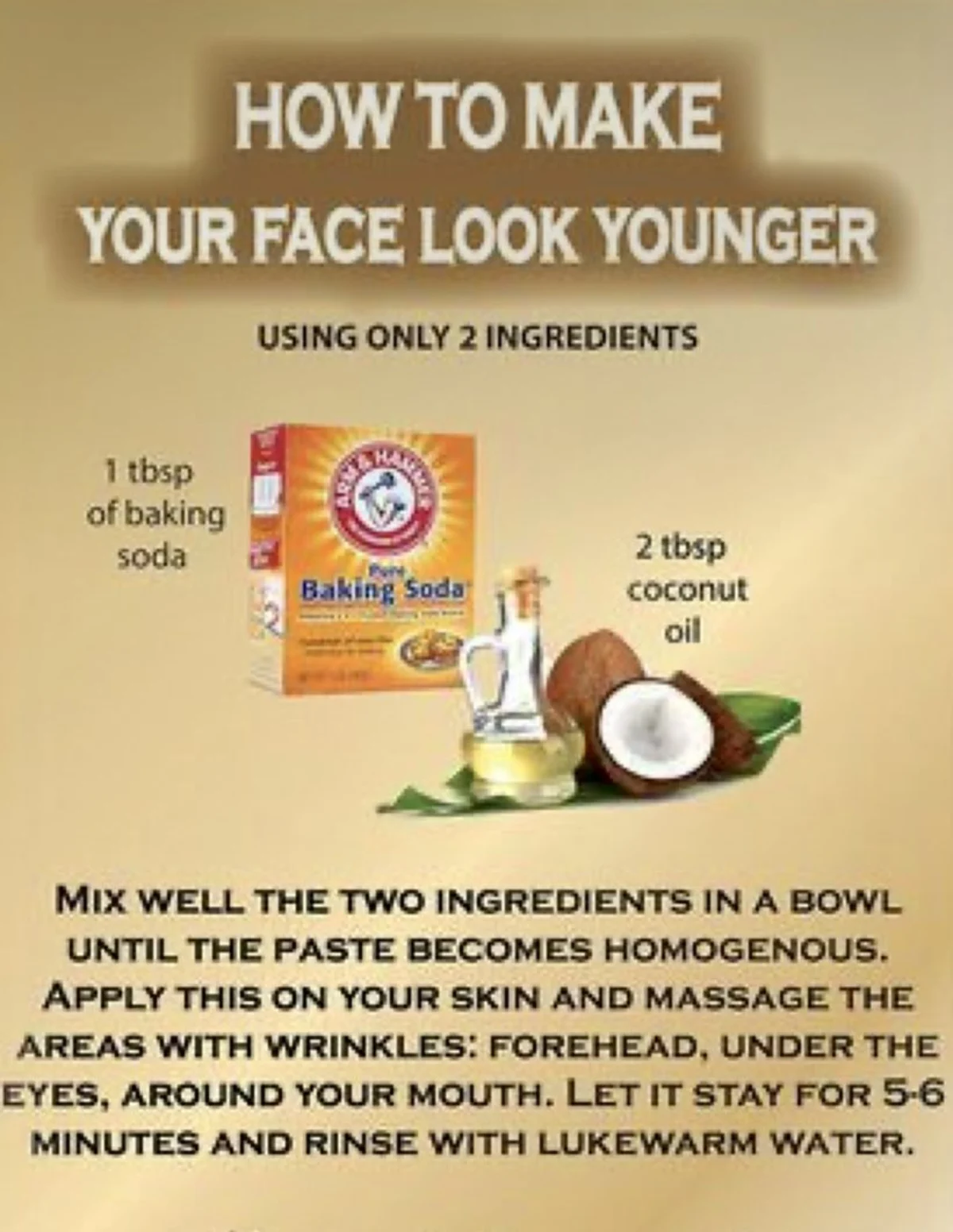
Texture is everything when it comes to making this feel like a treat rather than a chore. Aiming for a consistency similar to a soft paste or thick frosting gives you enough substance to work with while keeping the grains mobile. If the mixture feels too dry, it can be harder to spread and may concentrate the baking soda in one spot. If it becomes too oily, the grains can slip away before they have a chance to lightly polish. A good starting ratio is enough solid coconut oil to fill a teaspoon, gently warmed between your fingers, with a modest sprinkle of baking soda stirred in until the texture suits your preference.
Timing matters just as much as texture. This is not a treatment that benefits from extended contact. A brief, feather-light massage lasting no more than thirty to sixty seconds is usually sufficient. The goal is to sweep the paste across the forehead, cheeks, chin, and nose using soft, circular motions without pressing down. Letting it sit for too long may disrupt the skin’s natural barrier, so the magic truly lies in a short, mindful application followed by a thorough rinse with lukewarm water.
Ways to Adapt the Idea for Different Needs
One of the most appealing aspects of this concept is how flexible it can be. If your skin feels sensitive or reactive, consider shifting the balance significantly in favor of coconut oil, using just enough baking soda to create a gentle slip without visible grittiness. This transforms the mixture into more of a cleansing balm with very subtle polish, ideal for days when you want softness without noticeable exfoliation.
For those whose skin responds well to richer textures, the idea can be extended into a longer, more luxurious facial massage. After the initial light buffing action has been rinsed away, a fresh dab of pure coconut oil can be swept over damp skin to seal in the sensation of comfort. Others may enjoy adding a drop of cool, steeped chamomile tea into the paste to give it an extra element of soothing calm. These small variations keep the practice feeling personal and responsive to how your skin feels day to day.
- Use a stainless steel or ceramic spoon to avoid any reaction with the baking soda.
- Tie your hair back and use a soft headband to keep edges clean and oil-free.
- Dry your face gently with a dedicated soft cloth that you do not mind getting a hint of coconut oil on.
- Follow with a lightweight, fragrance-free moisturizer if your skin still feels thirsty after rinsing.
Planning This Into Your Quiet Moments
Finding the right moment for this treatment can elevate it from a task to a genuine pause. Evening often works beautifully because it removes the day’s buildup and sets the stage for nighttime renewal. The process pairs wonderfully with a warm bath or a few minutes of quiet reflection before bedtime. Lighting a candle, playing soft music, or simply standing in the calm of your bathroom without distractions can turn those sixty seconds into a restorative reset.
Frequency is a personal choice that benefits from careful observation rather than a rigid schedule. Many individuals enjoy it as a once-a-week reset, a midweek moment that feels removed from the usual hustle. If your skin tends to feel easily provoked, spacing it out to every ten days or even twice a month allows you to still enjoy the ritual without overdoing it. Paying attention to how your skin feels the morning after gives you clear, gentle guidance on whether to adjust the ratio or the timing.
Understanding Sensation and Aftercare
A clean, slightly tingly sensation is a common and expected part of the experience. Baking soda’s alkaline nature can create a brief shift in the skin’s surface pH, often perceived as a fresh, awakened feeling. However, there is a clear difference between a passing tingle and a persistent sting. The former fades shortly after rinsing, while the latter suggests the mixture may be too strong or the contact too long. Learning to recognize that subtle boundary is essential to keeping the practice both safe and enjoyable.
After rinsing, the skin is often slightly more receptive and ready to drink in moisture. A gentle, unscented moisturizer or a second, ultra-thin layer of coconut oil patted onto damp skin can help maintain a soft, balanced finish. Avoiding strong active ingredients immediately after is wise, as the skin has just been lightly polished and may not welcome anything too intense. A simple, nurturing approach to the hours that follow allows you to extend the feeling of care well beyond the moment of application.
Frequently Asked Questions
Can an easy baking soda coconut oil face treatment work for all skin types?
Skin types vary widely, and what feels wonderful for one person may not suit another. Those with dry or sun-weathered skin often appreciate the rich moisture coconut oil provides, while the baking soda offers a soft polishing effect. People with very reactive or redness-prone skin may find baking soda too stimulating and might explore using coconut oil alone as a gentle cleanser. The beauty of this concept is that it can be adjusted or skipped based entirely on how your skin responds on any given day.
How often is it reasonable to use this combination?
Once a week is a comfortable rhythm for many, creating a sense of ritual without overwhelming the skin. Some individuals with more resilient skin might enjoy it twice a week, especially during seasons when dryness and dullness feel more pronounced. The most useful guide is not the calendar but the mirror and the feeling of your skin. If it starts to feel tight, shiny in an uncomfortable way, or unusually sensitive, that is a signal to space the treatments further apart or dilute the mixture further.
What should I expect to feel during application?
A mild graininess as the baking soda moves across the skin paired with the slippery warmth of melting coconut oil is the core sensation. After rinsing, a soft, smooth texture is common, and many people describe their skin as feeling exceptionally clean yet not stripped. A brief sensation of warmth or light tingling can occur, but anything sharp or persistent indicates it is time to rinse immediately and reconsider the ratio for next time.
Can this mixture be prepared in advance?
It is generally more satisfying and practical to prepare this fresh each time. Mixing it right before use ensures the baking soda crystals retain their intended texture without dissolving into the oil over time. Coconut oil’s consistency also shifts with room temperature, which can alter the blend’s balance if it sits on a shelf. Taking those few extra seconds to scoop and stir in the moment adds to the ritual, making it feel deliberate rather than hurried.
The enduring charm of an easy baking soda coconut oil face rejuvenation lies in its gentle nod to simplicity, care, and resourcefulness. It is not about chasing a flawless result but about embracing a small, sensory act of kindness for yourself. The combination asks very little of you—a couple of pantry items, a soft cloth, and a minute of quiet time. In the soft rhythm of swirling, buffing, and rinsing, there is a gentle space where the day’s noise fades and you simply feel present in your own skin.