There is a quality of quiet opening in Fish Pose that feels very different from more active backbends. It does not ask for muscular force or dramatic flexibility; instead it invites a slow, supported expansion across the front body while the rest of the world softens into the background. People often come to this shape looking for a stretch through the chest and throat, but they stay for the way it strengthens the upper back, wakes up the breath, and leaves the whole spine feeling spacious. You do not need to be a seasoned practitioner to notice how a few calm minutes here can shift both posture and mood in surprisingly lasting ways.
What Makes This Pose Feel So Good
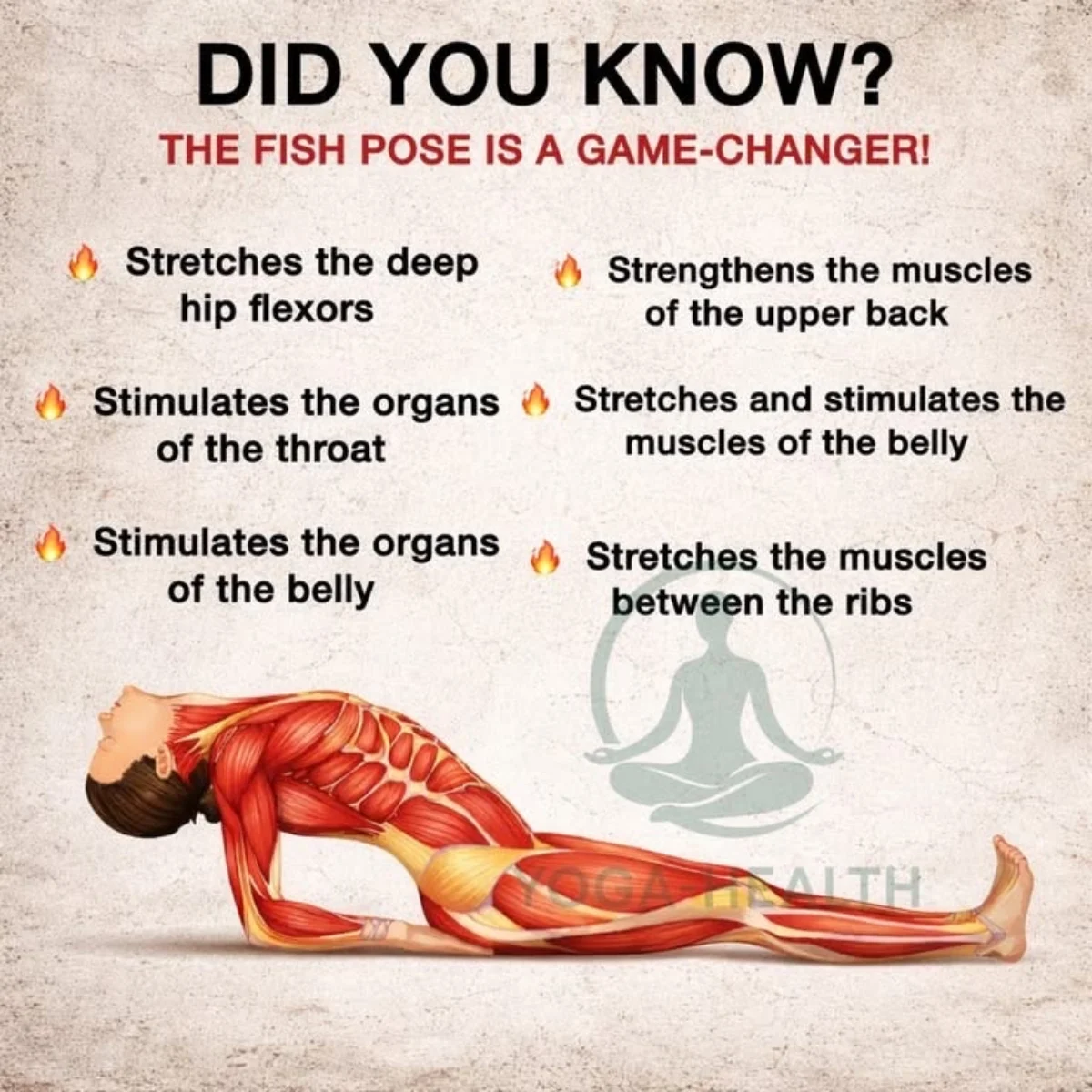
Fish Pose targets a part of the body that modern life keeps wound tight. Hours spent leaning into screens or steering wheels gradually shorten the muscles across the chest and front of the neck while letting the upper back round and weaken. Matsyasana works in reverse, gently stretching the pectoral muscles, intercostal muscles between the ribs, hip flexors, and the delicate front throat tissues all at once. At the same time it asks the rhomboids, middle trapezius, and erector spinae to engage and support the lifted arch, building the exact strength needed for upright posture without you having to think about standing straighter all day long.
Many practitioners also notice a lift in mental clarity and a brighter emotional tone after holding the shape for several slow breaths. One reason may be purely physical: when the chest expands more fully, the diaphragm has room to move and breathing can feel deeper and less effortful. That sense of taking a truly full breath often calms the nervous system while delivering a clean hit of alertness, which is a rare combination to find in a single posture.
Why It Is Worth Adding to Your Practice
If your current movement routine already includes a few rounds of gentle stretching, Fish Pose brings something distinct to the table. It counters the forward-dominated patterns that creep in from desk work, driving, reading, and even many common exercises like cycling or crunches. By giving the front body a clear opening experience at least a few times each week, you give the back body permission to do less compensatory gripping. Over time that can show up as less upper-back fatigue, easier deep breathing during walks or workouts, and a taller sitting stance that feels natural rather than forced.
People who practice singing, public speaking, or any activity that benefits from an open throat often mention a special appreciation for this posture as well. The gentle stretch across the neck and thyroid area can feel liberating, though the value here is about sensation and spaciousness rather than any specific physiological claim. Simply put, it feels wonderful to uncurl and lift the heart with support underneath you.
Key Visual Ideas That Inspire
There is something beautifully symbolic about the look of Fish Pose that shows up again and again in minimalist yoga imagery and wellness photography. The line from the crown of the head to the arch in the upper spine creates a clean, elegant curve. It communicates lightness and surrender simultaneously, which is a visually compelling idea wherever you are planning to use it for inspiration.
- Soft, neutral surfaces: A light mat or natural-toned floor keeps attention on the body line. Pale wood, sand, or simple cork all let the gentle arch read clearly in a photograph.
- Calm, muted clothing: Pieces in quiet earth tones or soft heathered grays reflect the inward, cooling nature of the posture and keep the mood restful rather than athletic.
- Uncluttered space: The shape feels most expressive when there is visual room to breathe around it. A minimal corner, an open studio, or even a simple outdoor setting can hold the pose beautifully.
- Gentle lighting: Soft, diffused light from a window or early morning outdoor glow brings out the lifted chest and the relaxed face without harsh contrast.
- Optional eye covering: A light cloth or eye pillow sometimes appears in inspirational images, reinforcing the internal, restorative quality of the posture.
Ways to Adapt the Idea for Different Bodies and Days
Not every body finds comfort in the full classical version where the crown of the head makes contact with the floor and the arms rest alongside the torso. The pose is actually wonderfully adaptable, which makes it worth exploring in several arrangements until you find the one that leaves you feeling open rather than strained. The underlying idea is always the same: lift the chest, roll the shoulders back, and breathe into the front ribs.
- Supported version with a bolster or folded blankets: Place a bolster or a stack of two firm folded blankets lengthwise along the spine from the lower back to the head. Let the shoulders fall to the sides and keep the legs extended or bend the knees with feet flat. This is a deeply restful variation that still delivers the opening across the chest and throat.
- Props under the head only: If the neck objects to reaching back, keep a folded blanket or a yoga block under the head so the crown does not drop below the heart line. This small change can make throat sensation much more manageable.
- Legs crossed or in a wide straddle: Some people prefer practicing with the legs in a comfortable cross-legged position or letting the inner thighs release wide apart. Either option changes the demand on the hip flexors and can feel freer in the lower back.
- Fish on a chair: Sitting toward the front of a sturdy chair, holding the side edges, and arching the upper back gently while letting the head drop back offers an upright variation that works well in an office break or travel pause.
Practical Tips for a Satisfying Experience
Because Fish Pose asks the neck to move into a position it rarely visits during daily life, a thoughtful approach makes all the difference between a stretch that feels spacious and one that feels pinchy. Before lowering back, spend a few breaths simply seated with hands behind you, lifting the sternum and squeezing the shoulder blades together. This pre-warms the upper back muscles that will support the arch.
Once you lower to the crown of the head, check that most of your body weight stays distributed through the forearms, elbows, hips, and legs rather than settling into the head and neck. The head contact should feel featherlight. If you notice tension in the jaw or throat, support the head with a prop right away rather than pushing through. Keep the legs actively reaching through the heels even when the pose feels restful; this engagement helps protect the lower back. When you are ready to come out, press into the forearms, lift the head, and tuck the chin gently toward the chest before lying flat to rest for a breath or two.
Integrating the Feeling into Your Day
One of the most useful gifts of Fish Pose is that it teaches you what an open chest and a supportive upper back actually feel like as a team. Once you have felt that combination on the mat, you can borrow pieces of it throughout the day. Waiting for the kettle to boil or sitting at a long red light becomes a chance to roll the shoulders back, lift through the sternum, and take one of those full, expansive breaths. The posture becomes not just a shape to visit for a few minutes but a physical reference point that quietly improves everything else.
Frequently Asked Questions
Is Fish Pose safe for the neck and shoulders?
When practiced with full attention to weight distribution and appropriate props, most people find Fish Pose comfortable and releasing rather than harmful. The key is to keep body weight in the forearms, elbows, and hips so the head stays light. Anyone with specific neck concerns, such as cervical disc issues, should work with a knowledgeable teacher who can offer modifications, and in many cases the supported bolster version becomes a wonderful alternative that still opens the chest without loading the neck at all.
Can I practice Fish Pose if I have lower back sensitivity?
Many people with lower back sensitivity do well by keeping the legs bent with the feet flat on the floor and the knees pointed upward. This reduces the pull on the hip flexors and lowers the demand on the lumbar spine. Paying attention to a gentle engagement through the glutes and core can also help keep the lower back comfortable. As always, backing off when sensation shifts from stretch to strain is the right instinct.
How long should I hold Fish Pose to notice the stretching and strengthening benefits?
Starting with five to eight slow, unforced breaths gives the front body enough time to release without exhausting the supporting muscles. Over time, some practitioners enjoy staying for a couple of minutes in the fully supported version, while others prefer shorter holds and a few repetitions. Listening to your own breath quality is a reliable guide: when the breathing stays smooth and full, you are likely in a useful duration.
Does Fish Pose help with rounded shoulders from desk work?
Because it stretches tight chest muscles and strengthens the upper back muscles that retract the shoulder blades, regular practice can absolutely complement posture work for rounded shoulders. Think of it as giving your body the opposite shape from the one it holds during hours of computing or texting. Combined with other heart-opening movements and consistent awareness of workstation setup, Fish Pose becomes part of a bigger posture-nurturing toolkit.
Returning to quiet, supported opening even a couple of times each week tends to shift something subtle but genuine in how you carry yourself. The posture meets you exactly where you are—tight shoulders, tired spine, shallow breathing and all—and offers a gentle shape that feels like a reset button made of breath and space. Whether you roll out a mat in a sunlit corner first thing in the morning or pause to open your chest after a long work stretch, the combination of stretching and strengthening that Fish Pose provides quietly works its way into the rest of your day.