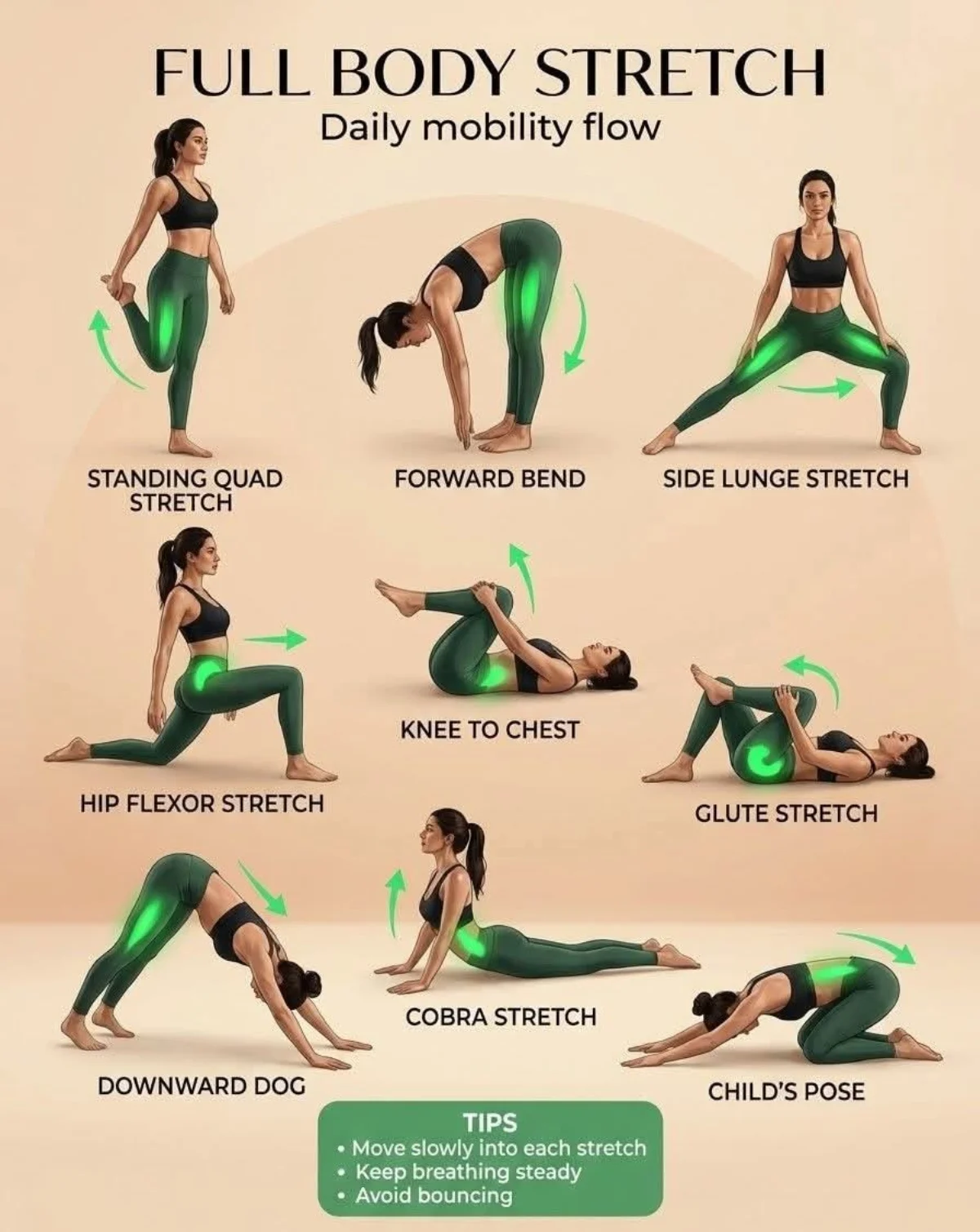
A full body stretch daily mobility flow exercise is more than just stretching; it’s a mindful movement practice designed to improve flexibility, enhance joint range of motion, and promote overall well-being. By incorporating this into your daily routine, you can experience a noticeable difference in how your body feels, moving with greater ease and reducing stiffness. It’s about creating a fluid sequence of stretches that warm up muscles, improve circulation, and prepare you for daily activities.
The Benefits of a Daily Mobility Flow
Regularly engaging in a full body stretch daily mobility flow offers a wide range of benefits. Beyond improved flexibility, it can reduce muscle tension, alleviate pain, and enhance posture. The increased circulation that results from these movements contributes to a healthier musculoskeletal system. Furthermore, a mobility flow encourages better body awareness, which can improve balance and coordination. The mindful aspect helps reduce stress and promotes a sense of calm.
Key Components of a Full Body Routine
A well-rounded full body stretch routine incorporates several key elements. It’s a combination of dynamic stretches to warm up the muscles, static stretches to lengthen them, and mobility exercises to improve joint range. The order of these movements is important, typically starting with dynamic stretches followed by static stretches. Listening to your body is crucial throughout the entire routine.
Dynamic Warm-up
Begin your routine with dynamic stretches. These involve controlled movements through a range of motion. Examples include arm circles, leg swings, torso twists, and walking lunges. Dynamic stretches prepare your muscles for more intense stretching by increasing blood flow and raising muscle temperature. The focus should be on smooth, fluid movements, not jerky motions.
Static Stretching
After your dynamic warm-up, transition to static stretches. This involves holding each stretch for a period of time, typically 20-30 seconds. Static stretches lengthen muscles and improve flexibility. Focus on feeling a gentle pull without pain. Good examples include hamstring stretches, quad stretches, shoulder stretches, and triceps stretches. Remember to breathe deeply throughout each stretch.
Mobility Exercises
Mobility exercises are designed to improve the range of motion at your joints. These often involve controlled movements through a full range of motion, sometimes with the aid of a foam roller or other tools. Examples include hip circles, shoulder dislocations (using a band), and wrist rotations. Mobility work is especially beneficial for athletes, but it’s helpful for anyone looking to improve their movement quality.
Adapting the Routine to Your Level
The beauty of a full body stretch daily mobility flow is its adaptability. Whether you’re a beginner or more advanced, you can modify the routine to suit your needs and abilities. If you’re new to stretching, start with shorter hold times and fewer repetitions. As you become more flexible, you can gradually increase the duration and intensity. Don’t be afraid to modify poses or exercises if you have any limitations or injuries.
- Beginner Modification: Reduce the duration of each stretch to 10-15 seconds.
- Intermediate Modification: Increase the hold time to 30 seconds and add more repetitions.
- Advanced Modification: Incorporate more challenging variations of stretches, like deeper splits or advanced poses.
Planning and Styling Your Stretch Session
Create a comfortable and inviting space for your stretch session. Find a quiet area where you won’t be disturbed. Consider playing relaxing music to enhance the mood. Consistency is key, so aim to incorporate this routine into your daily schedule at a time that works best for you. You might find it beneficial to set a timer to help you stay on track and avoid rushing through the stretches.
Experiment with different stretches to find what feels good for your body. Listen to your body’s signals and avoid pushing yourself beyond your limits. A little bit of stretching each day can go a long way in improving your overall well-being.
Frequently Asked Questions
How much time should I dedicate to a full body stretch?
Aim for at least 10-15 minutes each day. You can gradually increase the duration to 20-30 minutes as you become more comfortable. Even short, consistent stretching sessions can provide significant benefits.
Is it important to warm up before stretching?
Yes! Warming up your muscles before stretching helps to increase blood flow and prepares them for more intense movements. A dynamic warm-up is ideal, involving movements like arm circles, leg swings, and torso twists. This reduces the risk of injury and improves the effectiveness of your stretches.
Can I stretch if I have injuries or pain?
Consult with a healthcare professional or physical therapist before starting any new stretching routine, especially if you have injuries or pain. They can help you modify stretches to avoid aggravating your condition. Listen to your body and stop if you feel any sharp pain.
What are the best times of day to stretch?
There’s no definitive “best” time, but stretching in the morning can help wake up your body and improve your posture. Stretching in the evening can help relax muscles after a long day and promote better sleep. The best time to stretch is whenever you can consistently fit it into your routine.
A Final Thought
A full body stretch daily mobility flow exercise is a powerful tool for improving your physical and mental well-being. By incorporating this practice into your daily life, you can experience increased flexibility, reduced muscle tension, improved posture, and a greater sense of ease in your movements. Remember to listen to your body and adjust the routine as needed. The benefits of consistent stretching are well worth the effort.