Sometimes the stretches that look the most still on the outside feel the most alive on the inside. The frog, child, and tadpole shapes belong to a quiet family of hip openers that invite the body to soften into deeper ranges of motion without forcing anything. They sound playful, almost whimsical, yet underneath that gentle naming is a serious opportunity to release tension that many of us hold in the hips, inner thighs, and lower back. Whether you spend long hours sitting, move through high-impact workouts, or simply crave a moment of grounded calm, these shapes offer a flexible blueprint you can tailor to exactly how your body feels today.
Understanding the Frog Child Tadpole Connection
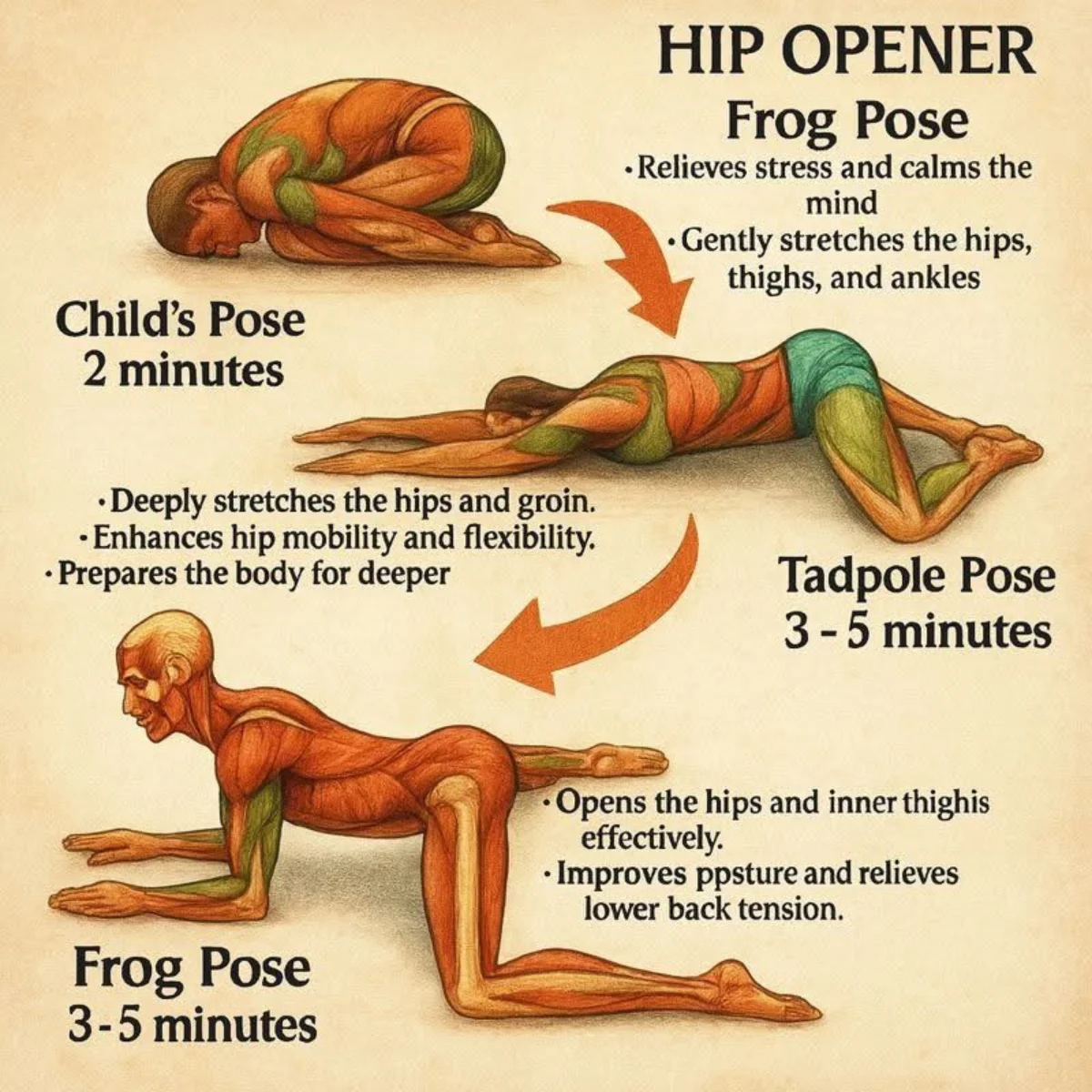
Think of these three positions as cousins rather than strangers. The frog shape usually invites the knees to open wide toward the edges of a mat, bringing the inner thighs into a deep stretch while the pelvis stays neutral or tilts slightly. Child’s pose follows a different path, folding the thighs closer together as the torso drapes forward, often with the forehead resting on the floor. The tadpole variation sits somewhere in between—a narrower hip opener that softens the angle of the frog without losing the inward focus on the groin and inner thighs. Together they create a spectrum of intensity that you can move through based on what your hips need in the moment.
What links them is a shared emphasis on passive holding rather than active pushing. Unlike standing lunges or dynamic leg swings, these floor positions work with gravity and breath. The muscles are given permission to let go slowly, which is often exactly what tight connective tissue around the hip joint requires. Many people discover that holding these shapes for two or three minutes with steady breathing unlocks a release that faster stretches cannot reach. The nervous system also gets a signal to downshift, making the sequence feel like a reset button for both body and mind.
What Makes the Look Work
There is a visual quietness about effective frog and tadpole stretches that tells you something important about effort. When these positions look comfortable rather than strained, the practitioner has usually found the right balance between edge and ease. Props play a big role in achieving that aesthetic of calm support. A folded blanket under the knees can transform the frog stretch from a wincing experience into something sustainable, while a bolster or cushion tucked under the chest in child’s pose lets the spine rest long without collapsing.
The orientation of the pelvis is another quiet detail that makes or breaks the effectiveness of the stretch. In the frog position, allowing the hips to sink backward toward the heels instead of jutting forward keeps the lower back safe and directs the opening where it belongs—into the inner thighs and hip sockets. In child’s pose, widening the knees just slightly more than hip-width apart creates a gentle internal rotation that complements the external rotation of the frog. The tadpole variation can bridge these two extremes, letting you play with a moderate turn-out while still softening the groin area without the full intensity of a wide-angle frog shape.
Key Visual Elements
Floor-based hip openers rely on a careful relationship between the legs, the pelvis, and the supporting props. In a well-supported frog stretch, you will often see padding under each knee and sometimes a bolster crossing under the forearms so the upper body can drape forward without rounding the shoulders. The spine remains long rather than curled, and the neck stays in line with the rest of the back. The ankles and feet mirror the knees, with toes turned outward in a way that feels natural rather than forced.
Child’s pose introduces a completely different visual. Here the body folds inward like a closing shell. The big toes often touch behind the body while the knees stay apart, creating a gentle oval space for the torso to nestle into. The forehead can rest on stacked hands, a block, or a soft cushion, and the shoulders release away from the ears. The tadpole position borrows from both styles, placing the knees a little wider than in a standard kneeling position but narrower than a full frog. One knee might draw slightly farther forward than the other, creating a gentle asymmetry that allows each hip to open to its own natural degree.
Why These Shapes Are Worth Exploring
Modern movement patterns tend to tighten the hip flexors and outer hip muscles in ways that our ancestors rarely experienced. Sitting in chairs, driving, and cycling all keep the hips in a flexed and relatively narrow position for hours at a time. The frog, child, and tadpole shapes counter that pattern by encouraging extension, external rotation, and adductor release in positions that do not require muscular effort to maintain. This combination of passive stretch and gravity-assisted opening can restore range of motion that gradually shrinks when we do not actively tend to it.
Beyond the physical benefits, these stretches offer something less tangible but equally valuable. The act of settling onto the floor, propping yourself with blankets or cushions, and breathing into a hold that lasts several minutes shifts the mind toward a slower, more introspective mode. It is hard to rush or multitask on the floor with your hips opening and your breath deepening. Many people find this meditative quality just as restorative as the stretch itself, creating a small pocket of quiet that carries into the rest of the day.
Ways to Adapt the Idea
You do not need to choose one shape and commit to it forever. These positions work beautifully when you move between them in a slow, listening way. Start in a wide child’s pose with knees apart and big toes touching, letting the hips settle toward the heels. After a minute or two, walk the hands forward and shift the knees wider to approach your version of the frog stretch. If the full frog feels too intense, draw one knee in slightly to find the tadpole variation, then switch sides after holding for equal time.
Props can completely change the experience. Placing a bolster lengthwise under the chest in the frog stretch turns it from a deep isolated opener into a restorative position you could comfortably hold for five minutes or more. Sliding a folded blanket between the heels and the back of the pelvis in child’s pose can reduce compression for those with limited ankle mobility. Even stacking pillows under the hips in the frog or tadpole shape can alter the angle enough to make a previously unreachable position feel welcoming. The goal is not extreme flexibility but consistent, comfortable exploration.
- Try a pillow or bolster under the torso to reduce weight on the hips
- Use a folded blanket under each knee for padding and grip
- Place a block or cushion under the forehead during child’s pose
- Experiment with asymmetrical tadpole variations to address uneven tightness
- Adjust the knee width by small amounts instead of moving to extremes
Styling and Planning Tips for a Comfortable Practice
Creating a small ritual around these stretches makes them easier to return to. Choose a quiet corner where you can spread a mat or soft rug, and keep a basket of folded blankets and cushions nearby so they are ready when you are. Wearing comfortable, non-restrictive clothing helps, since tight waistbands digging into the hips can work against the release you are hoping to find. Some people prefer to practice these shapes in the evening when the body is naturally warmer, while others use them as a gentle morning sequence after a few minutes of easy movement.
Timing and temperature matter more than most people realize. Holding these stretches for at least two to three minutes allows the muscles to move past their initial resistance and into a deeper release. Setting a gentle timer or playing a long, slow piece of music can keep you from clock-watching. If your space feels chilly, add an extra layer of warmth with a light blanket over your back, or wear soft socks so that cold feet do not distract you from breathing into the stretch. Small sensory comforts like these reinforce the message to your nervous system that relaxation is welcome here.
Combine the shapes with slow, easy breathing to enhance the opening. Inhale as if you are filling the space between your lower back and the floor, and exhale with a sense of softening around the hips and inner thighs. Some people find it helpful to imagine the breath traveling down into the tight spots, though even simple awareness of the natural breath rhythm is enough. The breathing does not need to be complicated; it just needs to be present.
FAQ
Is the frog stretch safe for beginners?
Yes, with thoughtful modifications. Beginners benefit from using thick padding under the knees and a bolster or folded pillows under the chest to reduce the intensity. Start with a narrower knee position and only widen gradually as comfort increases. Holding the stretch for a shorter time, around one minute, is a good starting point. Never push into sharp pain—deep hip stretches should feel like a strong sensation but not something that makes you hold your breath or clench your jaw.
How is the tadpole pose different from the frog pose?
The tadpole pose is essentially a narrower, less externally rotated variation of the frog. Instead of taking the knees wide toward the edges of the mat, you bring them to a moderate distance apart that still opens the inner thighs and groin but with less intensity. This shape can be accessed by starting from a hands-and-knees position and gently widening the knees outward while keeping the inner edges of the feet on the floor. It works well as either a preparatory stretch before deeper frog work or as a gentler alternative when the full frog feels inaccessible.
Can I do these stretches if I have hip issues?
Many people with general hip tightness find these positions helpful, but those with diagnosed hip conditions, recent injuries, or replacements should consult a physical therapist or medical provider before trying deep external rotation stretches. Even without specific injuries, practicing on a padded surface and avoiding any position that creates pinching, clicking, or sharp discomfort is essential. The purpose is gentle release, not pushing through pain signals that the body is sending for good reason.
How often should I practice these hip openers?
Consistency matters more than duration or intensity. A short session of five to ten minutes done three or four times per week tends to be more effective than an occasional long session. You can also weave one or two of these shapes into the end of other workouts or stretching routines. Listening to how your body responds the following day helps you adjust frequency—some people feel looser with daily practice, while others benefit from a rest day between deeper sessions.
Bringing the frog, child, and tadpole shapes into your movement life is less about achieving a picture-perfect position and more about reclaiming a sense of ease in parts of the body that do so much silent work. These stretches meet you where you are, whether you have been active for years or are just beginning to explore what your hips feel like when you give them time and attention. With a soft surface, a few well-placed props, and the willingness to stay still and breathe, you create a small space where tension can leave and a surprising amount of quiet can arrive. That combination of relief and stillness is what makes this gentle sequence worth returning to again and again.