
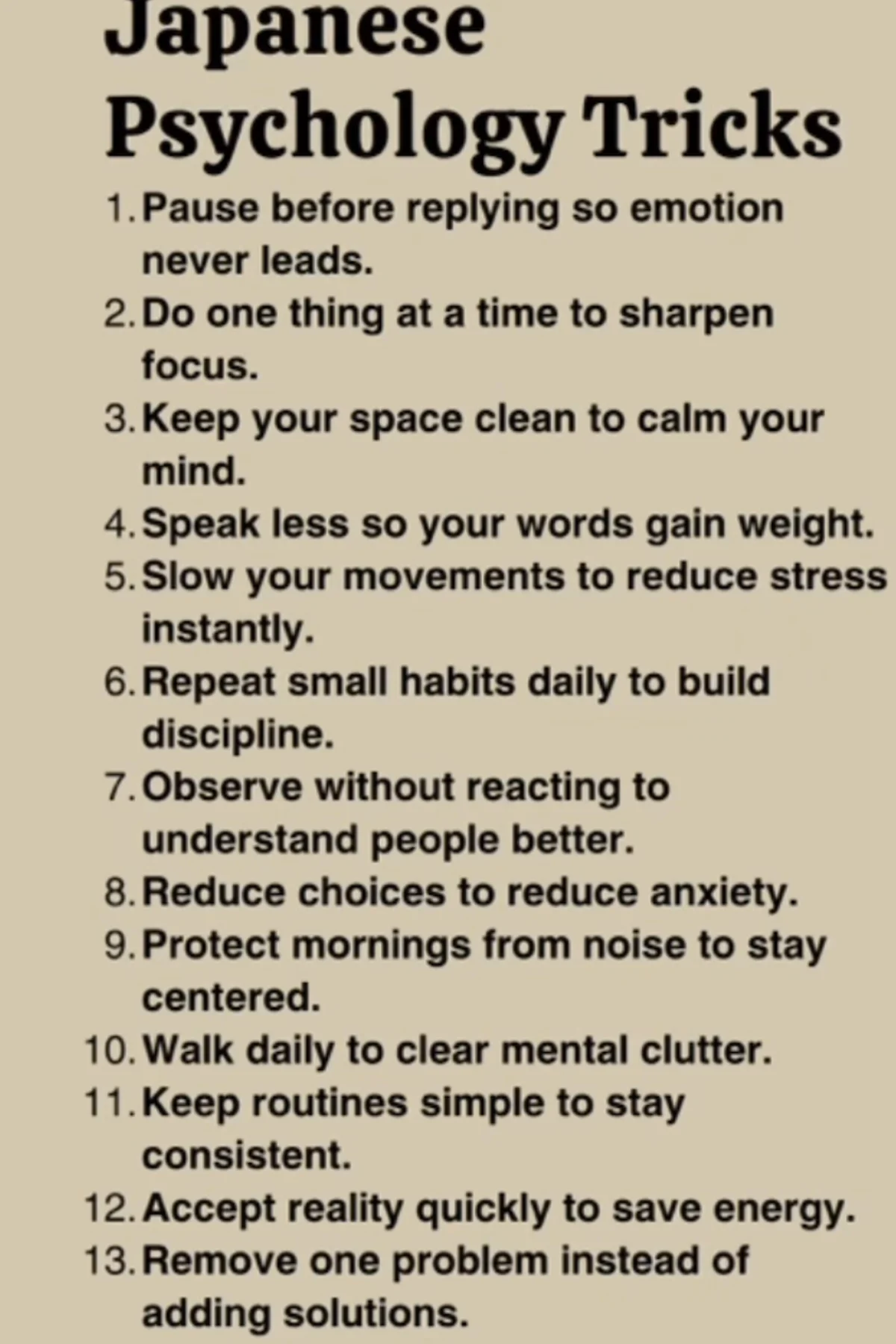
You know those days when your mind feels like a browser with too many tabs open? When the pressure to be happier, more productive, and perfectly put-together feels like a full-time job? For centuries, Japanese culture has quietly cultivated a different approach to mental well-being—one that doesn’t demand constant positivity or a complete personality overhaul. These Japanese psychology tricks aren’t really tricks at all. They’re gentle, profound shifts in perspective that invite you to work with your mind rather than wage war against it. Rooted in concepts like acceptance, nature connection, and finding beauty in the imperfect, they offer a soothing alternative to the exhausting pursuit of a flawless life.
Why Japanese Psychology Tricks for Better Mental Well-Being Matter Right Now
Modern life is loud. Our attention is pulled in a dozen directions, our self-worth is often measured by numbers, and the cultural script tells us to chase more—more success, more stuff, more certainty. In this climate, mental well-being can feel fragile. What makes Japanese psychology concepts so relevant is their quiet rebellion against this noise. They don’t ask you to fix yourself. Instead, they softly remind you that you are already part of something larger—a community, a natural world, a purpose that is yours alone.
These ideas matter because they offer a path out of the burnout cycle. Where Western self-help often focuses on aggressive self-improvement, these principles lean into acceptance, mindfulness, and connection. They teach that just being here, right now, in your imperfect, unfinished state, is deeply worthy. For anyone feeling untethered or exhausted by the pressure to thrive, these practices feel like a deep exhale.
Key Concepts That Quiet the Mind
Shinrin-Yoku: Forest Bathing as Emotional Reset
You don’t need a dense forest or remote mountain to practice shinrin-yoku, though that would be lovely. The core idea is simple: immerse your senses in a natural atmosphere and let your body and mind slow down to nature’s rhythm. Studies from Japan have long suggested that spending intentional, mindful time among trees can lower cortisol levels, reduce blood pressure, and ease the jagged edges of anxiety. But you don’t need a scientific report to feel it. You notice it when the constant mental chatter finally quiets and you become aware of the scent of damp earth or the specific sound of wind moving through pine needles. Forest bathing is not a hike with a step goal. It’s an invitation to wander slowly, breathe deeply, and let nature do the gentle work of untangling your mind without any effort on your part.
Wabi-Sabi: The Beauty of the Cracked and Worn
Imagine holding a chipped ceramic tea bowl and finding it more beautiful precisely because of its cracks. That’s wabi-sabi—the deeply held appreciation for impermanence, imperfection, and the authentic marks of time. Applied to mental well-being, wabi-sabi is a quiet revolution against perfectionism. It whispers that your quirks, your awkward moments, even your emotional scars, add texture and depth to who you are. When you embrace wabi-sabi as a personal philosophy, you stop editing yourself so ruthlessly. You begin to accept that a sad day is not a failure but a natural part of life’s patina. Your flaws are not defects to hide; they are the golden lines of kintsugi, the art of repairing broken pottery with gold, making the piece more precious for having been broken and mended.
Ikigai: A Gentle Reason to Rise
Ikigai sits at the crossroads of what you love, what the world needs, what you can be paid for, and what you are good at. But reducing it to a Venn diagram misses its tender, everyday power. For many in Japan, ikigai is not always a grand career calling. It can be as small as tending a morning garden, preparing a beautiful bento box, or being the person who always remembers a friend’s favorite tea. Finding your ikigai is less about a thunderous life purpose and more about identifying the small, steady reasons that make getting out of bed feel worthwhile. On difficult days, that gentle pull of purpose can be a lifeline, offering a sense of forward direction when motivation is scarce.
Shikata Ga Nai: Radical Acceptance of What We Cannot Change
“Shikata ga nai” translates loosely to “it cannot be helped.” This isn’t fatalism or giving up. It’s the profound practice of releasing your emotional grip on situations beyond your control. Think of the energy you spend raging against a delayed flight, a sudden downpour, or someone else’s unfair choice. That mental wrestling match exhausts you without changing the outcome. Shikata ga nai invites you to acknowledge the reality, feel your initial frustration, and then gently lay the struggle down. By directing your energy only toward what you can influence, you conserve a remarkable amount of inner peace for the battles that truly matter.
Practical Ways to Bring These Ideas to Daily Life
These concepts feel serene in theory, but their real magic shows up in how you weave them into a normal Tuesday. Start small and let one idea take root before adding another.
- Practice a five-minute forest bath indoors or out: If you can’t reach a park, sit by a window with a plant. Close your eyes. Notice the temperature of the air on your skin, the distant hum of life outside, the faint scent in the room. Engage your senses without labeling or judging.
- Find one wabi-sabi object near you: Look for a scuffed table, a frayed sleeve, a lopsided handmade mug. Instead of mentally replacing it, spend a moment appreciating its history and uniqueness. Let that gratitude spill over to your own imperfections.
- Name a tiny ikigai for tomorrow: Before bed, identify one small reason to look forward to the morning. It could be the first sip of coffee, five minutes with a novel, or the way morning light hits your kitchen counter.
- Pause and say “shikata ga nai” softly: When minor frustrations arise—a traffic snarl, a spilled drink—consciously use the phrase as a cue to unclench your jaw and loosen your shoulders.
Useful Considerations for Sensitive Minds
While these Japanese psychology tricks for better mental well-being are gentle by nature, they are not a substitute for professional care when mental health challenges feel overwhelming. Think of them as daily vitamins for psychological resilience, not emergency medicine. The goal is not to suppress genuine sadness or anxiety with platitudes. Feeling deeply is human. Wabi-sabi itself honors the full spectrum of emotions, including melancholy, as part of life’s beautiful texture. Practice these concepts with self-compassion, allowing yourself to just notice small shifts over time without pressuring yourself to achieve a perfectly zen state.
Tips for Building a Lasting Mindset Shift
Reading about these ideas creates a spark; subtle daily habits keep the flame alive. The goal is not to add more items to your to-do list but to infuse moments you already have with more presence.
- Anchor a ritual to an existing habit: While your coffee brews, stand by the window and take three intentionally slow breaths, noticing something natural outside.
- Create a visual cue for acceptance: Place a small, imperfect stone or a piece of handmade pottery on your desk as a tangible reminder of wabi-sabi whenever your perfectionism spikes.
- Explore your ikigai with curiosity, not pressure: Ask yourself once a week, “What gave me even a tiny spark of flow or fulfillment today?” Write it down without judgment.
- Reframe waiting as shinrin-yoku for the senses: When stuck in a line or waiting room, stop doom-scrolling. Instead, mentally scan your senses and notice three things you can hear, see, and feel right where you are.
Frequently Asked Questions
Can I practice forest bathing if I live in a city without green space?
Absolutely. While a forest is ideal, shinrin-yoku is more about a sensory mindset than a specific location. A quiet urban courtyard, a single tree on a sidewalk, or even a collection of houseplants by an open window can become your focus. Close your eyes and listen to birdsong or the sound of wind. Pay attention to the feeling of sunlight on your skin. The key is slowing down enough to let your senses come alive in whatever natural elements you can find.
Isn’t “shikata ga nai” just giving up?
It can feel that way at first, especially in cultures that prize control and action. But shikata ga nai is not passive resignation; it is an active release of useless suffering. The situation itself hasn’t changed, but your relationship to it has. That energetic release often creates enough inner space to respond calmly and wisely instead of reacting from a place of drained frustration. It is acceptance as a strategic emotional choice.
How is ikigai different from simply having a passion or a career goal?
A passion can be thrilling but self-focused, while a career goal often ties your worth to achievement. Ikigai is broader and gentler. It connects your inner joy with a sense of contribution to the world, however humble. You can find ikigai in making your family feel safe, walking a neighbor’s dog, or quietly practicing a craft. It’s not about the prestige of the activity but the feeling of life-meaning it gives you first thing in the morning.
What if my internal critic is too loud to appreciate wabi-sabi?
That’s a tender place to be, and it’s where many people start. You don’t need to silence your critic right away. Try starting externally—spend time honoring the beauty of imperfect objects around you, like crackled paint on an old building or a worn path across a lawn. As you practice seeing perfection in outside imperfection, your internal lens slowly softens. Think of it as a quiet, gentle practice rather than a switch you must flip today.
At their heart, these Japanese psychology tricks for better mental well-being are quiet invitations to come home to yourself. They don’t promise a life free of pain or struggle. Instead, they offer a sturdy, compassionate framework for moving through heartbreak, stress, and monotony with a little more grace. Somewhere between the scent of the forest, the acceptance of a cracked bowl, and the quiet spark of purpose waiting for you each morning, there is a softer, truer way to feel okay.