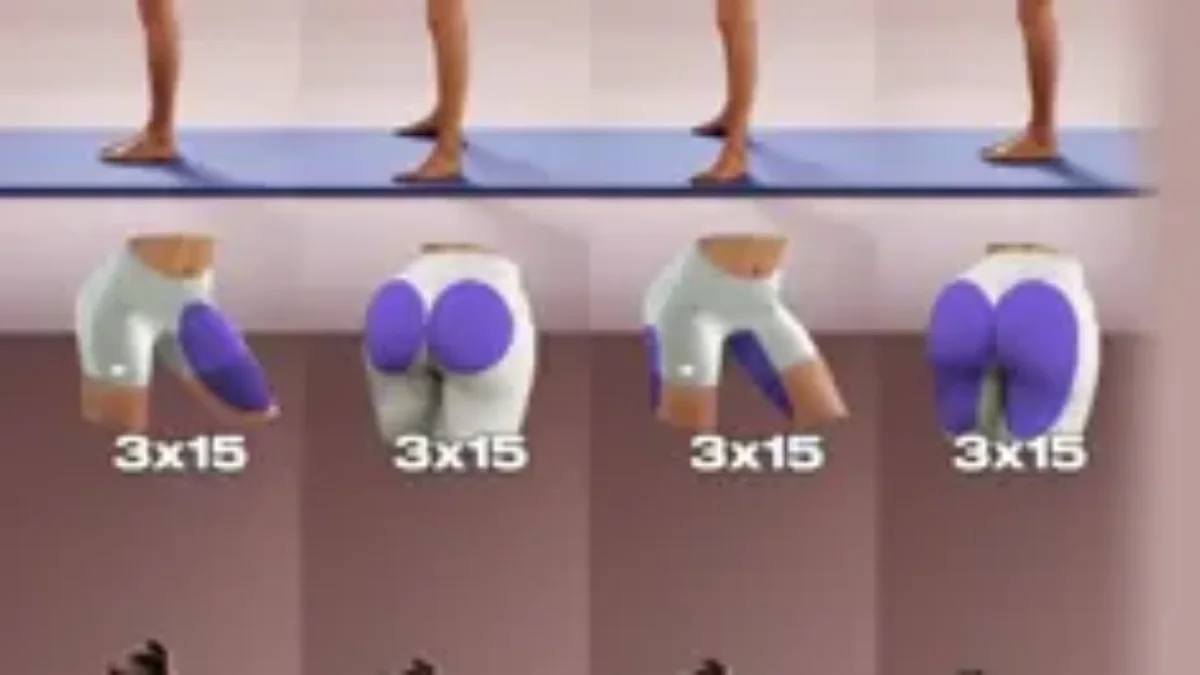
A dumbbell squat leg workout is one of the most reliable ways to build lower body strength without needing a fully equipped gym. The image here lays out a clean, manageable plan: three sets of fifteen repetitions—or simply 3×15. The visual breaks down the movement into four straightforward frames, showing a woman moving through the squat with a dumbbell in each hand. There is no added complexity, just a clear guide to consistent repetition and controlled motion. If you have been looking for a quick and effective way to strengthen your legs at home, this routine offers a solid starting point that fits into a busy schedule.
Why a 3×15 Dumbbell Squat Routine Matters
Bodyweight squats are effective on their own, but adding dumbbells shifts the focus toward building muscular endurance and functional strength. The 3×15 rep range bridges the gap between pure strength training and higher-repetition conditioning work. When you complete three sets of fifteen squats while holding weights, you are asking your legs to sustain effort over a moderate duration without heavy spinal loading.
This matters because many everyday activities—carrying groceries, lifting a child, climbing stairs—require your legs to work repeatedly under a mild external load. Training with dumbbells in this rep range prepares your body for that consistent demand. The woman shown in the demonstration maintains an upright posture and shoulder-width stance, which are key elements for distributing effort across the quadriceps, hamstrings, and glutes evenly. With consistent practice, this pattern helps develop the kind of lower body stability that supports better movement in other exercises and daily life.
Understanding the Visual Demonstration
The image provides a practical visual guide that anyone can follow without prior weightlifting experience. Across four frames in the upper section, the progression of a single dumbbell squat is mapped clearly. The woman begins standing tall on a blue yoga mat with a dumbbell held in each hand at her sides. Her feet remain shoulder-width apart, and her gaze stays forward as she bends her hips and knees evenly.
The sequence progresses through the lowering phase, the bottom position, and the return to standing. What is helpful about this layout is the emphasis on maintaining a neutral spine and controlled tempo. There is no rushing through the movement. The lower section reinforces the programming with a simple “3×15” visual, reminding you that a leg workout dumbbell squats 3×15 session is about repeating quality reps across three manageable sets rather than chasing heavy singles.
Key Details for Proper Form
Good form is the difference between an effective leg workout and unnecessary strain on your joints. The demonstration makes a few important details noticeable. First, the woman’s heels stay flat on the yoga mat throughout every frame. This suggests an emphasis on grounding your weight evenly through your entire foot rather than shifting onto your toes. Second, her torso remains relatively upright as she descends, which reduces excessive forward lean that can overload the lower back.
Her arms do not swing or lift the dumbbells to her shoulders. They remain hanging naturally at her sides, which challenges your grip strength and encourages the legs to do the primary work. The dumbbells themselves appear of a manageable size, suggesting that moderate weight combined with higher repetitions—like the 3×15 scheme—is the goal here. When you attempt this workout at home, focus on recreating these postural checkpoints rather than rushing to add more weight.
How to Approach the Setup
A few simple choices at the start can make your workout smoother and safer. Choose a flat, non-slip surface just like the blue yoga mat in the image. This protects your joints and gives you a consistent area to work within. Wear comfortable athletic clothing that allows your hips and knees to move without restriction. The woman wears a white tank top and dark shorts over green leggings, a practical combination for staying cool while providing enough coverage to move freely.
Pick a pair of dumbbells that you can control for all fifteen repetitions without losing form. The weight should feel challenging by the final three reps of each set, but not so heavy that your posture collapses. If you notice your heels lifting, your back rounding, or your knees caving inward, the weight is too heavy or you are fatigued beyond good mechanics. Reduce the load or shorten the repetition count slightly until you build enough endurance to complete the full 3×15 leg workout dumbbell squats target.
Practical Considerations for Your Home Workout
A home workout thrives on simplicity and consistency, and this dumbbell squat routine fits well into a no-fuss environment. You do not need a rack, a spotter, or special flooring beyond a basic exercise mat. This makes it easy to repeat regularly without the friction of traveling to a gym or waiting for equipment. The visual guide reinforces that a focused fifteen to twenty-minute block is all you really need.
Consider adding this squat workout to your current routine two to three times per week, allowing at least a day of rest or lighter activity between sessions. Since the 3×15 structure does not use extremely heavy loads, recovery demands are moderate, but your muscles still need time to adapt and repair. Pairing this with a short warm-up—such as bodyweight squats and gentle hip circles—prepares your joints for the range of motion you see in the demonstration frames. After your three sets, gentle stretching for your quadriceps and hamstrings helps maintain mobility.
Useful Tips to Stay Consistent
Sticking with a leg workout dumbbell squats 3×15 routine depends more on habit than motivation. A few strategies can help you maintain the practice without turning it into a chore.
- Track your sets simply: Keep a small notebook or use a note on your phone to mark down that you completed your three sets. There is something satisfying about a simple checkmark next to “Set 1, Set 2, Set 3.”
- Use a mirror or record yourself periodically: You do not need to obsess over every frame, but occasionally comparing your squat shape to the visual demonstration can catch small posture drift before it becomes a habit.
- Prioritize the mid-week session: If your week gets busy, protect the Tuesday or Wednesday workout. It keeps momentum alive so you do not go too many days between squats.
- Pair with a simple upper-body movement: After your squats, add one pushing or pulling exercise—like a dumbbell overhead press or bent-over row—to create a balanced full-body effect without lengthening your workout considerably.
FAQ About the Dumbbell Squat Leg Workout
Is the 3×15 dumbbell squat routine suitable for beginners?
Yes, the straightforward setup and controlled tempo make it beginner-friendly. Someone new to weighted squats should start with lighter dumbbells and focus on matching the posture shown in the visual frames. It is completely fine to aim for 3×10 or 3×12 first and gradually work up to fifteen steady reps.
How heavy should my dumbbells be for a 3×15 leg workout?
The appropriate weight is one you can lift for fifteen squats with proper form, while feeling significant effort in the last few repetitions. This varies from person to person. If you can breeze through fifteen reps without any muscular fatigue, you can increase the weight slightly. If you lose your upright posture or your heels come off the floor before reaching fifteen, the weight is likely too heavy right now.
Can I do this workout without a yoga mat?
A yoga mat provides cushioning and traction, as seen in the image where a blue mat is visible underfoot. You can perform the workout on any flat, non-slip floor. If you are on a hard surface, wearing shoes with decent grip helps maintain stability and comfort throughout your sets.
How often should I do this dumbbell squat leg workout each week?
Two to three times per week works well for most people, allowing at least one rest day between sessions. This schedule gives your leg muscles adequate recovery time while still providing enough frequency to build strength and muscular endurance over time.
Will dumbbell squats alone build noticeable leg strength?
Dumbbell squats performed consistently with good form and gradual progression will develop functional lower body strength. They target the quadriceps, hamstrings, and glutes effectively. Over time, you may find that you can handle slightly heavier dumbbells or add an extra set, which is a clear sign of increasing strength and endurance.
Building a Habit Around Simple Movement
A leg workout dumbbell squats 3×15 routine reminds us that effective fitness does not have to be elaborate. The image captures exactly what you need: a clear sequence of proper squat form and a simple repetition goal that keeps your session focused. The woman on the yoga mat is not performing anything acrobatic or inaccessible. She is moving through a fundamental human pattern with just enough resistance to make a difference, and that is something most of us can replicate at home.
When you commit to this practice, you are not just accumulating sets and reps. You are teaching your body to move well under load, building endurance that shows up in real life, and creating a small daily anchor of physical discipline. There is quiet value in showing up for those three sets, even on days when energy feels low. Over weeks and months, those efforts compound into stronger legs, better posture, and a genuine sense of capability that extends far beyond the blue yoga mat.