If you have ever felt like your lower back is constantly tight or your stomach seems to stick out no matter how many crunches you do, the issue might not be your core strength but your pelvic alignment. An anterior pelvic tilt happens when the front of the pelvis drops down and the back lifts up, creating an exaggerated curve in the lower spine. The good news is that yoga poses for anterior pelvic tilt can gently guide your body back toward a neutral position. By combining stretching for tight hip flexors with activation for underused glutes and deep core muscles, you can create lasting postural change.
Understanding Anterior Pelvic Tilt and Posture
Anterior pelvic tilt is a postural pattern where your pelvis tilts forward. Visually, this looks like a swayback stance with the tailbone lifted high, often causing the belly to protrude and the lower back to compress. It commonly develops from prolonged sitting, which shortens the hip flexors at the front of the body while weakening the glutes and hamstrings at the back.
When you are stuck in this position, standing upright feels like work because your muscles are fighting an imbalance. The deep core, especially the transverse abdominis, struggles to engage, leaving your spine without natural support. Over time, this can contribute to nagging stiffness, limited mobility, and even discomfort in the hips and knees. Retraining this alignment is not about forcing your spine flat. It is about releasing the tight muscles that pull your pelvis forward and waking up the muscles that have gone quiet.
Why This Routine Matters for a Flatter Stomach and Alignment
While spot reduction is a myth, improving your pelvic alignment can visually change your midsection immediately. When your pelvis tips forward, your internal organs push against the relaxed abdominal wall, creating a rounded look. By bringing your pelvis into a more neutral position, the torso stacks naturally, and the lower belly appears flatter.
Beyond aesthetics, proper alignment restores balanced breathing and helps your diaphragm and pelvic floor work together efficiently. A neutral pelvis also distributes weight evenly through your spine, reducing compression in the lumbar joints. This is especially valuable if you spend long hours at a desk. The poses in this guide address both the mechanical stiffness and the muscle weakness that keep you locked in an anterior tilt. They are gentle enough for most beginners but specific enough to feel effective right away.
Key Yoga Poses to Realign the Pelvis
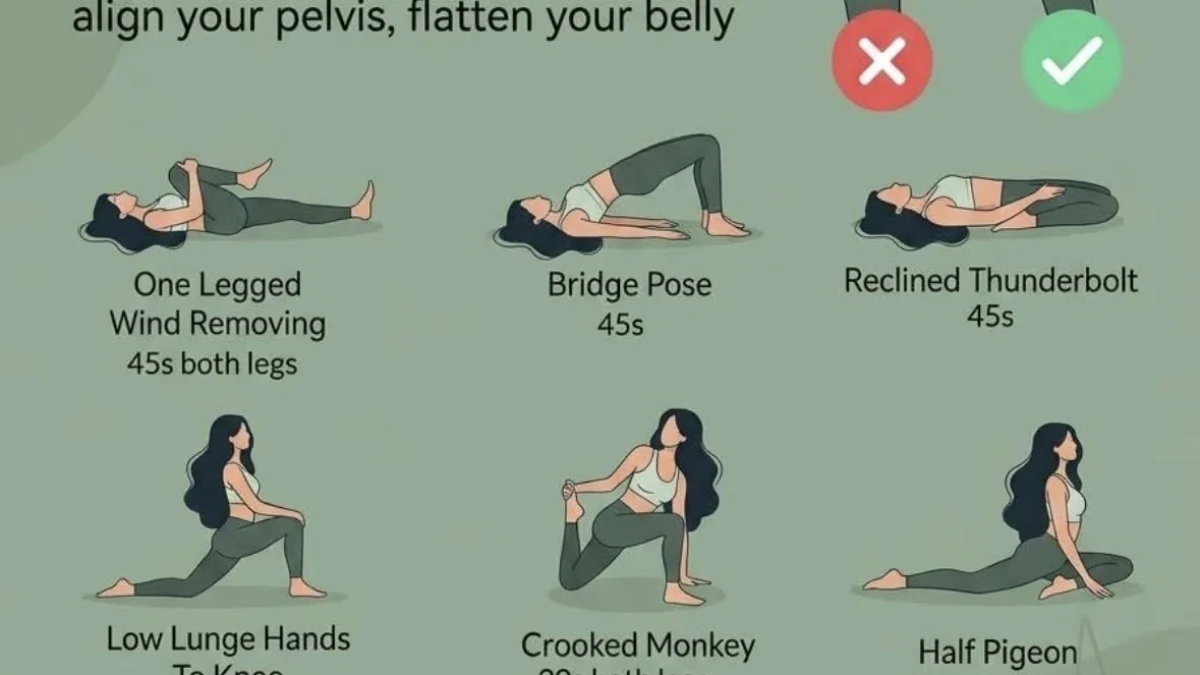
One Legged Wind Removing Pose
Lie flat on your back with both legs extended. Draw one knee toward your chest, interlacing your fingers over your shin. The key here is keeping your sacrum heavy on the floor rather than letting your tailbone lift off the mat. Hold for 30 seconds on each side. This pose gently releases the lower back muscles that are often overworked during an anterior tilt.
Bridge Pose
Bridge is one of the most effective ways to wake up dormant glutes. Lie on your back, bend both knees, and place your feet hip-width apart. Press into your heels to lift your hips. The visual cue for correct alignment is essential here. Avoid flaring your ribs upward or overarching your lower back. Instead, tuck your tailbone slightly and lengthen the front of your hips. Hold for 30 to 45 seconds, focusing on squeezing the back of the thighs and glutes rather than dumping tension into the spine.
Reclined Thunderbolt Pose
This pose provides an intense, targeted stretch for the quadriceps and hip flexors, which are chronically shortened when the pelvis tips forward. Kneel on the floor and sit back on your heels. If your knees allow, carefully lean backward, bringing your elbows or back to the mat. Keep your spine long, and press your hips gently downward. Stay for 20 to 30 seconds, breathing steadily into any tightness along the front of the thighs.
Low Lunge Hands to Knee
Step one foot forward into a lunge and place your hands on your front knee. Lower your back knee to the mat and untuck your back toes. Instead of simply sinking into gravity, actively draw your front heel backward on the mat and press your back hip forward. Correct form means you feel a stretch along the back leg hip flexor without compressing your lower spine. Avoid letting the belly droop forward. Hold for 30 seconds each side, directing the breath into the front of the pelvis.
Crooked Monkey Pose
From a low lunge, bend your back knee and reach your opposite hand behind you to gently hold the back foot or ankle. This traditional quadriceps stretch targets the rectus femoris, a muscle that crosses both the hip and knee and plays a major role in tilting the pelvis forward. Keep the hips square by drawing your back hip gently forward. Hold for 20 to 30 seconds on each side, prioritizing the release in the thigh over pulling the heel too aggressively toward the glutes.
Half Pigeon Pose
Half Pigeon is a favorite for external hip rotation and deep glute relief. Bring your front shin parallel to the front of your mat, and extend your back leg straight behind you. A common mistake in this pose is collapsing the weight into the front hip socket while the pelvis tilts heavily forward. Instead, square your hips by placing a folded blanket under the front hip if needed, and press the back hip toward the floor. Stay for 40 to 60 seconds, using slow exhales to soften any guarding around the outer hips.
Sage Marichi Pose C Variation
Sitting upright with both legs extended, bend one knee and place the foot flat on the ground. Twist your torso toward the bent knee, wrapping your opposite elbow to the outside of the thigh. This seated twist mobilizes the thoracic spine and strengthens the obliques, which help stabilize the rib cage and pelvis relationship. Keep the sit bones grounded and grow taller through the crown of the head as you rotate. Hold for 25 to 30 seconds per side.
Happy Baby Pose
Lying on your back, bend both knees and grab the outer edges of your feet, pulling the knees toward the armpits. The goal is to let the entire length of your spine release into the floor, so the tailbone naturally drops toward the mat. This pose undoes the grip of the deep hip muscles and helps the lower back widen. Gently rock side to side if it feels good, and hold for 40 seconds while focusing on relaxed nasal breathing.
Supine Bound Angle Pose
Finish your active sequence by lying back with the soles of the feet together and knees falling open. While this looks restful, it is actually a subtle inner thigh and hip opener that encourages the pelvis to settle neutrally. Place blocks or cushions under the knees if the groin stretch feels too intense. Stay for 1 to 2 minutes, allowing the floor to support your back completely so the anterior tilt pattern relaxes without effort.
Practical Considerations for Safe Practice
These poses primarily target flexibility in the front body and strength in the posterior chain, but progressing slowly matters. Always back out of a stretch if you feel pinching in the joints rather than a sensation of muscle lengthening. The hip flexors are particularly sensitive to sudden deep stretching, especially after long periods of sitting.
To get the most consistent results, practice these poses at least four times per week. Pay close attention to the visual cues on correct alignment versus incorrect alignment. It is common for people with anterior pelvic tilt to mimic the same swayback posture even during yoga, so checking your form constantly is important. Using a mirror or recording yourself can offer honest feedback that your body sensations might miss.
Useful Tips for Better Results
- Engage your core before moving. Before transitioning in or out of any pose, gently draw your navel toward your spine without holding your breath. This wakes up the transverse abdominis.
- Prioritize active glute engagement in Bridge Pose. Squeeze a block between your knees during the pose to feel the inner thighs and glutes work together, which prevents the hips from staying externally rotated and lazy.
- Do not over-flatten your back. The goal is a neutral pelvis, not a tucked or posteriorly tilted pelvis. Forcing your spine flat can create new tension patterns.
- Start low lunge variations with a bent back knee. A bent back knee targets the psoas muscle directly. Straightening the back leg shifts the stretch to the rectus femoris, which is also helpful but a different sensation.
- Breathe into discomfort. When you encounter tightness in the front of the hip, imagine sending your inhale into that specific area. This parasympathetic signal helps the nervous system release unnecessary guarding.
FAQ
How long should I hold each yoga pose for anterior pelvic tilt?
Most poses in this practice benefit from holds between 20 and 60 seconds. Poses like Half Pigeon and Supine Bound Angle can be held for a minute or more since they focus on passive release. Active strength poses like Bridge Pose work well with 30 to 45 seconds of engaged lifting, repeated for two or three rounds. Consistency of duration helps the nervous system adapt to a new, neutral alignment cue.
Can anterior pelvic tilt really make my stomach look flatter after yoga?
The visual change comes from postural alignment, not instant fat loss. When the pelvis tilts forward, the abdominal contents shift forward and the belly appears to protrude. By learning to rest in a more neutral pelvic position through consistent yoga practice, the lower abdomen naturally draws back toward the spine, creating a noticeably flatter silhouette. This change often appears within a few weeks of regular practice.
Is it safe to do Reclined Thunderbolt daily?
Reclined Thunderbolt is an intense stretch for the quadriceps, which attach to the front of the pelvis. If practiced gently and without forcing the knees into pain, it can be done daily for short durations of 20 to 30 seconds. Anyone with knee instability or meniscus issues should avoid sinking deeply into this pose or may choose to skip it and substitute a standing quad stretch with a wall for stability.
Why does my lower back still hurt during Bridge Pose?
Back pain during Bridge Pose usually means the glutes are not activating properly, so the lumbar spine compensates by arching. Try lowering your hips slightly and consciously squeeze your glutes to lift the pubic bone toward the navel. Placing a yoga block between your thighs can recruit the adductors and cue a proper posterior chain engagement. Avoid pushing your hips so high that your lower ribs flare apart.
How quickly can I fix an anterior pelvic tilt with yoga?
True postural correction depends on how long you have held the pattern and your daily habits. Many people begin to feel relief and improved body awareness within two to four weeks of regular practice. However, lasting change in resting posture often takes several months because the fascia and muscle length need consistent input to remodel. Pairing these poses with standing awareness during daily activities speeds up the process.
A Gentle Practice for Lasting Postural Health
Learning to correct an anterior pelvic tilt is less about intense workout effort and more about sensory awareness and consistency. The yoga poses in this guide target the exact muscles that keep you locked in a forward tilt, but the real shift happens when you start carrying that awareness off the mat. Notice how you stand in line at the store, how you sit at your desk, and how your pelvis rests while you sleep. Over time, this quiet attention becomes a natural habit. Trust the process, move slowly, and let your body settle back into the balanced posture it naturally desires.