Paper crafting remains one of the most accessible and rewarding creative outlets for people of all ages. Transforming flat sheets of colorful paper into dynamic three-dimensional shapes encourages imagination, problem-solving, and fine motor skills. When you want a project that feels lively and playful, crafting a whimsical figure brings instant joy to your crafting table. Making a paper craft of a dancing person allows you to explore simple geometric shapes, bright color combinations, and structural balance while having fun with everyday art supplies.
Whether you are looking for a rainy day activity for children, an engaging classroom project, or just a cheerful desk decoration, this handmade project fits the bill. The process relies on basic folds, loops, and curves rather than complicated templates or expensive equipment. By exploring how simple paper strips can hold weight and create motion, you gain a fresh appreciation for minimalist design and clever paper engineering techniques.
Gathering Your Colorful Materials
Before diving into any creative project, assembling your supplies ensures a smooth and enjoyable crafting session. You do not need professional-grade studio equipment to build a wonderful figure. Most of the required items are likely already sitting in your desk drawer, craft box, or school supply closet.
To create your own cheerful character, gather the following basic items:
- Several sheets of colorful construction paper or lightweight cardstock in bright shades like yellow, orange, red, green, and white.
- A pair of safe, sharp craft scissors for cutting clean strips and edges.
- A black marker or fine-liner pen to draw facial features and details.
- Optional adhesive such as a glue stick or clear tape if you prefer extra stability for your loops and joins.
- A flat work surface with good lighting to assemble your pieces comfortably.
Choosing contrasting colors for the head, torso, arms, and legs makes the final character stand out visually. Selecting vibrant primary and secondary hues gives the figure an energetic, playful personality that immediately catches the eye.
Building the Base and Torso Structure
Every great sculpture starts with a solid foundation. For this cheerful project, the body comes together through clever looping and curving techniques. Instead of gluing flat pieces together, you will use rolled strips of paper to create volume and springy movement.
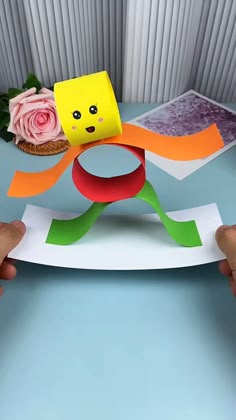
Start by cutting a neat rectangular strip of paper for the main torso. Rolling this strip into a cylinder creates a sturdy midsection that can support the upper and lower portions of the figure. Secure the ends of the roll gently so it maintains its rounded shape. This cylinder acts as the core of your dynamic little character, giving it presence and dimension on your tabletop.
Next, focus on the foundation platform. A curved white base piece provides a clean stage for your character to stand upon. By gently bending the white paper strip into an arch or gentle curve, you give the figure a sense of action, as if it is leaping or moving across a dance floor.
Shaping Dynamic Arms and Legs
The true magic of any dancing figure lies in its limbs. Rigid, straight lines rarely convey movement, so utilizing curved and wavy strips of paper is essential for capturing a sense of rhythm and energy.
For the arms, select a bright contrasting color like orange. Cut a long, slender strip and give it gentle, sweeping waves before attaching it across the top of the torso cylinder. These flowing lines resemble arms thrown out wide in mid-celebration or a joyful routine. Letting the ends curve naturally outward adds to the lively aesthetic.
For the legs, green paper cut into wavy strips works wonderfully. Attach the legs between the torso cylinder and the curved white base platform. The undulating shape of the legs creates the illusion that the character is bouncing, stepping, or spinning with enthusiasm. Achieving this balance relies on the natural springiness of the paper strips.
Adding Personality to the Head
No character is complete without a face to express its cheerful mood. The head sits proudly at the top of the structure, serving as the focal point of your entire creation.
Cut a strip of yellow paper, slightly smaller than your torso roll, and form it into a neat horizontal cylinder or rounded block. Mount this yellow piece securely above the outstretched arms. The bright yellow tone instantly brightens the design and draws attention to the upper portion of the figure.
Use your black marker to draw expressive facial details. Simple, friendly dot eyes, delicate eyelashes, rosy pink cheek accents, and a happy little smile give the character immense charm. These minimal details breathe life into the geometric shapes, turning simple paper loops into a lovable dancing companion.
Tips for Success and Creative Variations
Adapting this basic concept allows you to experiment endlessly with different styles, sizes, and color palettes. Simple adjustments can completely change the look of your finished project.
Consider these helpful tips to elevate your paper crafting experience:
- Experiment with heavier cardstock if you want your character to hold its shape longer without sagging over time.
- Try adding patterned origami paper for clothing details, bowties, or hair accessories to give your character extra flair.
- Vary the length and width of the paper strips to create taller, shorter, or more dramatic poses for your dancing figures.
- Involve children by letting them draw their own custom faces and choose their favorite color combinations for each body part.
Keeping your cuts clean and precise ensures that the loops fit together neatly. Taking your time during the assembly phase prevents accidental tears and helps your sculpture stay balanced on its display surface.
Frequently Asked Questions
What type of paper works best for this craft?
Standard construction paper or lightweight cardstock works wonderfully. Lightweight cardstock offers a bit more durability, while regular construction paper is easy for younger crafters to cut and fold.
Do I need glue to complete this project?
While a glue stick or small piece of tape can help secure stubborn loops, many paper loops can be tucked or slotted together depending on your folding technique. Using minimal adhesive keeps the process clean and straightforward.
Is this activity suitable for young children?
Yes, this project is fantastic for kids with adult supervision, especially during the scissor-cutting steps. Children love choosing the bright colors and drawing the happy facial expressions on the finished character.
Creating a paper craft of a dancing person is a delightful way to spend an afternoon exploring simple design, color, and structure. With just a few basic supplies and a bit of imagination, you can bring a cheerful, lively character to life right at your own table.