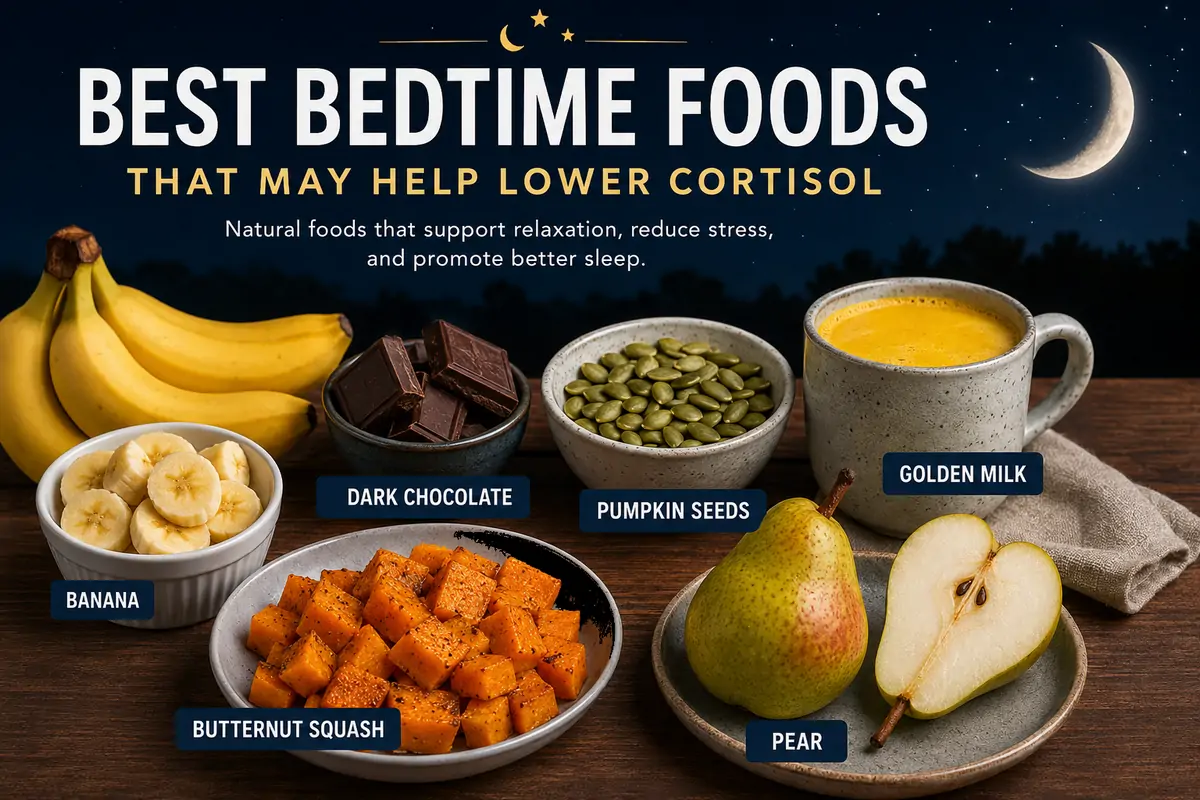
A good night’s sleep starts with healthy evening habits, and what you eat before bed can make a difference. While no single food can instantly lower cortisol, some foods contain nutrients that may support relaxation, healthy sleep, and normal stress responses.
This guide explores six bedtime foods that are rich in vitamins, minerals, and natural compounds that may help you unwind before sleep.
Why Is Cortisol Important?
Cortisol is often called the “stress hormone.” Your body naturally produces more cortisol in the morning to help you wake up and become alert. Throughout the day, cortisol levels gradually decrease so your body can prepare for sleep.
However, stress, poor sleep habits, caffeine late in the day, and unhealthy eating may keep cortisol levels higher than normal at night, making it harder to relax.
Adding nutritious evening snacks may support your body’s natural sleep routine.
1. Bananas 🍌
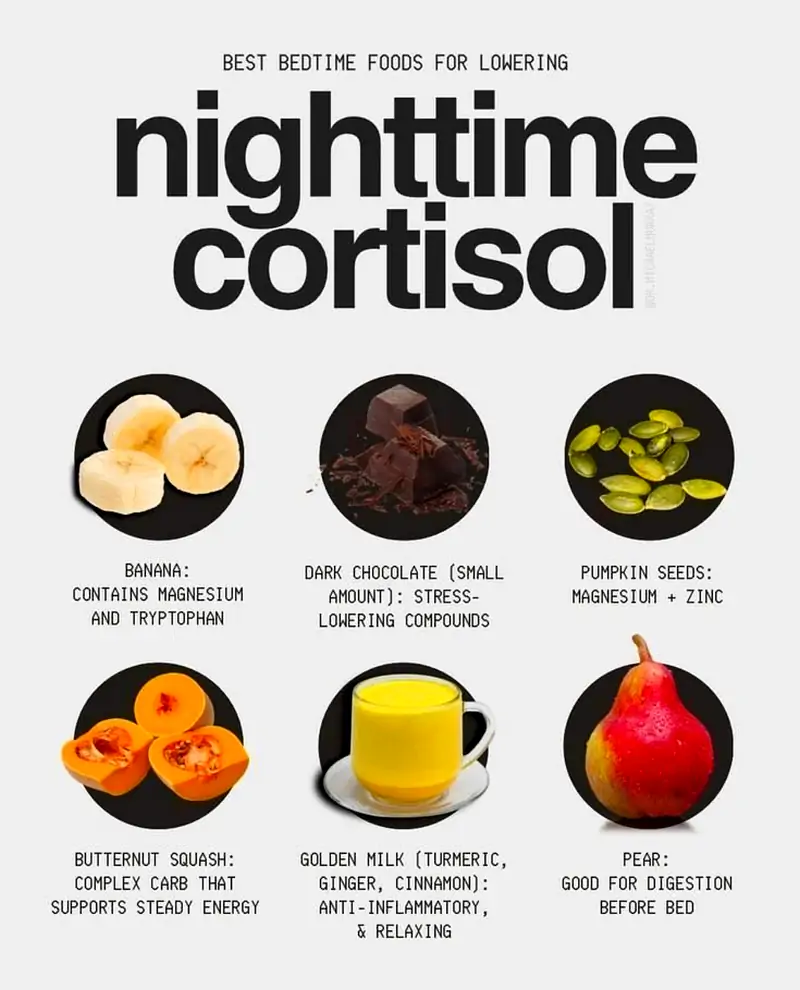
Bananas are one of the best bedtime snacks because they’re rich in:
- Magnesium
- Potassium
- Vitamin B6
- Tryptophan
These nutrients help support normal muscle function and contribute to the production of serotonin and melatonin, two compounds involved in healthy sleep.
Best serving: One medium banana about an hour before bedtime.
2. Dark Chocolate 🍫
Good-quality dark chocolate (70% cocoa or higher) contains magnesium and plant compounds called flavonoids.
Eating a small amount may be a satisfying evening treat.
Because chocolate also contains caffeine, it’s best to keep the portion small.
Best serving: 1–2 small squares.
3. Pumpkin Seeds 🎃
Pumpkin seeds are packed with important nutrients, including:
- Magnesium
- Zinc
- Healthy fats
- Plant protein
Magnesium plays an important role in hundreds of body functions, including muscle relaxation and normal nerve function.
A small handful makes an easy bedtime snack.
4. Butternut Squash 🎃
Butternut squash provides complex carbohydrates, fiber, potassium, and vitamin A.
Complex carbohydrates digest slowly and may help provide steady energy without causing a rapid spike in blood sugar.
Roasted butternut squash makes a warm and comforting evening side dish.
5. Golden Milk 🥛
Golden milk is a warm drink made with:
- Milk
- Turmeric
- Ginger
- Cinnamon
Many people enjoy drinking golden milk before bed because it’s warm, comforting, and naturally caffeine-free.
You can also use dairy-free milk like almond or oat milk.
6. Pears 🍐
Pears are naturally high in fiber and water, making them a light evening snack.
They’re easy to digest and pair well with a small serving of yogurt or cottage cheese for extra protein.
Healthy Bedtime Tips
Along with choosing nutritious foods, these habits may improve your evening routine:
- Eat dinner 2–3 hours before bedtime.
- Avoid large meals late at night.
- Limit caffeine in the afternoon and evening.
- Stay hydrated throughout the day.
- Keep a regular sleep schedule.
- Reduce screen time before bed.
Foods to Avoid Before Sleeping
Some foods may make it harder to fall asleep:
- Energy drinks
- Strong coffee
- Sugary desserts
- Fried foods
- Spicy meals
- Large late-night meals
Frequently Asked Questions
Can food lower cortisol immediately?
No. There is no food proven to instantly lower cortisol. However, a balanced diet and healthy lifestyle may support normal cortisol regulation over time.
Is it okay to eat before bed?
Yes. A light snack can be part of a healthy routine if you’re hungry. Heavy meals close to bedtime may disturb sleep.
Is dark chocolate good before bed?
A small portion may be fine for some people, but because it contains caffeine, people who are sensitive to caffeine may prefer to avoid it late in the evening.
Which bedtime snack is the healthiest?
Bananas, pumpkin seeds, pears, plain yogurt, and warm milk are all nutritious bedtime options.
Final Thoughts
Creating a relaxing bedtime routine is about more than just getting into bed early. Choosing wholesome foods like bananas, pumpkin seeds, pears, butternut squash, and warm golden milk can be part of a healthy evening routine that supports restful sleep and overall well-being.
Remember, the biggest improvements in sleep usually come from combining good nutrition with regular exercise, stress management, and consistent sleep habits.